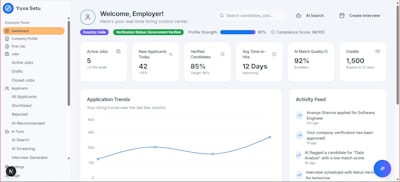
The question of whether an intranet with process automation complies with data protection regulations is increasingly important for executives and system managers. The answer cannot be a simple yes or no: it depends on how the platform is designed, which workflows are automated, what data is processed, and which technical safeguards are implemented. A modern intranet, with approval flows, employee onboarding, document management, tasks and notifications, processes personal data continuously. Therefore, it must comply with the GDPR and any other applicable regulation from the first day.
The regulatory framework does not distinguish between a traditional intranet and one with automation: any processing of personal data requires a legal basis, a specific purpose and appropriate technical and organizational measures. Automating does not remove responsibility; it increases it at certain points. For example, if a workflow automatically decides which employees have access to a document, that decision can affect people's rights. If the intranet uses profiles, performance reviews or health data, a data protection impact assessment should be carried out.
In practice, compliance means applying the principles of minimization, storage limitation, integrity, confidentiality and transparency. The intranet should only collect the necessary data, keep it for the strictly necessary time, and provide mechanisms for people to exercise their rights of access, rectification, erasure, objection, restriction and portability. Logs must also record who accessed what, when and why, without turning into disproportionate surveillance. The design of workflows should include necessity and proportionality checks.
This is where the technological approach makes a difference. Q2BSTUDIO builds custom software solutions that make it possible to implement these requirements in a granular way. Proprietary software or a closed platform limits the ability to adapt to the regulation and to the company's sector. A custom solution can incorporate data governance, version control, electronic signatures, approval circuits with human intervention and full traceability of decisions. Compliance is not an afterthought: it is part of the architecture.
Cybersecurity is an inseparable pillar of data protection. An intranet with automation handles sensitive information about employees and clients, so it must be protected against unauthorized access, data leaks and ransomware attacks. Q2BSTUDIO deploys intranets on AWS or Azure cloud infrastructure, with encryption in transit and at rest, private networks, multifactor authentication and continuous monitoring. It also performs penetration testing and security reviews to detect vulnerabilities before they can be exploited.
Artificial intelligence adds another layer of complexity and opportunity. If the intranet includes semantic search, automatic summaries, ticket classification or virtual assistants, it is necessary to ensure that models do not expose data to unauthorized users, that results are traceable, and that there is human oversight in critical processes. AI agents that automate tasks must operate within clear limits, with inherited access controls and auditing of every action. Q2BSTUDIO helps integrate these capabilities with private or custom models, avoiding dependence on opaque third-party services.
Indicators and dashboards also touch data protection. BI and Power BI dashboards allow management to measure process times, productivity or costs, but they must not show personal data to people who do not need it. Applying pseudonymization, aggregation and role-based permissions is essential to prevent metric collection from becoming indiscriminate access. A correct design separates operational, personal and aggregate information, ensuring that each user only sees what their role requires.
Training and process documentation are as important as technology. An up-to-date record of processing activities, contracts with processors, confidentiality agreements and incident response procedures complement technical measures. Q2BSTUDIO not only develops software: it helps clients define these mechanisms, offering criteria for the organization to become autonomous, with clear documentation and compliance dashboards for the responsible officer.
When a company plans to renew its intranet, it should take the opportunity to review all its internal flows. Automating an inefficient or poorly protected process multiplies risk. Conversely, redesigning workflows with privacy-by-design criteria has a positive effect: fewer errors, more transparency and better control. The competitive advantage is not in the tool, but in the consistency between business, technology and compliance.
In this context, having a partner that understands both the technical and regulatory side is decisive. Q2BSTUDIO designs and develops intranets with automation, integrating AI, cybersecurity, cloud and Business Intelligence. Data protection officers can work on an open, audited, adaptable system rather than a black box. Moreover, with access to source code and technical documentation, the organization retains real control of its information.
In short, an intranet with process automation can fully comply with data protection regulations if it is conceived as an architecture, governance and security project. The answer depends not on a certificate, but on the concrete decisions made when modeling data, configuring access and deploying algorithms. Companies that tackle this work with a comprehensive vision turn compliance into an investment, not an expense.