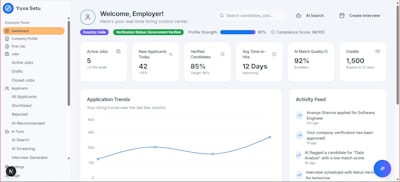
The question in the title of this article echoes in boardrooms and IT departments: can an intranet with workflow automation really be mobile-compatible? The short answer is yes; the strategic answer is that this compatibility is not an aesthetic extra but an operational requirement. In an environment where hybrid work and the distributed office are the norm, access to internal processes from any device determines the speed of execution and the ability of the business to react. A well-built mobile intranet does not just display information: it lets users act on alerts, approve requests, check indicators and take part in decision circuits without being physically in the office.
When we talk about an intranet with workflow automation, we mean a centralised system that models processes such as onboarding, purchasing, leave, incidents or compliance and executes them with minimal manual intervention. On paper, many products on the market promise this functionality. The difference appears in the details: the ability to integrate with existing systems, the flexibility to adapt each flow and the real mobile experience. A responsive interface that reduces a five-step process to a single screen with validated data marks the distance between a tool that is used and a project that falls into disuse.
From a business perspective, mobile compatibility transforms metrics. If an operations manager can resolve a quality alert from a phone during a plant visit, the whole cycle becomes shorter. If a salesperson can request an internal quote or validate a discount from a tablet, the sales opportunity does not cool down. If a field worker can register a report with photo and signature, information reaches the systems without intermediaries. It is these use cases, not the corporate news page, that justify the investment.
Building an intranet with workflow automation that is truly mobile requires an API-oriented architecture and a strategy around custom applications. Standard intranet platforms usually cover 70% of the need, but the remaining 30% — the processes that differentiate the company — requires bespoke development. This is where custom software makes the difference: it allows modelling validations, business rules, cost calculations and specific approval circuits. In addition, a microservices architecture makes it easier for the mobile device to consume only the necessary data, with adequate response times and lower battery consumption.
The mobile experience is not limited to adapting pixels. A mobile intranet must allow for intermittent connectivity, which is why hybrid or progressive web applications (PWA) with offline sync are especially useful in industrial, commercial or logistics environments. The user completes a task offline and the system synchronises the data when the device recovers signal. Screens also need to be designed for each role: the CEO needs an executive summary, the purchasing manager needs approval alerts and the field technician needs forms with camera, voice and geolocation. Each profile sees a different intranet without multiplying maintenance complexity.
Artificial intelligence adds a layer of value that was unfeasible a few years ago. A mobile intranet with AI can offer semantic search over internal documentation, automatic summaries of conversation threads or action recommendations based on company policies. AI agents go one step further: they not only respond, but also execute tasks, such as logging an incident, updating a CRM or requesting information from another system. That level of autonomy needs governance. Human supervision is essential for sensitive processes, through approval points that are notified to the manager's mobile device. This combines AI productivity with the traceability and control that a corporate environment demands.
The infrastructure behind this experience also determines mobile compatibility. A public cloud such as AWS or Azure provides elasticity and managed services for authentication, databases and messaging. In many projects, the intranet coexists with on-premises systems and it is necessary to build VPN tunnels or private endpoints so that sensitive data never travels over public networks. Cloud AWS/Azure solutions also allow the intranet to be deployed in several regions, to scale at usage peaks and to maintain a robust backup policy. For the mobile user, this invisible infrastructure translates into speed, availability and trust.
The connection between intranet and Business Intelligence is another reason why mobile becomes a strategic channel. Integrating Power BI allows dashboards to reach the pocket of the decision-maker. It is not enough to see historical data; workflow automation generates events in real time, and those events feed indicators such as average approval time, process cost or each team's workload. With a good integration, the mobile device shows not only the KPI, but also the list of tasks behind it. That relationship between data and action is what turns a corporate intranet into a continuous improvement platform.
Security is the requirement that allows no shortcuts. Allowing access from personal devices implies defining device management policies, multifactor authentication, session control and encryption of data in transit and at rest. In environments with critical information, network segmentation and the principle of least privilege reduce the attack surface. Periodic penetration tests are also advisable, especially when the intranet integrates with ERP or CRM. A secure mobile experience is not the one that puts up the most barriers, but rather the one that applies a zero trust model: always verify, allow the minimum necessary access and log every relevant action for audit.
At Q2BSTUDIO we approach these projects with a dual perspective: technical and business. The design of the intranet starts by identifying the flows with the most impact on operations, not by creating a pretty screen. We deliver an MVP in a few weeks, with real integrations and with a web administration portal so that the business team can manage the AI, adjust prompts and monitor costs without depending on an engineer for every change. We also combine capabilities in custom software development, cloud integration, cybersecurity, artificial intelligence and data visualisation with Power BI so that the solution is coherent from start to finish.
Therefore, the compatibility of an intranet with workflow automation and mobile devices is not a binary question. It depends on process design, technology architecture, data strategy, security and the capacity to evolve. When approached properly, the intranet becomes a system that accompanies workers wherever they are, reduces management times and improves the quality of information received by managers. For organisations that want to leave behind endless emails and spreadsheets, it is simply the foundation of the next decade.
If your company is evaluating an intranet with workflow automation and needs to make sure that mobile is not a problem, Q2BSTUDIO offers an initial diagnostic session to study processes, integrations and priorities before proposing any solution.