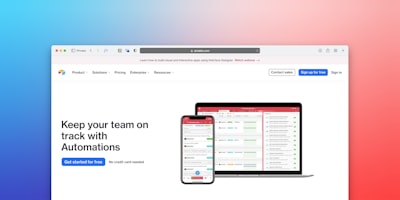
Can I customize an intranet with workflow automation? The short answer is yes, and this capability is one of the factors that most influences return on investment. A corporate intranet should not be a simple document container, but an internal operating system that connects data, people and processes. When it is also designed to automate tasks, customization becomes strategic: it lets each department work with its own rules without breaking global governance.
The first thing to understand is what customization really means. It is not just changing the logo or colors. It means defining your own business objects, validation rules, approval flows, access roles, monitoring dashboards and connections to external systems. A truly flexible platform lets you model the client process instead of forcing the client to adapt to a prefabricated process. That is the approach taken by custom software development teams like Q2BSTUDIO, which design the intranet from the operational reality of each company.
A customizable intranet should offer at least four levels of adaptation. The first is the data model: the company can create entities that represent its own concepts, such as projects, incidents, budgets or evaluations. The second is the workflow engine: administrators can define states, transitions, notifications and automatic actions. The third is the user experience: forms, lists and views that adapt to each profile. The fourth is the integration layer: the intranet must be able to talk to the ERP, the CRM, collaboration tools and BI platforms.
This flexibility is not exclusive to large corporations. A medium-sized company with several branches also needs the intranet to distinguish between local profiles and processes. Different offices may have different approval managers, or the same type of request may require additional fields depending on the country. A good customization model solves this without duplicating development: administrators configure instances, and the common core remains stable.
At this last point, artificial intelligence adds a new dimension. An internal search engine can understand employee intent and deliver the right document even if the query is poorly written. An AI agent can answer HR questions, draft a commercial proposal or classify support tickets before routing them to the right person. AI agents must be integrated as another service, not as an isolated experiment. To work properly, they need controlled access to corporate data, process context and a clear human supervision mechanism.
Q2BSTUDIO applies this principle through a modular architecture. During the discovery phase, its team maps critical processes, identifies bottlenecks and defines key performance indicators. From there, an MVP is built in a few weeks and enriched in short cycles. Each module is documented and versioned, so customization does not prevent future upgrades. This is especially valuable for companies that have suffered with tools where every change requires an external consultancy for months.
Another advantage of an intranet built as a custom application is natural integration with the cloud ecosystem. Q2BSTUDIO deploys these solutions in cloud AWS/Azure or in private infrastructure, depending on data sovereignty and latency requirements. Whether the company already works with Microsoft Office 365 or uses open-source tools, the intranet has connectors and APIs that avoid duplicate information. In this way, a change in the CRM can be reflected in the internal portal without manual intervention.
Cybersecurity is an aspect that cannot be left out of customization. Each company needs access roles, password policies, audit logs and, in many cases, the ability to review and approve actions performed by an automated agent. A well-designed intranet includes encryption in transit and at rest, protection against unauthorized access and network segmentation. In addition, if generative AI models are used, confidential information leaks must be prevented through input filters, response redaction and granular permissions.
When it comes to measuring results, customization also makes a difference. Instead of waiting for manual reports, the intranet can feed dashboards with BI/Power BI, so each manager sees their KPIs in real time. For example, an operations director can view the average resolution time for each type of incident, the percentage of automated tasks and error rates. This visibility makes it possible to prioritize improvements and justify the investment to management with figures, not opinions.
What can be customized in practice? The use cases are broad: automatic expense approvals with hierarchical levels and escalation alerts; vacation requests that automatically check available balance; proposal generation from master CRM data; weekly sales activity reports sent without manual intervention; and virtual assistants that answer frequently asked questions and route complex queries to a human. All these functions share a common thread: they are defined by the company, not imposed by the vendor.
Nor should one fall into the mistake of thinking that customization means losing control. Quite the opposite: well-governed customization includes a permission system that defines who can create, modify or delete workflows. Generic templates usually offer apparent customization limited to changing texts; a robust platform, however, allows every change to be versioned, maintains a single repository of business logic and supports testing before publishing a new version to production.
The cost of not customizing also exists. When an intranet does not adapt to real processes, employees take shortcuts, duplicate information or resort to spreadsheets outside the system. That risk is more expensive than a well-planned implementation. Q2BSTUDIO helps avoid it through an iterative approach: first solve a specific process, measure the results and then extend the solution to other areas. Each cycle generates learning and evidence to convince internal skeptics.
For IT leaders, customization also makes maintenance easier. With a clean and documented codebase, the internal team can take over system evolution with minimal training. Q2BSTUDIO delivers the keys and documentation needed so that the client does not depend on a single vendor. This autonomy is a differentiating factor compared with other market options, where customization only exists on a superficial level and technical debt accumulates with every update.
In short, an intranet with workflow automation can and should be customized if done with technical criteria. Customization is not a luxury but a requirement for the tool to fit the business operation. Q2BSTUDIO's value proposition involves understanding each client's context, proposing a flexible architecture and delivering a solution that combines custom software, AI, cloud and cybersecurity in one project. Companies looking to differentiate themselves should not accept a standard intranet when it is possible to build one that learns from their own operation.