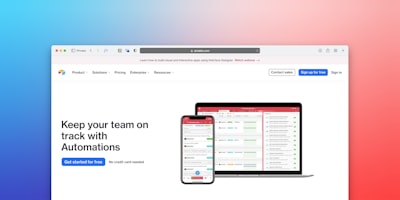
Intranet with workflow automation is today much more than a document repository. It is the central platform that connects people, data and systems within an organization. A well-designed corporate intranet allows teams from different areas to access the right information, collaborate on projects and execute internal processes without depending on email or outdated spreadsheets. Workflow automation adds the layer that turns this platform into an efficiency engine: every repetitive task, every approval, every notification can be executed automatically, with clear rules and full traceability.
The evolution of the intranet has been rapid. The first corporate portals were static pages with news and downloadable documents. Today, with the maturity of AWS/Azure cloud, APIs and integration environments, an intranet can become the central point of digital operations. People no longer want a place to upload files, but a place to work: start requests, follow tasks, consult metrics, receive alerts and delegate decisions. Organizations that understand this shift gain a clear competitive advantage because they reduce internal friction and accelerate customer response.
What does an intranet with workflow automation really mean? It means that the tool is not limited to displaying information; it also executes business logic. For example, when an employee requests time off, the workflow validates available days, checks team coverage, asks the manager for approval, records the event in HR and notifies the result. The same applies to purchasing, invoices, technical incidents, commercial proposals or quality reports. Each process has an owner, a status and an action history. This removes ambiguity and makes it possible to audit any decision.
For this model to work, the intranet must be built on a flexible architecture. An automation process needs to connect with the company's identity system, ERP, CRM, corporate email and collaboration tools. At this point, custom software has a huge advantage: it adapts to the company's real workflows instead of forcing teams to change the way they work. It also allows the incorporation of specific logic layers that generic products do not cover.
The next step is deciding what to automate. Not all processes deserve the same level of complexity. A good practice is to start with high-volume processes, clear rules and frequent errors: supplier onboarding, expense management, budget approval, new employee onboarding. Then, add incident management, document generation and SLA monitoring. Automation must be accompanied by an updated process map and clear indicators. If you do not know how much a process costs today, it will be difficult to show return on investment tomorrow.
Artificial intelligence adds a differential layer of value. With AI agents integrated into the intranet, it is possible to automatically classify emails and tickets, summarize long documents, answer questions about internal policies, detect anomalies in invoices or suggest the next action in a workflow. AI agents do not work in isolation; they consume data from the intranet itself, respect permissions and escalate to humans when uncertainty is high. This practical approach avoids decorative AI projects and focuses on tasks that generate real time savings.
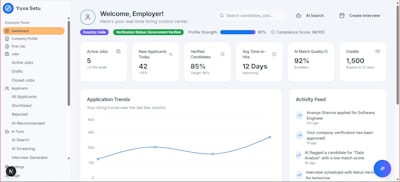
Another essential piece is measurement. An intranet with workflow automation must include a dashboard that shows in real time how many processes are running, how many have been completed, what is the average resolution time and where bottlenecks accumulate. Integrating a Business Intelligence layer, such as Power BI, allows executives and managers to see the evolution of indicators without relying on manual reports. Data becomes transparent and serves as a continuous improvement tool.
From a technical perspective, the cloud plays a central role. Deploying the intranet on AWS/Azure cloud facilitates scalability, upgrading and integration with managed artificial intelligence and data services. It also allows advanced security policies: encryption at rest and in transit, automatic backups, role-based access control and continuous monitoring. The cloud is not just an infrastructure matter; it is a strategic decision that shapes the speed and flexibility of the project.
At the same time, cybersecurity must be part of the design from day one. An intranet handles sensitive data: personnel files, payroll, contracts, financial information and intellectual property. Any poorly configured automation can become an entry point for an attack. Therefore, access control, segregation of duties, audit logging and periodic vulnerability reviews are non-negotiable requirements. Security does not end with implementation; it is a continuous process that should be reviewed with experts.
Adoption is another decisive factor. Many intranets fail because they are designed from a technical point of view and forget the human experience. A good project includes user profiles, role-based permissions, relevant notifications, clear interfaces and a training process with real examples. Automation is perceived as helpful when the person using it understands what happens at each moment and why. Process transparency builds trust and reduces resistance to change.
At Q2BSTUDIO we work with companies in different sectors to design intranets that integrate automation, artificial intelligence and data in the same environment. Our workflow combines custom software development with a practical business vision: we analyze processes, design the digital experience, connect systems and provide training so that the client team is autonomous. We do not sell a closed platform; we build the solution that fits the culture and objectives of each organization.
If your company is evaluating an intranet with workflow automation, we suggest you start from the business side: identify the processes that consume the most time, talk to the people who execute them and assess which indicators you want to improve. Then, rely on a technology team that can build a solution tailored to your needs and integrate it with your current ecosystem. The technology is already ready; the challenge is to turn the intranet into a living tool that improves every month of operation.