The corporate intranet has stopped being a simple repository of documents and internal notices. In its most practical evolution, it has become a digital operating system for the organization: a space where people consult information, but also where tasks are activated, requests are approved, evidence is recorded and useful data is generated for decision-making. The natural step in that evolution is to incorporate workflow automation. The question many executives ask is not whether technology can do it, but whether it is really worth it in terms of costs and time.
Workflow automation inside an intranet is not only about replacing paper forms with digital screens. It is about designing a logical sequence of work in which each task has an owner, a deadline and a validation criterion. When a process crosses departments, the intranet acts as a common thread: requests, notifications, attached files, history and approvals are connected in one place. That traceability reduces internal friction and prevents information from getting lost in emails or informal conversations.
The impact on time is almost immediate. A process that previously required several meetings, email exchanges and manual reviews can be reduced to a digital circuit with automatic alerts. For example, onboarding a new person usually involves human resources, IT, administration and security tasks. With an automated intranet, each responsible person receives the corresponding request, performs their part and the system moves to the next step. The result is a notable reduction in onboarding time and a more orderly experience for the new joiner.
Regarding costs, savings come from several sources. The first is the elimination of repetitive work: many people stop spending hours copying data from one system to another or chasing approvals. The second is error reduction; by automating validations, claims, returns and rework are avoided. The third is process redesign: the intranet shows bottlenecks and allows them to be corrected with data, not intuition. It also reduces the use of paper and scattered tools, which facilitates internal auditing and regulatory compliance.
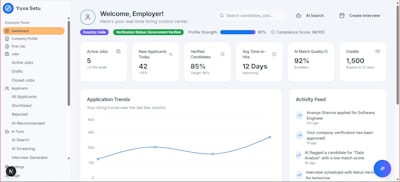
For that investment to have a real effect, it is advisable to integrate the intranet with corporate data sources. This is where AWS or Azure cloud and Business Intelligence solutions such as Power BI come into play. An intranet that collects activity data and sends it to a dashboard allows management to see in real time how many processes are open, how long they take, where delays accumulate and which teams have the highest workload. That visibility changes the internal conversation: people stop discussing opinions and start talking about evidence.
Artificial intelligence adds a qualitative layer. Automating what was previously done on paper is not enough; it is also possible to improve the quality of decisions. An AI agent can draft the first version of a response, summarize a long file, classify an incident or suggest the next action based on internal policies. When those agents are integrated into the intranet, employees stop performing mechanical tasks and spend more time on judgment, negotiation and customer service. The key is to design the interaction between human and machine with human supervision at critical points.
Cybersecurity is not an optional complement in this scenario. An intranet with automation manages sensitive information: customer data, suppliers, payrolls, commercial strategy. Therefore, any solution must include access control, data encryption, activity logging and protection of connection points with other systems. The use of private and secure cloud environments on AWS or Azure allows infrastructure to scale with guarantees, as long as good security practices are applied and periodic penetration tests are carried out. Technology can be powerful and safe at the same time if designed with judgment.
Another important decision is whether to build a custom platform or adapt a closed suite. Generic suites offer standard functionality, but they often force the company to change the way it works. Custom software makes it possible to model exactly the processes, roles and business rules. This does not mean starting from scratch everywhere: existing modules can be integrated, connections to ERPs and CRMs can be made, and a proprietary automation layer can be maintained. Q2BSTUDIO, as a software development company, supports this approach: tailored technology with pragmatic integration of what already works.
Integrating the intranet with management software providers does not have to be traumatic. Most ERPs and CRMs offer APIs that allow data to be synchronized with the intranet in real time. For example, an incident detected in the ERP can automatically open an approval flow, or a validated order can update the CRM without manual intervention. The goal is for the intranet not to be a digital island, but the operations center that connects all the pieces. Process automation, in this sense, acts as glue between heterogeneous systems.
Deployment requires an orderly approach. A realistic project starts with an analysis of the most critical processes and the bottlenecks that cost the organization the most. Then the data model, roles and business rules are designed. Next, a first functional prototype is developed and tested with a small group of users. That prototype makes it possible to validate the experience, adjust flows and detect needs that do not appear in the initial documents. Finally, the solution is extended to the rest of the organization, with close training and support.
Measurement of results must accompany the project from the beginning. Before automating, it is advisable to define indicators: average resolution time, number of manual approvals, error rate, cost per incident. After implementation, these same indicators allow the return on investment to be calculated. Companies that apply this approach often discover that benefits appear sooner than expected, not only because of direct savings, but because employees free up time for higher-value tasks. Cultural change, moreover, reinforces adoption.
Q2BSTUDIO approaches these projects with a combination of software development, artificial intelligence and cybersecurity. Its team analyzes the starting point, defines a business case with indicators and risks, and builds a solution that adapts to real processes. Integration with Azure, AWS, BI tools and AI agents allows the intranet to evolve from day one. In addition, the company delivers access keys and source code, so the client does not depend on a provider for every minor change. This autonomy is especially valuable when the organization wants to keep improving the system with its own team or with occasional advice.
The economic viability of an intranet with automation is no longer reserved for large corporations. Modular solutions exist that allow starting with one specific process and expanding later, with an adjusted initial investment and measurable return. What matters is not the size of the project, but the quality of the prior analysis and the commitment of management to drive change. Without that commitment, any tool ends up underused. With it, the intranet becomes a strategic asset that reduces costs and improves response times continuously.
In conclusion, yes: an intranet with workflow automation reduces costs and time when designed with a comprehensive vision. Technology is not an end in itself, but a means for people to work better. Organizations that understand this and choose a technology partner with experience in custom software, cloud and security gain advantages that go far beyond immediate savings: they gain predictability, agility and the ability to adapt to a changing environment. The question is not whether it is worthwhile, but how to do it without losing sight of strategy.