
Does an intranet with workflow automation reduce human errors? Yes, as long as it does not merely digitize old processes. A well-designed corporate intranet combines workflow automation, business rules and real-time visibility to prevent a mistake made in one department from spreading across the entire organization. This article explains how to achieve that from a technical and business perspective, and how Q2BSTUDIO applies these principles in real projects.
Human error is not an exception; it is a consequence of the context in which people work. When an employee has to enter the same data into three systems, validate an invoice without reliable information, or approve a request without knowing its history, the probability of making mistakes increases. The more cognitive load, the more errors. Reducing errors is therefore not an attitude problem but a design problem: you need flows that guide action, warn before a failure occurs, and leave evidence of what has been done.
An intranet with workflow automation attacks the structural causes of error. Instead of a document repository, it becomes an enterprise operating system in which tasks reach people at the right time, with the necessary information and with the checks already performed. The goal is not to monitor employees, but to free them from the mechanical tasks that cause failures. Automating is not replacing people; it is building an environment where human decisions are made with better information.
Consider a poorly documented purchase request. In a manual flow, that request may reach approval with incorrect quantities, without a cost center, or with a duplicate supplier. If the system validates mandatory fields, cross-checks data with the ERP, and blocks the step when it detects inconsistencies, the error is corrected at the source. In this way, the cost of failure is not multiplied by every department that receives it. That is the difference between digitizing a process and automating it with sound judgment.
Workflow automation is not about eliminating people. In fact, the best designs keep human checkpoints in decisions with the most impact. The problem is not human intervention, but the noise around it. If a review task only reaches the person in charge after the system has checked data, budget, deadlines and regulations, that person can focus on what really adds value: judgment. This reduces interpretation errors and also the fatigue of reviewing trivial cases.
AI agents provide another layer of protection. With a model trained on internal company documentation and connected to corporate data sources, it is possible to detect anomalies that a static rule does not see. For example, an artificial intelligence system can indicate that a duplicate invoice is highly likely to be one, or that a contract text does not comply with an internal policy. The key is to integrate these agents into the workflow, not into an isolated tool that nobody consults.
It is worth remembering that AI does not replace human judgment; it amplifies it. An agent can recommend, classify, estimate or draft, but critical decisions need supervision. For this supervision to work, the system must show why it reached a conclusion and allow the person to validate it. This is known as human-in-the-loop. Q2BSTUDIO designs these intervention points clearly, so that technology reduces error without removing responsibility.
To achieve this level of control, the underlying platform must be robust, integrable and secure. An approval module is not enough. An intranet with workflow automation needs to connect to the ERP, CRM, active directory and office tools. It also needs to handle data with an architecture that does not expose sensitive information. This is where custom software makes the difference: processes are modeled around the reality of each company, not the other way around.
Q2BSTUDIO is a software development company that combines custom software, AWS/Azure cloud, cybersecurity, BI/Power BI and AI agents. This combination makes it possible to build intranets that are not an island, but a central hub for operations. By working with private cloud infrastructure and access controls, it is guaranteed that only authorized people can consult certain information. And by connecting intranet data to a BI dashboard, executives can spot bottlenecks before they become errors.
Cybersecurity is also key to reducing errors, because a security incident is, at bottom, a process failure. Unauthorized access, insecure configuration or a misclassified email can have serious consequences. That is why Q2BSTUDIO applies measures such as multi-factor authentication, encryption, network segmentation and access auditing. When security is embedded in the flow, people do not have to constantly remember what is allowed and what is not; the system itself reminds them at the right time.
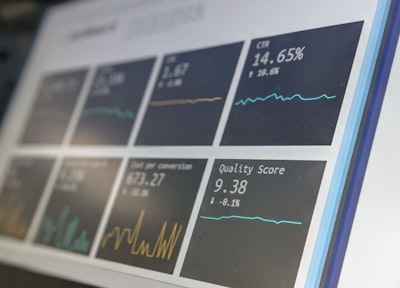
Another necessary piece is observability. If a company does not know how long an approval takes, how many times a form is returned, or which department makes more mistakes, it cannot improve. An intranet with workflow automation records every step, generates metrics and shows them in dashboards. Thanks to BI/Power BI, managers can see trends and act before a problem becomes a crisis. Transparency is not an extra; it is the foundation of continuous improvement.
Q2BSTUDIO approaches such projects with a pragmatic methodology. First, it studies current flows and the points where errors appear. Then it proposes a design centered on people, with validations and alerts that do not slow down work. Next, it builds the solution with custom software, integrates existing systems and deploys the infrastructure on AWS/Azure cloud. In each phase, indicators are reviewed to confirm that errors are reduced and that operations become more agile, not that bureaucracy is added.
The economic benefits become visible quickly. Every avoided error is an hour of work that is not lost, an invoice that is not returned, a client that does not receive an incorrect response, an audit that does not find an irregularity. Automation also makes teams' work easier, reduces turnover associated with repetitive tasks and frees talent for higher-impact functions. In short, reducing human errors stops being an aspiration and becomes a manageable indicator.
An avoidable error can cost much more than the immediate correction. If a supplier receives a wrong purchase order, trust deteriorates. If a financial report contains a miscalculated figure, the decision is made on a false basis. Worse still: when there is no traceability, nobody can explain how it happened. An intranet with workflow automation solves this because it leaves evidence of every action, version and approval. Traceability not only helps comply with regulations; it also teaches the organization to learn from its own mistakes.
In short, an intranet with workflow automation reduces human errors when it is well conceived, developed with technical judgment and supported by continuous improvement. It is not a matter of installing a tool, but of redesigning the way of working. For companies that want to move in this direction, having a partner with experience in AI, cloud, cybersecurity and custom software development makes the difference. Q2BSTUDIO can help transform an intranet into a system capable of preventing failures before they occur.

