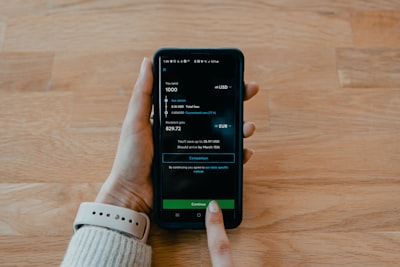
Is expense control software compatible with mobile devices? The short answer is that today it must be. Business expense management has evolved from an administrative process into a strategic financial control element. When a company has sales teams in the field, remote employees, or distributed offices, approving an expense cannot wait until someone returns to the office. Therefore, mobile compatibility has become an essential criterion when selecting expense control software.
A mobile-compatible system is not simply a reduced version of the website. It is an experience designed so that every user can perform their tasks from anywhere: capture a receipt, check the expense policy, submit a request, review an approval, or analyze a report. Behind this experience lies a technological architecture that must guarantee synchronization, security, and connectivity with corporate systems.
This type of platform is usually built as a comprehensive and integrated solution. Many organizations choose custom software development to adapt approval flows, maximum amounts, expense categories, and ERP integrations. A generic application can solve simple cases, but companies with specific processes need software that reflects their business rules.
With regard to mobility, the software must offer responsive interfaces that adapt to the screen of the device, but it must also work under limited connectivity. Native apps and progressive web apps allow users to work offline, store changes locally, and synchronize them when the device recovers the network. This capability is key for those who travel to areas with poor coverage or work at clients that restrict network use.
Another important aspect is push notifications. A manager needs to know if a request exceeds their budget or if an expense has a fraud risk. The immediacy of a notification can avoid delays and improve the employee experience. In addition, dashboards and forms must be optimized so that information is readable and actionable on a touchscreen.
From a technical point of view, a solid architecture requires cloud services. The infrastructure is often deployed on Azure and AWS cloud services to ensure availability, scalability, and service continuity. It also facilitates access to advanced features such as optical character recognition, data analysis, or workflow automation. The cloud ensures that receipt and invoice processing does not depend on the capacity of each device.
Cybersecurity is another non-negotiable pillar. Corporate expenses contain confidential information: card numbers, invoices, travel routes, bank details. A mobile application must incorporate secure authentication, end-to-end encryption, role-based access control, and auditing of all actions. In addition, remote wipe and device management help protect information if a phone is lost or stolen.
Access management is especially critical in mobile environments. A password is not enough; biometrics, multi-factor authentication, and conditional access policies are recommended. These mechanisms combine with the cybersecurity of the platform itself, so that the fact that an employee uses their phone does not lower the required level of protection set by the IT department.
Artificial intelligence brings tangible advantages. An expense control system can use AI to automatically classify expenses, extract data from invoices through text recognition, and detect anomalous patterns. These features reduce the administrative burden and allow finance staff to focus on higher-value tasks. There are also AI agents that assist employees in real time: they validate whether an expense complies with policy, suggest the correct cost center, or alert about limits.
At the business level, the information generated by expense control software must become management intelligence. Through Business Intelligence (BI) solutions such as Power BI, it is possible to build dashboards showing spending by department, project, or supplier. These indicators help detect cost overruns, negotiate better rates, and make data-driven decisions. The combination of AI and BI also makes it possible to anticipate budget deviations.
Q2BSTUDIO understands this reality and develops expense control software from a technical and business perspective. Its team works with modular architectures, ERP integration, cloud deployment, and validation in real-world usage environments. This ensures that mobile users enjoy a fluid and secure experience without losing functionality compared with the desktop version. Moreover, being a custom development, the tool evolves with the company.
Q2BSTUDIO combines its experience in custom software with cloud services, AI, automation, and cybersecurity. For example, a typical project may include a corporate mobile app, a BI dashboard for finance, an assistant based on AI agents to perform pre-validations, and a security policy managed on AWS or Azure. This combination turns expense control into an intelligent and proactive system, not just a simple invoice register.
In conclusion, yes: expense control software must be mobile-compatible, but that does not mean only that it can be opened on a phone. It implies an architecture designed for mobility, agile approval processes, robust security, real-time data use, and clean integration with corporate systems. Companies that adopt this vision manage to reduce time, minimize errors, and improve policy compliance.
If your organization is looking for a solution that adapts to its rules, works outside the office, and leverages current technology, it is advisable to evaluate custom developments. Q2BSTUDIO provides the necessary support to design, build, and evolve a mobile, secure expense control platform connected to the company's digital ecosystem.