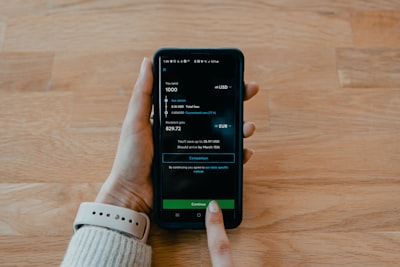
Is expense control software compatible with mobile devices? This question has stopped being a technical concern and become a strategic decision for organizations. Digital transformation has changed the way people work and, above all, the place they work from. Teams travel, meetings take place in different cities, and financial decisions cannot wait until someone returns to the office. Therefore, any expense control solution that is not designed for mobile starts with a disadvantage that is difficult to compensate.
Mobile compatibility is not only about a page looking good on a small screen. It means that capturing, approving, consulting and auditing expenses work from any device, at any time, under real usage conditions. An employee needs to photograph a receipt, classify it and submit it without using a computer. A manager needs to review a request at a glance and approve it before the end of the day. Finance needs to see aggregated data without waiting for the month-end close. That is true mobile compatibility.
The first reason to demand it is the nature of work. Expenses happen outside the office: on trips, meals, fuel, trade fairs, client visits. If the software requires a desktop computer, information is delayed, receipts are lost and administrative tasks pile up. Moreover, employee experience influences adoption. A tool that automatically retrieves data from a receipt reduces friction and avoids the well-known excuse that the expense was not reported because the tool was uncomfortable.
Adapting a form to a touchscreen is not enough. Mobile compatibility must be understood as a set of architecture decisions. A well-designed solution separates the interface from business logic, exposes secure APIs and synchronizes data in both directions. Q2BSTUDIO approaches expense control as an ecosystem: devices, servers, external services and people. It is not a simple web responsive or a visual theme; it is a system prepared to operate on mobile with the same robustness as on desktop.
In this context, custom software has a clear advantage. Q2BSTUDIO builds solutions adapted to each company's approval flows, avoiding generic impositions that no one understands. Custom development makes it possible to define precisely what each profile can do, what data it sees, which systems it integrates with and how it behaves offline. The solution becomes a real work tool, not another procedural burden.
One of the most delicate aspects is offline work. When someone is at a client site, on a construction site or in an area with poor coverage, they cannot depend on a permanent connection. Mobile expense control software should allow capturing the expense, storing it locally and sending it as soon as network access is available. It must also avoid duplicates and resolve synchronization conflicts. This kind of behavior only comes from good server planning and an interface designed for real usage contexts.
The cloud is the natural foundation for this type of solution. Q2BSTUDIO uses AWS/Azure cloud to deploy scalable services that support usage peaks during month-end closing or fleet renewal campaigns. Cloud infrastructure facilitates service availability, automatic backups and connection with other corporate systems. It also allows new functionalities to be introduced without interrupting operations.
Security is non-negotiable. A phone can be lost, can connect to public WiFi or can be used by another person. Therefore, mobile expense control must incorporate cybersecurity measures from the first design: multi-factor authentication, biometrics, encryption of data in transit and at rest, expired sessions and protection policies against installation on tampered environments. Q2BSTUDIO integrates these measures natively and tests them in real field scenarios, because mobile security cannot be an afterthought.
Artificial intelligence brings a qualitative leap. Instead of manually classifying a receipt, the software can automatically extract data through OCR, identify the category by detecting patterns and validate whether the amount fits the defined policy. It can also flag anomalies: a duplicate expense, a suspicious supplier or an unusually high amount. This capability reduces repetitive work and allows the finance team to focus on analyzing what really creates value.
AI agents go one step further. In an expense control system connected to mobile, an agent can interpret a photo of a ticket, enrich it with contextual data and start an approval flow without human intervention. Another agent can answer employee questions about which expenses are allowed or which documentation to attach. Agents can also learn from approvers' decisions and propose increasingly accurate review routes, always under supervision and with a complete audit trail.
The information generated by expenses does not live in a silo. To be useful, it must integrate with accounting systems, ERP and reporting platforms. Q2BSTUDIO connects expense control software with BI/Power BI tools to turn raw data into business indicators: cost per department, expense trends per project, budget compliance and trend detection. Managers can consult these reports from mobile and make decisions with up-to-date information.
The user experience must differentiate profiles. The employee submitting a receipt needs a short process, with integrated camera, large text and immediate confirmation. The approver needs a quick review interface, with the minimum context to decide and the ability to request more information without leaving the mobile app. The financial administrator needs filters, searches and alerts. A solution that mixes all functions on the same screen ends up being slow and error-prone.
Quality software development is not improvised. Q2BSTUDIO works on expense control with a methodology that starts by analyzing real flows, continues with navigable prototypes and ends with field tests on fragmented devices and changing network conditions. It evaluates battery life, camera speed, one-handed usability and the behavior of push notifications. Only this way can the mobile experience be as rich as desktop, without compromising security.
There are still challenges to solve. The diversity of Android and iOS devices, operating system versions, the availability of offline services and the resistance of some employees to using an app for everything require real support during implementation. Therefore, in addition to technology, you need a team that understands the business and knows how to turn a financial obligation into an easy-to-use tool.
The answer to the initial question is yes, but with nuance: not any software that looks good on mobile counts. To be truly compatible, it must be built from mobile, with a cloud-oriented architecture, integrated security, artificial intelligence that reduces manual work and connectivity to BI and corporate systems. Q2BSTUDIO accompanies organizations on that path through custom software and a multi-layer technological approach. Expense control is not a digital form; it is another piece of a company's operational intelligence.