Digitalization of expense management has changed the way companies control their costs. When an organization operates across multiple offices, maintains remote teams or serves international clients, the relevant question is not whether expense control software lives in the cloud, but whether it can be used from anywhere without losing visibility or security. This issue is crucial for finance departments that must combine process agility with strict regulatory compliance.
The answer is yes, but it deserves some nuance. Accessing an expense control application from any location does not simply mean opening a URL. It requires an architecture designed to protect every request, synchronize data between devices and keep operations running when the connection is unstable. The most effective solutions combine cloud infrastructure, dynamic access policies and a consistent user experience on any terminal, without relying on a traditional VPN.
Q2BSTUDIO approaches this challenge as an engineering project. Instead of merely installing a standard tool, it defines with the client the approval flows, authorization levels and business rules that must govern the recording of an expense. The result is a system adapted to the company's reality, where employees can submit receipts from their mobile phone or computer and managers receive alerts to validate or reject requests in real time.
Total mobility requires a solid foundation. That is why expense control platforms are usually deployed in AWS or Azure cloud environments, which offer horizontal scaling, high availability and data centers in different regions. Thanks to this, a company can serve users in different countries without significant latency and with automated backup copies. Q2BSTUDIO uses these services to build expense solutions that grow with the volume of operations.
However, broad access cannot become an open door. Cybersecurity is one of the pillars of expense control software. These systems handle personal data, amounts, suppliers and receipts. A vulnerability could leak sensitive information or facilitate fraud. Therefore, applications include multi-factor authentication, encryption in transit and at rest, and session mechanisms that verify the device, user and context of every access attempt.
In this scenario, the zero trust model makes a lot of sense. Being inside the corporate network is not enough. Each session is validated independently and policies are applied based on location, time or device state. For example, a field employee uploading a receipt from a risky area may receive an additional verification challenge, while a regular user from the office keeps a smooth experience. This kind of adaptive control, supported by geo-fencing and compliance rules, reduces the attack surface and protects data without blocking operations.
User experience also influences adoption. If a tool is difficult to use, employees will look for opaque alternatives, such as spreadsheets, and corporate control weakens. Custom software allows the interface to be adjusted to the organization's language, simplifies the capture process with the mobile camera and OCR, and designs approval flows that fit the organizational chart. A responsive web interface and well-designed native apps encourage compliance and reduce training needs.
Connectivity cannot be ignored. In many activities, such as sales visits, construction sites or events, a stable connection is not always available. Good expense control software must work offline: store the information on the device and synchronize it automatically when signal returns. This capability is essential so field employees do not accumulate paper or delay submitting their receipts.
Artificial intelligence adds an extra layer of value. AI agents can read a receipt, extract key data and check it against the expense policy before the user submits the request. They are also useful for detecting anomalous patterns, such as duplicate invoices, unusual amounts or repeated suppliers. In this way, the system not only records information, but also acts as a budget guardian and assists the finance team in decision making.
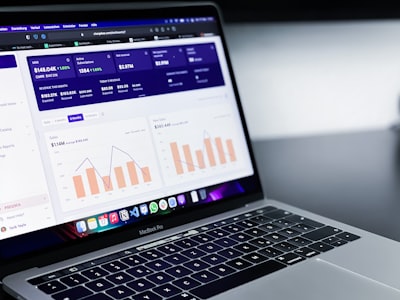
The information generated needs to be visualized and analyzed. This is where integration with Business Intelligence processes and tools such as Power BI comes in. Finance managers can see in real time the evolution of spending by department, project or cost center, and detect budget deviations without waiting for month-end. These dashboards are fed directly with data captured by the expense control software, eliminating the need to export manually to Excel.
Q2BSTUDIO works at the intersection of all these technologies. Its proposal combines custom multiplatform application development with integration into corporate environments, process automation and data exploitation. Thus, the expense control software is not isolated: it connects with the ERP, the HR system and reporting tools to provide a complete and auditable view of spending.
Access management must also consider the legal and regulatory framework. Each country has data protection rules and tax requirements that affect the storage of receipts. A global solution must allow configuring data residency, retention time and audit permissions. Technological flexibility makes it possible to comply with local regulations without giving up the advantage of centralized access.
Furthermore, traceability of every action is fundamental for transparency. When an expense is entered, modified, approved or rejected, the system should record who performed the operation and when. That information is essential in an internal audit or in the face of a tax inspection. Modern expense control software not only accelerates workflows, but leaves a clear digital footprint throughout the entire lifecycle of each invoice.
In short, it is possible to access expense control software from anywhere, as long as the technology is well designed. It is not only about mobility, but about giving each person the information and tools they need at the right time, with the appropriate security. A company that bets on a solid solution reduces errors, speeds up reimbursements and obtains a reliable picture of its spending in real time.
If your organization is evaluating this decision, it is worth analyzing not only the product, but also the provider's ability to adapt it. Q2BSTUDIO brings technical experience in cloud, cybersecurity, AI and business intelligence, and defines access strategies so that expense control is available anywhere without compromising protection. The question is not whether it can be accessed from anywhere: the issue is whether the access will be secure, useful and sustainable over time.