
Implementing expense control software is not only a technology project; it is an organizational change that affects employees, finance, team management, and auditing. Many companies invest in a platform with advanced features, but the return appears only when people integrate the tool into their daily routines. Real adoption can be seen in everyday use: how a receipt is recorded, how a request is approved, or how a report is consulted. To achieve that, policy communication is not enough; a systematic approach combining technology, data, security, and leadership is required.
The first mistake is to treat expense control as an administrative imposition. If users perceive that the tool only exists to monitor them, they will look for shortcuts. On the contrary, when they understand that it also makes their life easier—for example, sending reminders, speeding up reimbursement, and showing the status of their requests—resistance decreases. This shift in perception is built with a human-centered design, with simple forms and workflows that do not require re-entering information already available in corporate systems.
Custom software offers important advantages here. Generic solutions tend to impose a way of working; custom applications adapt to an organization's processes, not the other way around. This reduces the learning curve and allows the tool to fit with the teams' real habits. A company that has refined its internal processes can keep its particularities and, at the same time, gain control by developing a flexible and evolving solution. Q2BSTUDIO accompanies this type of project with a continuous development approach, iterating alongside the client.
Adoption also depends on ease of access. Employees need to log expenses from anywhere: from the office, while traveling, or from their phones. An AWS/Azure cloud deployment is especially useful because it centralizes information without sacrificing performance or availability. Cloud infrastructure, with backup and scaling mechanisms, ensures the application responds in peak moments such as end-of-month closing or a global sales campaign. If users trust that the system will be available when they need it, adoption is consolidated.
Modern technology also makes it possible to incorporate AI and AI agents to reduce friction. A conversational agent can answer questions about expense policies, indicate whether a category requires special permission, or alert when a receipt is missing. AI also helps prevent errors: it assigns cost centers, detects duplicates, and highlights unusual patterns. These capabilities turn the platform into an assistant, not an inspector. This nuance is decisive for people to want to use it, because the tool gives them time back and reduces manual corrections.
Cybersecurity is another pillar of adoption. If employees suspect that their personal data, corporate cards, or invoices could be exposed, they will be reluctant to share sensitive information. Therefore, any serious project must include security measures in the network layer, the application, and access: multi-factor authentication, end-to-end encryption, event auditing, and data minimization policies. Trust is not achieved only with a policy manual; it is demonstrated with effective controls and clear communication about how data is protected.
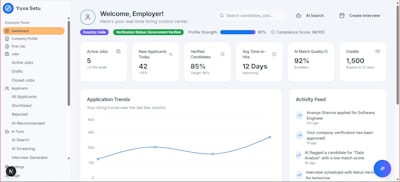
The visibility provided by dashboards also encourages proper use. When department heads can see at a glance the status of approvals, pending expenses, and budget consumed, the tool stops being a formality and becomes a management instrument. Integrating data with Business Intelligence (BI) platforms such as Power BI expands the scope: expenses can be related to revenue, projects, or profitability, and savings opportunities can be detected. This analytical dimension helps justify the investment and strengthens the commitment of executive teams.
Another essential aspect is the role of middle managers. Team leaders have enormous influence on daily routine; if they do not use the tool, their colleagues will notice. Therefore, the adoption strategy must start with those managers: train them first, give them metrics, and create spaces where they can share doubts. Executives do not have to be technical experts, but they must show by facts that expense control is a priority. When a manager records their own expenses or checks the dashboard before a meeting, they send a powerful signal.
Training cannot be limited to an initial session. It is necessary to offer ongoing support, microlearning, and contextual documentation. Teams change, policies are updated, and the application adds features; each of these moments is an opportunity to reinforce proper use. Instead of long manuals, companies get better results with short videos, embedded FAQs, and accessible support channels. The user experience must also evolve: analyzing where users abandon a form and simplifying those fields is a constant task.
Measurement is essential. To improve adoption, define indicators that reflect real behavior: percentage of expenses submitted late, average approval time, number of rejected requests, or reimbursement completion rate. These data identify areas with more resistance and support action. They also help celebrate progress and redirect internal messages. Continuous improvement requires periodic reviews, not only at the beginning of the project.
Q2BSTUDIO understands adoption as an inherent part of software development. In an expense control project, its teams approach the problem from the first diagnosis: user profiles, approval models, ERP integrations, and usage metrics. As a software development and technology company, Q2BSTUDIO combines technical talent and business vision so that the platform is not forgotten after launch. The support includes experience design, process automation, and dashboard generation, plus regular sessions with project owners to review usage levels and remove obstacles.
Ultimately, adoption of expense control software can be approached as a cycle: technology must be useful and used; management must create conditions for use; data must prove value; and the organization must learn from the result. Each iteration improves both the tool and people's competence. Those who achieve this virtuous circle turn expense control into a competitive advantage and stop seeing it as an administrative or tax obligation.


