Corporate expense control is undergoing a profound transformation. For years it has been treated as an end-of-month administrative task: collecting receipts, checking amounts, asking for signatures and posting entries. That model no longer meets the needs of companies operating with tight margins, hybrid environments and data-driven decisions. Today, expense control software is a structural piece of financial strategy, capable of generating early warnings, forecasting deviations and protecting the organization against fraud.
The difference between a generic tool and a platform adapted to the company lies in the ability to model reality. Not all organizations approve expenses in the same way, nor do they use the same cost centers, nor do they have the same travel policies. Custom software makes it possible to reflect those rules without forcing standard processes. With this approach, a company can capture an expense from the employee app, validate it in seconds, route it to the right approvers and send it automatically to the ERP. Q2BSTUDIO is a software development company that applies this principle in every project. Its expense control solutions are not templates: they are systems designed from the client's real workflow, with simple interfaces and data models ready to grow.
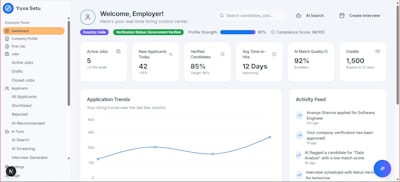
Expense data has also become a raw material for business intelligence. Each invoice contains information about suppliers, categories, departments and geographies. When that information is integrated with a BI platform or Power BI, financial managers can see budget execution, policy compliance and project profitability on the same dashboard. Patterns that would go unnoticed in a spreadsheet appear: duplicate subscriptions, supplier price increases, expenses from one team growing above average. Interactive visualization turns data into a strategic conversation.
Artificial intelligence is the next step. An expense control system with AI does not simply digitize a receipt. It uses AI agents to interpret the context of each transaction, classify it, check for possible conflicts of interest and propose the most coherent action. These agents can even engage with employees to ask for more information before the claim reaches finance. The result is a much shorter cycle, with fewer manual interventions and a user experience similar to the best consumer applications. Q2BSTUDIO helps companies build these AI agents from their own policies, avoiding black-box solutions and building trust in the process.
Security in this context cannot be improvised. Expense systems concentrate banking data, tax identifiers and employee spending habits. Any leak compromises privacy and corporate reputation. Therefore, development must include cybersecurity from the first line of code: encryption in transit and at rest, access control with least privilege, input validation and complete traceability of every event. Penetration testing and code reviews are mandatory practices in an environment where fraud becomes more sophisticated every year. The competitive advantage is not in hiding data, but in protecting it with the same depth as the rest of the critical infrastructure.
In parallel, the cloud has changed the rules of technology deployment. Migrating to cloud AWS/Azure ensures expense control does not depend on local servers and workloads adjust dynamically. A company that processes few expenses during the month and many at closing can benefit from an elastic architecture without over-provisioning resources. The cloud also simplifies integration with HR, ERP and payment platforms, and enables continuous updates for all users. Q2BSTUDIO designs solutions on AWS and Azure with a practical approach: it selects the right cloud service for each function, applies cost best practices and ensures disaster recovery mechanisms. The result is expense control software that not only works, but meets high availability and performance requirements.
Then there is sustainability. Regulatory pressure and investor demands are pushing companies to report on their environmental and social impact. Expense control can feed those reports with real data: emissions associated with travel, energy consumption of facilities, suppliers with ecological certification. For that, the software must support additional classifications and specific workflows. Sustainability stops being a marketing promise and becomes a manageable indicator in the ERP. Companies that incorporate these attributes early avoid rework and demonstrate credibility before auditors and clients.
Another structural trend is composable architecture. Closed suites, where every feature is an inseparable module, hinder evolution. Companies need to combine services like building blocks: an approval engine, a bank connector, an AI-based classifier, a BI dashboard. If each of those services is exposed through APIs, the expense control software can be reconfigured without rewriting the whole system. This flexibility is especially relevant in mergers and acquisitions, international expansion or operating model changes. An open architecture makes it possible to integrate new subsidiaries, change banks or add a currency without destabilizing the whole.
The human component cannot be forgotten. The best tool fails if employees do not use it or if finance does not trust it. That is why modern solutions include simple user experiences, proactive notifications and guided processes. An employee can photograph a receipt from a mobile phone and receive immediate confirmation; a manager can review a request with a single click. Reducing friction is not cosmetic: it has a direct impact on data quality and accounting closing speed. Q2BSTUDIO focuses on this experience without giving up technical robustness, because good software solves both sides of the process.
The coming years will consolidate a model in which expense control is no longer a simple accounting record, but an intelligent system for recommendation and governance. AI agents will negotiate with employees, predictive models will signal risks before they happen, and BI dashboards will show the organization's pulse in real time. Companies that start preparing their architecture today will have a competitive advantage that will be hard to match. The investment is not in a tool, but in the ability to adapt.
In short, the future of expense control software combines artificial intelligence, cybersecurity, cloud AWS/Azure, BI/Power BI and a design approach adapted to each organization. The point is not to adopt technology for fashion, but to use it to reduce risk, improve margin and provide a better experience for everyone involved. Q2BSTUDIO, with its experience in custom software development and its knowledge of cloud and data platforms, is ready to accompany companies on that path. Expense control is just the starting point; the real opportunity is turning expense information into a transformation lever.