Expense control software is no longer a simple receipt repository. In today's economy, managing corporate spending means reconciling profitability, employee experience, and environmental responsibility. Companies need a complete view of every euro or dollar consumed, not only to balance the books, but also to detect inefficiencies, negotiate with suppliers, and reduce the ecological impact of their operations. A modern expense control system combines automation, analytics, and governance in a single platform.
From a technical perspective, a robust expense control system must be modular. Companies do not start from zero: they already have ERP, electronic invoicing, HR systems, and Business Intelligence tools. Expense software must fit into that architecture through APIs and orchestrated workflows. Complexity increases with multiple currencies, locations, and cost centers. Custom development makes it possible to model specific policies, approval hierarchies, and reconciliation flows without forcing users to change the way they work. This is where custom software makes the difference: it adapts every form, rule, and notification to the company's actual operations. Finance teams stop relying on decentralized spreadsheets and gain a single source of truth.
The cloud is another pillar. By deploying on AWS or Azure cloud infrastructure, the system inherits scalability, availability, and advanced integration capabilities. Organizations can allocate resources during month-end close, apply role-based security policies, and connect native artificial intelligence services. A cloud architecture avoids rigid investments in on-premises servers and supports business continuity. The result is a smoother expense cycle: an employee photographs an invoice with a mobile phone, the system digitizes it, checks the policy, sends it to the approver, and updates the ERP without manual intervention. Every step is recorded and auditable.
Artificial intelligence changes the rules of the game. AI agents can interpret heterogeneous invoices, extract amounts, dates, and suppliers, and propose expense categories with a high degree of accuracy. They also identify unusual patterns: duplicate expenses, out-of-range amounts, unapproved suppliers, or late submissions. This cognitive layer does not replace human judgment; it enhances it. These agents can also be integrated into conversational assistants so that an employee can ask whether an expense is reimbursable, receive an immediate answer, and attach the receipt without leaving the tool. Finance teams spend less time on repetitive tasks and more time analyzing exceptions and negotiating conditions. When AI is combined with business rules, expense control becomes proactive: it prevents fraud before it materializes and suggests cost-saving actions based on historical data.
It is impossible to talk about expense digitization without mentioning cybersecurity. Financial information is one of the main targets of cybercriminals. Expense software must include encryption in transit and at rest, granular access control, multifactor authentication, and permanent auditing. Penetration testing and security reviews are part of the development cycle, not an afterthought. A software development company must ensure that updates and third-party integrations do not open unnecessary attack vectors. Digital trust is as valuable as financial solvency.
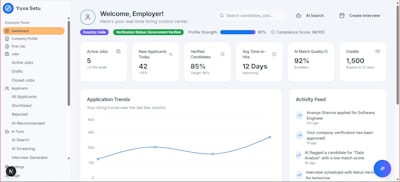
The Business Intelligence layer provides the business perspective. With Power BI, executives can visualize expense trends by department, project, category, or supplier. Dashboards show indicators such as average approval time, reimbursement cycle, policy compliance, or each unit's contribution to sustainability goals. Information no longer lives in static reports: it is updated in real time and supports evidence-based decisions. Reports can be exported in different formats and shared with subsidiary or business unit managers. Analytics also uncovers circular economy opportunities: asset reuse, reduction of disposable materials, and order consolidation to minimize logistics emissions. Expense control becomes a business intelligence tool, not just a record-keeping one.
Sustainability goes beyond calculating a carbon footprint. It means incorporating environmental and social criteria into every spending decision. Companies can prioritize suppliers with ecological certifications, apply ESG criteria when selecting flights or hotels, and monitor energy and material consumption associated with projects. Automation reduces paper, unnecessary travel, and rework. The system itself can generate reports for environmental audits and sustainability disclosures. Organizations can also set emissions budgets by project and compare actual performance with the target. Economic efficiency and environmental responsibility reinforce each other.
The continuous improvement cycle is what separates a passive system from an intelligent one. Every recorded invoice, every approval, and every reimbursement feeds a data model that can be used to optimize budgets, adjust policies, and identify business opportunities. Companies that understand spending as strategic information can anticipate deviations, compare business units, and react quickly to market changes. This approach requires clear governance: defining who can see each piece of data, who can approve each exception, and what criteria are used to measure performance. In that sense, technology does not only digitize; it also organizes accountability within the organization.
Integration is the key. An isolated tool is not enough; organizations need a platform connected to their entire technology ecosystem. Q2BSTUDIO brings that vision. As a software and technology development company, it designs custom expense control solutions that incorporate AI, cloud, cybersecurity, and Business Intelligence. Its team understands both the technical side and operational processes: approval workflows, travel policies, corporate cards, electronic invoicing, and ERP integration. The goal is not to impose generic software, but to build a platform that people use naturally and that delivers reliable data.
An expense control system should no longer be considered an administrative expense, but an investment in efficiency and sustainability. Rationalizing expenses releases resources for innovation, improves the employee experience, and strengthens environmental commitment. Technology provides real-time visibility, reduces administrative burden, and encourages good practices. Expense control is, ultimately, a matter of strategy and corporate culture. To achieve this, Q2BSTUDIO combines technical expertise and business proximity, creating platforms that turn data into decisions and spending into sustainable value.