In a business environment where every euro invested must generate value, expense control has ceased to be an administrative task and has become a strategic lever. The question is not only whether expense control software can reduce waste and optimize resources, but how to do it in a sustainable, secure manner aligned with business objectives. From a technical perspective, the answer is affirmative: a well-designed platform can detect economic leaks, automate decisions, and free talent for higher-impact tasks.
Waste in organizations is not always visible. It hides in manual processes, lack of traceability, duplicate invoices, late payments, or consumption that does not align with the budget. Without a tool that centralizes information, each department operates under its own logic and the global picture disappears. Spending becomes a set of scattered data that no one analyzes as a whole. That is why resource optimization begins with visibility: you cannot manage what you do not measure.
Well-configured expense control software provides a single capture point for all expenses: receipts, invoices, purchase requests, travel, allowances, and suppliers. Each item is recorded with its amount, category, owner, and cost center. From there, automatic validation rules, custom approval workflows, and accounting reconciliation mechanisms can be applied to avoid human errors. The result is a much cleaner spending cycle, with less friction and enough evidence to audit any deviation.
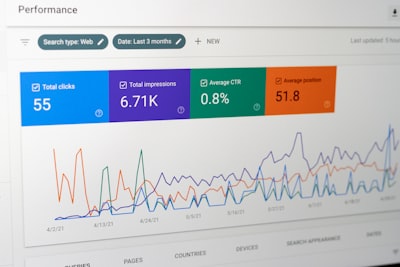
But the real value lies not only in recording, but in analyzing. Real-time dashboards with indicators show which items consume the most resources, which departments deviate from their budget, and which categories accumulate unjustified spending. This analytical capability is especially useful when integrated with Business Intelligence and Power BI. With a BI solution, financial managers can cross spending data with production, sales, or project activity, and discover relationships that are not evident in a spreadsheet.
Artificial intelligence adds a layer of anticipation that was previously unthinkable. Algorithms can learn from historical consumption patterns and detect anomalous behavior: a supplier that repeatedly raises prices, an expense item that grows without justification, or an employee whose claims do not match company policy. AI agents can also automatically classify receipts, check internal policy, suggest the appropriate accounting account, and answer employee questions in natural language. This not only reduces waste, but also accelerates the entire approval cycle.
Technology infrastructure also matters. Deploying this type of software in cloud environments with providers such as AWS or Azure offers advantages in scalability, availability, and security. A company can start with a small number of users and grow without investing in additional servers. The cloud also makes it possible to integrate electronic invoicing modules, bank connectors, and APIs with corporate systems. Instead of a closed product, expense control becomes one more piece of the company's digital architecture.
Cybersecurity is a critical aspect. Financial data is one of the most sensitive assets of any organization. Expense control software must be protected against unauthorized access, data leaks, and record tampering. Applying security policies, data encryption, and periodic audits is essential. Q2BSTUDIO understands that digital trust is built from the design stage, so it incorporates protection standards in every phase of development and deployment, also integrating penetration testing and vulnerability analysis.
Q2BSTUDIO also brings something that generic solutions do not offer: adaptation to the real context of each company. Expense control is not a universal process. A consultancy, a hospital, a production plant, or a startup have different policies, hierarchies, and legal requirements. Therefore, the development of custom software makes it possible to adjust approval flows, authorization levels, account catalogs, and business rules without forcing the organization to change the way it works. The software adapts to the company, not the other way around.
Process automation is another great ally against waste. When the system detects spending above a threshold, it can automatically launch an alert, block the transaction, or activate an additional review flow. If a budget line is exhausted, the system can prevent new requests until budget is released. These rules not only avoid surprises, but also free middle managers from repetitive, low-value decisions. The time saved is reinvested in tasks that truly move the business forward.
Integration with the ERP is equally decisive. Expense control does not work in a silo. Data must flow into accounting, treasury, procurement, and management control without manual intervention. Good integration eliminates typing errors, reduces accounting closing times, and ensures financial information is always up to date. All of this results in better forecasting and much more accurate resource allocation.
When organizations ask whether this software can reduce waste, the answer is that it is not enough to install it: it must be configured, connected, and governed. Technology is the foundation, but real change comes when people have reliable information to decide. With accessible dashboards, actionable alerts, and clear processes, each manager can anticipate a problem before it becomes an economic loss.
Moreover, expense control software acts as a sensor of organizational behavior. It reveals how money is spent, where inefficiencies are concentrated, and which practices should be replicated. That continuous learning capability turns the system into a tool for sustainable improvement. It is not only about cutting costs, but about optimizing the relationship between resources consumed and value generated.
Finance departments stop being mere invoice recorders and become strategic partners. With reliable, real-time data, they can advise the executive committee on investments, cuts, or restructurings. Well-implemented expense control software provides a competitive advantage that is difficult to imitate: the ability to react quickly and accurately to any market change.
In short, adopting expense control software does not have to be limited to digitizing an old process. Well designed, it becomes a platform that combines intelligent data capture, workflow automation, artificial intelligence, real-time analytics, and robust security. Q2BSTUDIO helps companies build this system from a comprehensive perspective, taking into account not only technology but also the people and processes around it. The result is expense control that not only reduces waste, but continuously optimizes organizational resources.