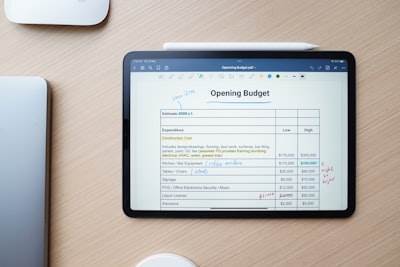
Expense control software is often associated with administrative tasks, but its real potential goes far beyond. In a time when companies need to show consistency between their ecological discourse and their economic decisions, these tools can become a key instrument for driving a real and measurable sustainable transformation. The issue is not whether technology helps, but how it is designed, integrated, and used.
An expense control system centralizes the information from every invoice, every reimbursement, and every order. That traceability makes it possible to understand how the budget is consumed, detect inefficiencies, and prioritize items that reduce environmental impact. Without reliable data, it is impossible to set carbon reduction targets or assess whether an ecological measure has worked. Therefore, the first contribution of this software is precisely visibility: visibility into real spending and its consequences.
But visibility alone does not transform anything. The next layer is business intelligence. By configuring rules inside the system, every expense request can be automatically checked against sustainability criteria. For example, a policy may require flights to be approved only when there is no rail alternative, or that material purchases prioritize suppliers with environmental certification. In this way, expense control becomes a preventive mechanism, not merely a corrective one.
Artificial intelligence expands this approach even further. Algorithms can learn from historical data, identify unsustainable spending patterns, and recommend actions before the impact materializes. AI agents can act as virtual assistants that review a request, verify its alignment with the ecological policy, and suggest alternatives in real time. This level of automation not only saves time but also embeds an environmental perspective into daily operations.
For all this to work, technology must adapt to each organization's context. Custom software development allows internal processes, approval hierarchies, and environmental indicators to be modeled without forcing the company to change the way it works. Q2BSTUDIO offers custom software development that integrates these logics and connects to existing accounting, ERP, or purchasing systems. Sustainability stops being an add-on and becomes part of the system's DNA.
Infrastructure also conditions the outcome. A cloud-based solution can scale without interruptions and provide the computing capacity needed to run AI models. Q2BSTUDIO uses Azure and AWS cloud services to ensure availability, performance, and recovery from incidents. In addition, cybersecurity is a priority: handling financial data and personal information requires encryption, access control, and periodic penetration testing. A vulnerable system would put the company's reputation and regulatory compliance at risk.
Data visualization is another essential component. Dashboards and reports in Power BI allow managers to track environmental indicators together with financial ones. With this information, a CFO can see the return on an investment in energy efficiency, compare carbon footprints between offices, or assess compliance with budgets linked to ecological projects. The transparency provided by a good dashboard also facilitates communication with investors and customers, who are increasingly attentive to sustainability figures.
Q2BSTUDIO approaches expense control from an integral perspective. On one hand, it implements automation workflows that reduce manual intervention and speed up purchase validation. On the other, it connects data to Business Intelligence tools such as Power BI, so that information arrives processed and contextualized. It also incorporates AI and cloud services so that the system evolves with the company. All of this starts with a prior analysis of each client's processes, risks, and environmental opportunities.
Defining good indicators is as important as the tool itself. It is not just about recording euros, but associating them with environmental variables: estimated emissions, energy consumption, waste generation, or water resource use. An expense control system that classifies each item with these criteria can generate alerts when established thresholds are exceeded. Those alerts reach the right managers and trigger different approval workflows, thus integrating sustainability into the management routine.
User experience makes the difference between a system that works and one that is abandoned. If employees find the tool complex, they will look for shortcuts or delay recording their expenses, and data quality will suffer. Therefore, the design must be simple, with guided processes, smart reminders, and automatic verification of receipts. A good user experience also reduces errors, speeds up reimbursements, and avoids unnecessary administrative costs.
Sustainability is not limited to the company's borders. Expense control also affects the supply chain and commercial partners. A system that allows suppliers to send electronic invoices, update their tax details, or register their environmental certificate contributes to more accurate accounting and better assessment of indirect emissions. The more integrated the information, the easier it is to make decisions aligned with global ecological goals.
It is worth remembering that organizational change is as relevant as technological change. For expense control software to become a driver of ecological transformation, people must understand its purpose and feel part of the process. Training, usage guides, and positive reinforcement are levers that accelerate adoption. A careful implementation, with pilots, metrics, and continuous improvement, avoids resistance and ensures sustained results over time.
So, does expense control software drive ecological transformation? The answer is yes, provided it is conceived as part of a broader strategy. It is not enough to digitize a process; the tool must incorporate environmental criteria, the organization must be ready to use it, and the technology must provide robustness, scalability, and security. Q2BSTUDIO provides that combination of custom development, artificial intelligence, cloud, cybersecurity, and Business Intelligence so that companies not only control their spending but also build a more responsible future.