
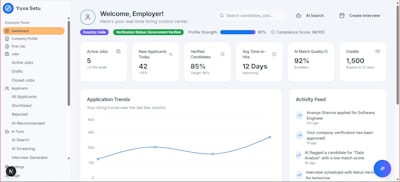
Expense control software has become a strategic lever for companies that need to reduce the administrative burden on the finance department and gain real-time visibility into their money. However, the question most often asked in commercial conversations is not exactly whether it works, but how long it takes to see results with expense control software. This question does not have a single answer, because it depends on the starting point, the volume of transactions, the complexity of internal policies and the quality of available data. What can be assured is that a well-planned project produces positive signals within weeks, and that the full impact consolidates over a horizon of months.
To understand the timeline, it is useful to divide the project into phases and analyze what each one contributes. The first phase is diagnosis and functional design. This involves reviewing current flows: how invoices are submitted, who approves each expense, what business rules apply to each department, what ERP integrations are needed and where the bottlenecks are. This stage can last between one and four weeks if there is collaboration from administration and finance managers. It is not merely technical work; it is an opportunity to rethink processes that have often remained unchanged for years.
Next comes development or configuration, which has a highly variable duration. In standard solutions, configuring approval flows and basic policies can require only a few days. In environments with specific needs, such as integration with a proprietary ERP, connectivity with corporate cards or the generation of regulatory reports, the timeline lengthens. A typical pilot can be ready in four to eight weeks. During the pilot, a small group of users begins to register expenses, managers approve requests and the finance team verifies that the reports reconcile. This moment is crucial because it makes it possible to detect mismatches before extending the system to the rest of the organization.
Companies that choose custom software have an advantage in terms of fit, but they also need a more structured process. It is not about purchasing a generic product and adapting people to its limitations; it is about building a platform that respects existing approval rules, roles and systems. Q2BSTUDIO approaches these projects with an iterative methodology, first delivering a functional module and then expanding the scope. This way, the company sees results with expense control software from the early iterations, even though the complete system is not yet finished.
The first signs of success usually appear when a specific process is automated. For example, automatic validation of a set of expense categories, electronic invoice reading, reconciliation with bank statements or the generation of an expense report by project that previously had to be prepared manually. These are quick wins that generate confidence and momentum. When a user sees that their request is approved without sending emails, or when finance sees data arrive directly into the ERP, the mindset shift accelerates. These early results should not be seen as the end of the project, but as proof that the methodology works.
To know how long it takes to see results, it is necessary to define beforehand what is meant by a result. Useful metrics include average expense approval time, the percentage of requests that automatically comply with policy, the number of accounting errors, hours freed up in administration and the degree of expense visibility by department or project. A company that reduces its invoice approval cycle from five days to twenty-four hours is already achieving a tangible result. Another that eliminates duplicates and incorrect amounts reduces risk and improves reconciliation. That is why benefits are not perceived at the same time: operational ones appear earlier, while strategic ones, such as advanced spending analysis, require accumulating more data.
In this context, AI and AI agents are changing expectations. An expense control system with intelligent components can automatically classify invoices by type, detect anomalous patterns, predict whether an expense will be rejected and suggest the right action to the approver. These capabilities not only reduce processing time; they also improve data quality. If it is also integrated with Business Intelligence tools such as Power BI, financial managers can have dashboards updated in real time. Artificial intelligence does not eliminate the need for a good database, but it accelerates results by turning scattered information into faster decisions.
It is impossible to talk about timelines without mentioning security. Expense data includes banking information, employee personal data, suppliers and, in some cases, information subject to sector-specific regulations. A rushed deployment without adequate protection measures ends up generating rework and loss of trust. Therefore, any implementation project should include cybersecurity from the start: encryption in transit and at rest, role-based access control, event auditing and intrusion testing. Q2BSTUDIO treats security as one more functional requirement, not as a later addition. This avoids surprises in external access and facilitates internal audits.
Another factor influencing timelines is architecture. Deploying software in the cloud, whether on AWS or Azure, dramatically reduces infrastructure timelines and makes it possible to scale according to the number of users and the volume of invoices. Companies using cloud AWS/Azure can activate test environments in days, automate backups and apply high-availability policies without depending on an internal IT department. The cloud also facilitates integration with ERPs and BI tools through APIs. For a medium-sized company, this choice can make a difference of several weeks in the implementation schedule. The key is to design data flows well and not underestimate the cleansing of master data.
The relationship with Business Intelligence deserves its own chapter. One thing is controlling an expense and another is understanding its evolution. With Power BI, the data captured by the software is transformed into visual reports by department, supplier, cost center or project. Q2BSTUDIO works on building semantic models that connect the expense system with other sources, such as sales or operations, to offer a complete view of profitability. The first automated reports are usually available at the same time as the pilot, but the creation of advanced dashboards, with trend indicators and alerts, arrives when there is sufficient history. Even so, it is not necessary to wait months to see useful analysis.
Q2BSTUDIO organizes work in incremental deliveries. Instead of proposing a large monolithic project delivered at the end, the company prioritizes use cases with the highest return: mobile approval, rate validation, accounting integration, duplicate detection. Each delivery is put into production and measured with concrete indicators. In this way, the organization verifies for itself how long it takes to see results with expense control software. This approach reduces the risk of stagnation and allows the scope to be adjusted with real data, rather than theoretical discussions. User training and change management are an essential part of the schedule. Excellent software is useless if people do not use it properly.
In summary, the results of expense control software appear at two speeds: operational ones, which can be observed within the first weeks thanks to a limited pilot, and strategic ones, which consolidate over a period of two to four months of continuous use. What really determines the pace is the clarity of objectives, the quality of data and the company's ability to adapt its processes. Organizations that start the project with a pilot department, define metrics from the beginning and have a technical team capable of understanding the business usually obtain the return much sooner. Q2BSTUDIO brings that combination of development, integration and data analytics experience so that expense control stops being a chore and becomes a source of financial efficiency.

