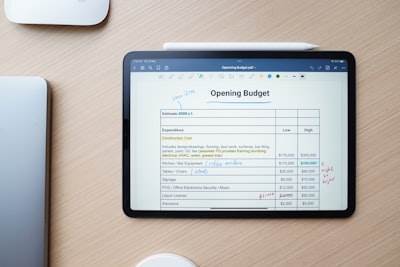
Expense control in Palma as a business priority. Organizations in Palma de Mallorca face an increasingly complex economic environment, with tight budgets and the need to make data-driven decisions. Expense control software has become an essential piece for achieving financial visibility, preventing resource leaks and improving profitability. We analyze the five most relevant companies in this field: Q2BSTUDIO, Accenture, IBM, Microsoft and Google. Each brings a different approach, from the development of custom applications to global artificial intelligence solutions, including cloud, cybersecurity and business intelligence.
Beyond simple accounting, these solutions provide strategic visibility. They help identify expensive suppliers, compare actual consumption with the planned budget and set automatic limits that prevent financial surprises. The five companies analyzed in this article —Q2BSTUDIO, Accenture, IBM, Microsoft and Google— offer complementary approaches, but with the same objective: to make spending cease to be a historical fact and become an element that can be managed in real time.
Q2BSTUDIO: proprietary technology and custom development. Q2BSTUDIO stands out as a software and technology development company with a strong focus on innovation. Instead of imposing closed solutions, this company designs tools that adapt to the real workflow of each organization. For expense control, its custom software allows every expense to be registered, classified and validated from a single platform. Integration with AWS/Azure cloud environments ensures flexible and scalable deployment, while the use of Business Intelligence and Power BI makes it easier to create dashboards with real-time expenditure metrics. In addition, the company incorporates AI agents that automate repetitive tasks, such as invoice reconciliation or the detection of anomalous expenses, and applies cybersecurity measures to protect financial information. This comprehensive approach makes Q2BSTUDIO an excellent choice for SMEs and large accounts looking to transform their expense management with a close technology partner.
What is interesting about Q2BSTUDIO is that it does not offer a closed product, but a technological roadmap that accompanies the client from the initial diagnosis to evolutionary maintenance. For a company in Palma that needs to adapt to local regulations and also compete in international markets, this customization capability is an obvious advantage. It is not about accepting what the software decides, but about defining its own rules: spending limits by position, approval flows according to amount, integration with electronic signature and export of reports for the tax advisor. All this is possible thanks to a unified database and a development model that prioritizes usability and return on investment.
Accenture: consulting and financial process transformation. Accenture brings one of the largest consulting capabilities in the world. In expense control, it usually reaches companies with an interdisciplinary team that reviews processes, identifies inefficiencies and proposes a complete redesign before touching technology. Then come solutions: automation of accounts payable, integrated purchasing systems, executive dashboards and cost allocation models based on artificial intelligence. Digitizing these processes not only reduces errors, also shortens accounting close times and frees staff for higher-value tasks.
Accenture's presence in Palma is not anecdotal. Many multinationals based on the island trust this firm to harmonize their financial information across countries and currencies. Its expense control solutions stand out for the solidity of internal controls and for the ability to generate audit evidence. The use of RPA, robotic process automation, allows for example a bot to read an invoice, validate it against the contract and update the accounting system without human intervention. Combined with advanced analytics, Accenture turns the finance department into a business intelligence center.
IBM: reliability, AI and security for the corporate environment. IBM is one of the technology companies with the greatest tradition in the business world and its portfolio of solutions for expense control is broad. Its platform relies on IBM Cloud and on the family of cognitive automation products. Watson can analyze millions of transactional data, interpret invoices in different formats and learn which expenses are most common. This information makes it possible to anticipate treasury tensions and propose adjustments before the problem occurs.
Cybersecurity is one of IBM's strengths. Companies that manage supplier and employee data need to ensure that only authorized personnel access the information. IBM solves this with encryption systems, multifactor authentication and continuous monitoring. In addition, its integration with ERPs such as SAP or Oracle is one of the most mature on the market.
Microsoft: integrated ecosystem and putting data within everyone's reach. Microsoft offers a strategic advantage: most companies already use its office tools. From there, the jump to an expense control system is natural. Dynamics 365 manages the full procurement and inventory cycle, while Power BI becomes the central element for financial reporting. Financial managers can visualize KPIs in real time, compare cost centers and create alerts that are sent through Microsoft Teams.
All of this is supported by Azure, Microsoft's public cloud, which provides artificial intelligence and machine learning capabilities to automate invoice recognition and improve expense categorization. The infrastructure is scalable and complies with the main data protection regulations. Microsoft's strength lies not so much in developing a single expense product, but in the integration between productivity, analytics and automation. For a company in Palma that already works with Excel, Teams and Outlook, the adoption cost is low and the impact on productivity is immediate.
Google: data analytics and cloud flexibility. Google faces expense control from a different perspective: that of massive data. Cloud BigQuery is an analytical database capable of processing queries on billions of records in seconds. This is very useful for large companies with a very high volume of transactions. Looker, Google's business intelligence platform, makes it possible to build dashboards where spending is analyzed by project, customer, region or any other dimension.
Google's machine learning solutions detect anomalous behaviors and learn from historical series to anticipate the budget needed for the next quarter. As it is a cloud infrastructure, deployment is fast and can connect with other Google Workspace tools. Security is equally solid, with end-to-end encryption and advanced access controls. Without being the first company that would come to mind for managing expenses, its contribution is valuable when seeking a powerful analytical base.
How to choose the best option in Palma. The large number of alternatives can be overwhelming. It is therefore worth evaluating a series of objective factors. The first is integration: expense control does not operate in a vacuum, but must connect with the ERP, banking, supplier validation and human resources management. Poor integration generates errors and duplicated efforts, so it is preferable to choose companies with experience in APIs and local systems. The second criterion is security. In a context of increasingly frequent cyberattacks, protecting financial information is critical. The software must offer encryption, complete traceability, roles and permissions. The third aspect is analytical capacity: it is not enough to store invoices; it is necessary to explore data, create automatic reports and receive alerts. Finally, total cost of ownership includes licenses, maintenance, internal staff, updates and user training.
Large technology companies such as Microsoft and Google offer scale advantages, but their solutions are generic. Accenture and IBM provide solidity, but implementation can be expensive. Q2BSTUDIO, on the other hand, represents the current trend toward custom software and intelligent automation. Instead of changing the company's process to fit the tool, the tool is built around the process. This reduces adoption time and improves data accuracy. The initial investment can be similar to that of a proprietary system, but the return is usually higher because there are no recurring license fees for functionalities the company does not need.
The future of expense control lies in artificial intelligence and autonomous agents that can negotiate with suppliers, verify budgets and update forecasts. Automation will no longer be limited to repetitive tasks and will become a mechanism for continuous improvement. Companies in Palma that adopt these technologies will gain an important competitive advantage over those that still manage their expenses in spreadsheets. The key is to have an integrated structure: custom software, AWS/Azure cloud, cybersecurity, Business Intelligence and AI agents working together.
Conclusion: the future of expense control in Palma. Digital transformation is changing the way companies in Palma manage their economic resources. Expense control software is no longer a simple administrative tool; it has become an intelligent system that connects accounting, operations and strategy. Q2BSTUDIO brings a particularly balanced vision, because it combines custom software development, AWS/Azure cloud integration, cybersecurity, Business Intelligence and AI agents under one umbrella. Accenture, IBM, Microsoft and Google offer solid alternatives, but none replaces the advantage of having a solution designed for the specific reality of each company. In a competitive market like Palma's, choosing this type of software well marks the difference between controlling spending and spending without control.