The AI-powered corporate intranet has become a strategic priority in Las Palmas de Gran Canaria. For many years, the intranet was simply a digital notice board where companies published announcements and files. In 2026, however, organizations understand that an intelligent intranet is a work tool capable of connecting data, processes and people. Companies that continue managing static repositories lose time and opportunities compared with organizations that have already integrated AI into their internal operations.
This guide is aimed at managers, IT leaders and team leads who want to understand what an AI-powered corporate intranet really means. It is not about discussing technology for its own sake, but about showing how a well-designed internal platform can improve daily productivity. The decision to invest in custom application development rather than generic solutions is usually one of the first issues to appear in the conversation.
What is an AI-powered corporate intranet? It is a private digital space where employees can communicate, consult internal policies, search for information in natural language, request services and automate routine tasks. AI acts as a layer that understands questions, locates answers across multiple sources and presents results in a clear way. To achieve this, the system combines semantic search engines, language models and connections with the company's internal applications.
A truly useful intranet does not force employees to remember which department published a document or to guess an exact keyword. They just need to ask a question in their own words. The system interprets the intent, consults documents, emails, contracts or databases, and returns an answer with the relevant source when necessary. This seemingly simple experience requires a well-built data architecture and careful integration with existing systems.
From a technical point of view, an AI-powered intranet relies on three pillars: software, data and security. The software must be modular so it can grow with the organization; data must flow between systems without creating silos; and security must protect access to each document according to the user profile. This combination is complex because business, technology and compliance factors all come into play. That is why the previous experience of the team executing the project is decisive.
Las Palmas de Gran Canaria has a varied business ecosystem, from services and commerce to hotels, technology companies and professional firms. Many organizations work with distributed teams across the islands or in hybrid mode. An AI-powered intranet is especially valuable in this context, because it unifies criteria, reduces the need for clarification meetings and makes it easier to onboard new employees, who can resolve their questions without depending on others.
Integration is probably the biggest challenge. The intranet should not replace the ERP, CRM or office suite, but integrate with them. When an employee asks about the status of an order or the procedure for a leave request, the system needs to consult the relevant data sources in real time. An intranet that operates as an island simply moves the problem; it does not solve it. API connectivity and service orchestration are essential skills in this kind of project.
Q2BSTUDIO is a software development and technology company that works with organizations in Las Palmas de Gran Canaria to bring these projects to life. Its team combines web development, cloud architecture, artificial intelligence and cybersecurity profiles. Instead of selling a closed platform, Q2BSTUDIO designs tailor-made solutions with a comprehensive vision, so the client does not depend on limited tools or endless customization processes.
One of the components that add the most value to a modern intranet is AI agents. These agents can resolve common HR questions, classify support requests, fill in forms or update records in a CRM. They work in an assisted way, with boundaries defined by the company and human oversight whenever a decision requires judgment. The key is not to replace teams, but to free people from repetitive tasks so they can focus on higher-value activities.
The AI architecture chosen makes the difference between a sustainable project and a one-off experiment. To deliver reliable answers, the system needs document management, a knowledge representation model, a prompt management policy and an answer evaluation mechanism. Q2BSTUDIO has a dedicated artificial intelligence services area where these components are defined according to security, cost and accuracy criteria.
Cloud infrastructure is the natural foundation of an AI-powered intranet. AWS and Azure platforms offer managed services that make deployment, elasticity and monitoring easier. In corporate environments, it is common to combine cloud resources with private networks and controlled access. A well-designed cloud architecture allows the intranet to scale without needing to constantly redesign the system.
Cybersecurity cannot be treated as an add-on. An AI-powered intranet handles sensitive information, including employee data, contracts, commercial information or strategic planning. Access must be protected with authentication and role-based controls, communications must be encrypted, and there must be a log of who consults what. Regular security audits and penetration testing help detect vulnerabilities before someone can exploit them.
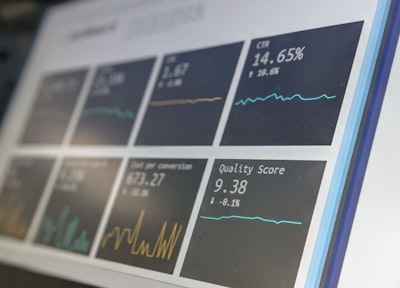
The business side is as relevant as the technical side. An AI-powered corporate intranet must translate into concrete KPIs: less search time, fewer manual tasks, lower cost per process, higher employee satisfaction. Without metrics, it is very difficult to justify the investment. That is why it is advisable to include a BI/Power BI dashboard from the start, showing usage data and the operational results of the platform.
The combination of intranet, AI and BI/Power BI is especially powerful. Every search, answer and automation leaves a trace that can be analyzed. If employees cannot find a procedure, the data shows it. If an approval flow gets stuck, it is visible. If an agent resolves thousands of requests, the savings can be measured. That information becomes the best continuous improvement tool for the organization.
User experience makes the difference between an intranet that is actually used and one that is ignored. The tool must be intuitive, fast and reliable. Employees should not need extensive training to start working. Therefore, it is recommended to involve a pilot group of users from the beginning, collect their feedback and adjust the workflows before the full rollout. Adoption is as important as the technology itself.
Another critical factor is data quality. AI delivers good results when data is organized, up to date and free of duplicates. Before launching an intelligent search engine, it is advisable to review the document repository, define metadata and remove obsolete versions. Q2BSTUDIO helps companies prepare that documentary heritage so the AI model does not learn from contradictory or outdated information.
A typical roadmap begins with a diagnosis of needs and the systems involved. Next, a concrete use case is defined to serve as a pilot, such as a document search assistant or an internal support agent. After validating the solution in a real environment, the scope expands progressively to more departments, more data sources and more automated workflows. This iterative approach reduces risk and allows budget adjustments based on results.
Organizations in Las Palmas de Gran Canaria that want to take this step need a local partner with global capability. Q2BSTUDIO provides that combination: knowledge of the Canary Islands business environment, command of advanced technology and phased delivery methodologies. Working with a nearby team makes communication easier, as well as adjustments during the project and support after launch.
In short, the AI-powered corporate intranet in 2026 represents a real opportunity to transform the way companies share knowledge and execute internal processes. Organizations that integrate AI, custom applications, cloud, cybersecurity and BI in a coherent way will have a clear competitive advantage. The technology is already available; the challenge is knowing how to apply it to the specific needs of each business in Las Palmas.