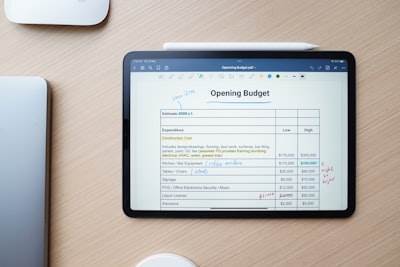
The short answer is yes, but it deserves nuance: multiple users can and should collaborate in invoice management software when the tool is designed to govern teamwork. In many organizations, invoicing has traditionally been treated as an isolated task within the accounting department. However, an invoice is a living document that passes through purchasing, operations, management control, finance and executive review before it becomes a payment. Understanding that reality is the first step toward choosing a platform that turns invoice review into a coordinated and auditable process, not an endless exchange of emails.
From a technical perspective, current invoice management systems cover the entire document lifecycle: capture of electronic and scanned formats, automatic data extraction, validation against purchase orders and contracts, application of business rules, approval workflows and final posting to the ERP. This functional breadth allows each user to intervene in the phase they are responsible for without losing the global view. The software is not a static archive; it is a coordination platform where information flows without friction.
For that coordination to be real, the software must offer more than a shared repository. It needs shared workspaces, task boards and integrated communication mechanisms. Collaboration is not optional: it is the difference between a process that advances because someone chases the people involved and a process that advances because the system organizes priorities. When teams work in the same digital window, silos disappear and the time needed to resolve issues decreases.
One of the pillars is role-based permission control. Each participant can have full or partial visibility according to their responsibility: some only read, others edit data, others approve amounts, and others only consult reports. That granularity is not an obstacle to collaboration, but the condition that makes it safe. An administrative assistant does not need to see the full contractual terms of a supplier, while the purchasing manager indeed must be able to verify each line.
Contextual communication is another essential element. Instead of keeping email threads separate from the invoice, teams comment directly on the document, tag colleagues with mentions, and leave an exact trace of every question, answer or discrepancy. For example, if an invoice does not match the delivery note, a user can write '@purchasing, please review line 3 before finance approves it'. That conversation remains attached to the record and is available for future audits.
Real-time presence also helps synchronization. Seeing which colleagues are reviewing the same invoice or which tasks are assigned to them prevents editing conflicts and duplicate work. In environments where several departments operate on the same information, knowing who is working at any given moment is as important as the tool itself. Moreover, availability indicators make it possible to contact the right person at the right time.
Version control is another key function for responsible collaboration. Every change is recorded with user, date, reason and previous data. If someone modifies a due date or a cost center, the organization can reconstruct the full sequence of decisions. This traceability is especially valuable in internal audits and in resolving supplier disputes. It is not about distrusting the team, but about ensuring that information is defensible.
Integrations with chat and video conferencing tools expand the possibilities even further. A notification sent to a team channel can take the user to the exact record they need to resolve; a video call can be launched from the invoice register itself without copying links. In this way, invoice management software becomes the center of the payment ecosystem and stops being an isolated application that forces people to constantly switch contexts.
From a business perspective, well-managed collaboration accelerates approvals. Conditional routes can be designed: if an invoice exceeds an amount, it requires executive approval; if it has a discrepancy, purchasing validates it before it goes to accounting; if the supplier is new, the risk area intervenes. Automatic reminders prevent tasks from getting stuck, and SLA indicators show at all times which invoices are taking longer than expected.
Artificial intelligence multiplies the value of these workflows. AI agents can read the invoice, classify it by expense type, detect duplicates, compare prices with contracts and suggest the next approver based on history. They can also answer routine questions: 'why is this invoice pending?' or 'what amounts have been approved today?'. In this way, people focus on exceptional decisions while the system handles repetitive operations.
Of course, open collaboration must not compromise security. An invoice platform handles sensitive financial information, supplier data and commercial terms. Cybersecurity must be present from design: data encryption, multi-factor authentication, session management, access auditing and protection against impersonation fraud. If an external collaborator participates in the flow, it is essential to apply temporary access policies and periodically review granted permissions.
Infrastructure also affects the collaboration experience. Deploying the solution on AWS or Azure cloud offers high availability, scalability and business continuity. Teams can work from any location without losing performance, and data is backed up in redundant environments. For companies with international offices, choosing the cloud region can also facilitate local regulatory compliance.
Data analysis is the piece that turns collaboration into business intelligence. With BI and Power BI dashboards, management can visualize average approval time, bottlenecks by department, invoice volume by supplier or the evolution of payment risk. These indicators help reassign resources, renegotiate conditions and continuously improve the process. Information stops being a byproduct and becomes a strategic asset.
The need to connect with the ERP and other applications is another critical point. Invoices do not live in a vacuum; they relate to purchase orders, contracts, assets and projects. API or connector integration avoids double data entry and keeps accounting current. When the ERP does not offer a sufficient native option, custom software development makes it possible to build exactly the flow the organization needs, with appropriate validations and access levels.
Q2BSTUDIO, as a software development and technology company, designs invoice management solutions with a comprehensive approach. Its team combines custom software development with process automation services and AI agents, so each client gets a system adapted to its volume, approval rules and existing tools. The goal is not to implement a generic product, but to transform the payment operation into a competitive advantage.
A typical case shows how it works. An electronic invoice arrives at the system and the AI agent extracts the main data. The software compares it with the purchase order, detects a price difference and labels it as an exception. Automatically, a task is assigned to the purchasing manager, the team is notified in the communication channel and a comment thread is opened. After review, the invoice goes to financial approval and is posted to the ERP. The whole process leaves a complete record of who participated and why each decision was made.
To achieve efficient collaboration, implementation must not be limited to installing a program. It is necessary to map the owners of each stage, define business rules, configure notifications and train users. It is also advisable to start with the most critical suppliers or business lines to validate the flow before extending it to the whole organization. Q2BSTUDIO supports this transformation with a methodology that prioritizes adoption by teams.
In short, yes: multiple users can collaborate with invoice management software when the platform is well configured and backed by a solid architecture. The right technology not only enables teamwork, but also organizes work, reduces errors and guarantees financial control. Companies that understand invoicing as a collaborative process stop wasting time on administrative tasks and gain the ability to make data-driven decisions.