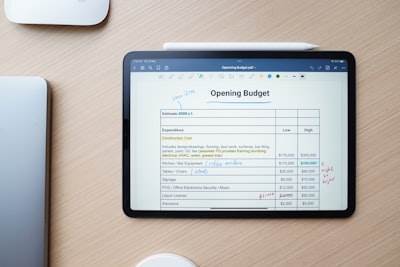
In recent years, invoice management software has stopped being a simple digital record of documents. It has become a strategic platform where accounting data, supplier relationships, approval flows, regulations and operational risks converge. The question of whether it can drive continuous improvement has a nuanced answer: yes, as long as it is conceived as a learning system, not as a static processing machine. Continuous improvement does not depend only on the tool, but on the organization's ability to read the information that the tool generates and turn it into changes.
An invoice contains much more information than an amount and a date. It includes product data, payment terms, currencies, taxes, cost allocations and delivery deadlines. Every anomaly in that data set is a signal: a supplier billing late, a price that does not match the purchase order, a duplicate charge, an approval that takes too long. A good invoice management system not only detects the signal, but classifies it and puts it in context. That context is the starting point for continuous improvement.
Invoice software can, for example, compare each invoice with the purchase order and the contract, establish automatic controls and flag exceptions. The important thing is that those exceptions are recorded with their reason and frequency. If the organization notices that 20% of invoices arrive without a purchase order reference, it can redesign the intake form or strengthen communication with suppliers. Without that structured record, improvement is anecdotal.
For this logic to work, technology must be flexible. Standard e-invoicing products cover many cases, but in companies with heterogeneous processes or regulated sectors they are often insufficient. That is why it makes sense to opt for custom software applications that integrate invoicing with ERP, CRM, contracts and supplier portals. A custom application allows you to model your own workflows, adapt approval policies and evolve without relying on the limitations of commercial software.
Architecture decisions also condition the capacity for improvement. Working on AWS or Azure cloud provides a balance between scalability, availability and security. The invoicing system can grow with the company, process month-end peaks and facilitate access from different locations, while always maintaining a complete audit trail. The cloud also makes it easier to integrate analytics and AI tools without large initial investments.
The other pillar is cybersecurity. A poorly protected invoicing process is a recurring target for CEO fraud, transfer manipulation and leakage of financial information. Continuous improvement cannot be built on unreliable data. You have to guarantee document integrity, user authentication and traceability of every change. With a solid cybersecurity strategy, the organization can lay the foundations to automate with confidence.
Artificial intelligence and AI agents add a layer that accelerates the improvement cycle. An AI model can extract data from PDF invoices, detect error patterns and suggest accounting classifications. An AI agent can interact with the team, resolve questions about the status of an invoice and propose the next action when an approval is stuck. The key is that these capabilities do not work in isolation: they must feed the indicators and rules that allow the process to improve.
Visibility is the next layer. With Business Intelligence and Power BI, the finance department can have real-time dashboards showing average processing time, automation rate, cost per invoice and age of accounts payable. These indicators are not simple tables; they are the objective basis for prioritizing initiatives. If approval time is high, the team can investigate whether the problem is lack of delegation, notifications or workload. Continuous improvement needs data, and Power BI turns it into actionable knowledge.
The improvement cycle can rely on methodologies such as Kaizen and PDCA. The process begins with observing data and defining an objective. Then a bounded change is introduced, for example, modifying the automatic approval threshold or redesigning the invoice intake form. The result is measured for several weeks and, if positive, it is extended to the entire organization. This method requires the software to allow rules to be configured without constantly intervening in the code, or for the technical team to adapt them quickly.
An underestimated aspect is people's participation. Continuous improvement is not only about algorithms. The employees who manage invoices every day know the real frictions: a confusing supplier portal, an obsolete approval policy, a badly coded cost center. The software can include an idea module where workers propose improvements, with their rationale and estimated impact. When a suggestion is implemented, the system must record who proposed it, what was done and what effect it had. This reinforces a learning culture.
Speaking of impact, it is also necessary to document financial impact. Saying that the process has improved is not enough; it must be quantified. The software can calculate savings in labor hours, reduction of lost discounts, decrease in accounting errors and the benefit of paying critical suppliers earlier. This information is key to justifying new investments in automation and to maintaining management commitment.
In this context, Q2BSTUDIO, as a software and technology development company, offers a comprehensive vision. It is not just about installing a document management system; it is about designing a platform that connects invoicing with the rest of the systems and incorporates artificial intelligence, cloud, cybersecurity and analytics. Q2BSTUDIO develops custom applications, implements AI agents to automate tasks, secures access, deploys services on AWS or Azure and builds dashboards in Power BI. The goal is to turn invoice software into a driver of continuous improvement, not a data repository.
In addition, it is important to understand that continuous improvement is a recurring project. Once the system is in production, key indicators must be periodically reviewed, compared with previous quarters, and decisions made about which experiment to launch. Real-time dashboards and automated alerts help detect deviations before they become problems. For example, if the cost per invoice rises for two consecutive months, the system can issue an alert and open an analysis task.
The use case is broad: from an SME that wants to eliminate manual tasks to a multinational that needs to harmonize its subsidiaries. In all cases, the premise is the same: invoice management software should not be limited to digitizing the process. It must be a source of operational knowledge, a channel for implementing improvements and a tool for cultural transformation. Technology provides the mechanism, but the innovation is decided by the people who interpret the data and act.
So, can invoice management software drive continuous improvement? Yes, as long as it is integrated with the company's digital ecosystem, supported by reliable data, accompanied by change methodologies and linked to clear objectives. Organizations that understand this achieve more than efficiency: they build a culture capable of learning from every invoice, every exception and every error. That culture is, in itself, continuous improvement.