What should I look for in an invoice management software provider? This question goes far beyond comparing feature lists. An invoice management solution affects treasury, supplier relationships, internal audit, and the workload of the finance team. For that reason, the decision should combine technical, strategic, and operational criteria.
Many companies make the mistake of choosing a tool only because of its interface or license price. Invoice management is a cross-functional process: purchasing, accounting, financial management and, often, the people responsible for approving expenses are all involved. A reliable provider must understand that context and propose a solution that fits the actual way the organization works.
The first dimension to analyze is functional scope. It is not enough to digitize PDFs or register electronic invoices. A good platform must accompany each invoice from receipt to posting: data extraction, validation against purchase orders or contracts, approval flows, exception handling, and transfer to the accounting system or ERP. The provider must explain how it handles each of these steps and what happens when data is incomplete.
The second dimension is technical architecture. Closed solutions tend to become obsolete when business processes change. A provider with custom software development capabilities can adapt workflows, screens, integrations, and validation rules without forcing a platform change. That flexibility is especially valuable when an organization wants to stand out through operational efficiency rather than use the same software as everyone else.
The third dimension is artificial intelligence. AI has transformed invoice processing: this is no longer simple optical recognition, but models capable of learning from each document, detecting anomalies, and classifying expenses. In addition, AI agents can handle repetitive tasks, such as requesting a missing field, checking an expense policy, or sending internal reminders. A good provider must know how to integrate these components sensibly and explain to what extent the machine decides or recommends.
The fourth dimension is infrastructure. Invoices contain sensitive information that must be available to the teams that need it, but also protected. A modern platform is often deployed on AWS/Azure cloud, allowing processing to scale during month-end peaks and ensuring service continuity. The question is not only whether the provider uses the cloud, but how it manages backups, data residency, and disaster recovery.
Cybersecurity is the fifth dimension and cannot be an afterthought. Invoice software is a gateway to the organization: if an attacker manages to manipulate an invoice or intercept a communication, they could change payments and compromise bank accounts. The provider must demonstrate its security framework, access management, data encryption, and penetration testing approach. It should also align with regulations such as GDPR or specific industry rules.
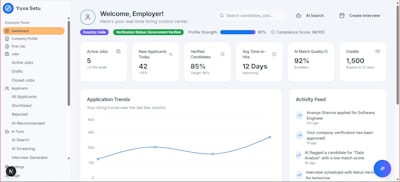
The sixth dimension is visibility. Once invoices are digitized and approved, they need to become useful information for management. This is where analytics comes in: a dashboard with metrics for average payment times, invoice aging, bottlenecks, and cash-flow forecasting. A partner with experience in Business Intelligence with Power BI can build reports that connect invoicing with the rest of financial data, avoiding scattered spreadsheets and inconsistent criteria.
These six technical dimensions must be combined with an assessment of the provider as a partner. Delivery methodology matters: how are requirements gathered? How are tests run? What communication channels are used? What happens if scope changes? A provider with experience in similar industries and a multidisciplinary team inspires more confidence than one that only shows an attractive product.
Q2BSTUDIO, a software development and technology company, approaches invoice management from this comprehensive perspective. Its team combines custom software engineering, process automation, artificial intelligence, AWS/Azure cloud, cybersecurity, and Business Intelligence. Instead of imposing a generic tool, it analyzes the real process, identifies inefficiencies, and builds a solution that integrates with the ERP and with the tools the company already uses.
In practice, a project of this nature should begin with a quick diagnostic: invoice volume, entry channels, error types, approval times, source and destination systems, and audit requirements. With that data, the provider can size the solution and offer a roadmap that avoids unnecessary downtime. Metrics should be defined from the start: fewer administrative hours, lower error rates, faster approval cycles, and effective exception control.
Be wary of offers that promise immediate installation with no adjustments. Invoice management is not just a software problem; it is a process change that affects people and work habits. A responsible provider will train users, document flows, and support the organization during the first few weeks. It should also be transparent about maintenance costs, upgrades, and support.
Another critical aspect is data migration and change management. Moving from a manual system or an old tool to a modern solution is not a simple technical change: it involves cleaning data, defining matching rules, communicating the new workflow to teams, and preparing a contingency plan. The provider must be able to lead that transition and measure progress during the first few weeks. It should also offer training tailored to each profile: the experience of an administrative assistant is not the same as that of a chief financial officer.
In short, what should I look for in an invoice management software provider? I look for a combination of functional knowledge, technological solidity, real security, analytical ability, and, above all, a collaborative relationship. The best solution is not the one with the most features, but the one that reduces friction and protects data. A partner that thinks long term will help turn invoice management from a routine chore into a competitive advantage.