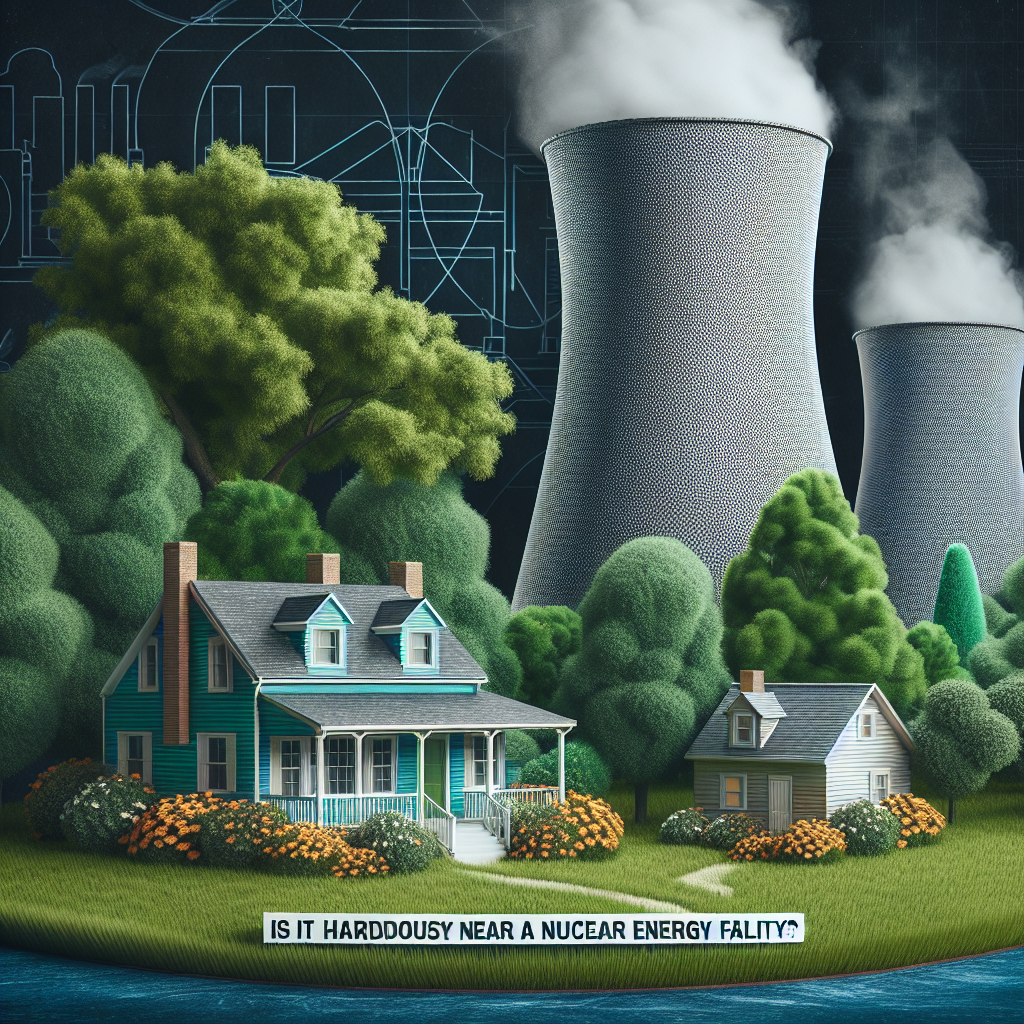
Nuclear power plants could be a solution to the energy crisis in the United States driven by the exponential growth of data centers. However, there are concerns about the safety of these facilities. Historical incidents like the Chornobyl disaster remain fresh in the collective memory, raising doubts about the potential health effects on those living near these stations.
In southwestern Michigan, Holtec International is working on reopening the Palisades nuclear power plant, with the expectation that it will be operational by October 2025. This would be the first facility of its kind to reopen in the country, setting a possible precedent for other regions. The plant was closed in 2022, but with a capacity of 800 megawatts, the state seeks to restart it to meet its clean energy goals.
Despite both state and federal financial backing, the Nuclear Regulatory Commission has stated that the reopening timeline is very demanding. In an inspection conducted in 2024, 1,000 damaged steam generator tubes were found, raising concerns among residents. While some experts consider the repairs feasible, the community fears that prioritizing short-term solutions could compromise long-term safety.
Historically, Michigan has relied heavily on nuclear energy, with plants producing up to 30% of the state's electricity. Although decommissioning projects have reduced that share to 24.9% in 2024, the rate remains above the national average of 19.1%. This level of dependence has raised concerns about the impact on health and the environment.
While events like Three Mile Island in 1979, Chornobyl in 1986, and Fukushima in 2011 have highlighted the risks of nuclear energy, the reality is that nuclear accidents are rare. In fact, only one has occurred on U.S. soil. Additionally, this form of energy is significantly safer than the gas and oil industry. Many states are considering reopening closed plants to meet the growing demand for electricity, driven by the rise of cloud computing and artificial intelligence.
The debate over nuclear energy has gained importance due to the age of operating plants. Most exceed forty years of operation, and although some have been shut down, the United States remains the country with the most active reactors in the world. However, with the increase in data centers, current capacity may not be sufficient, forcing a decision between building new stations or reopening existing ones.
The cost and construction time of new facilities are key factors in this discussion. The Vogtle nuclear plant, completed in 2024, arrived seven years late and exceeded its budget by approximately $17 billion. In this context, reopening decommissioned plants appears to be the most economically viable option.
Another relevant aspect is the management of nuclear waste, a radioactive byproduct generated during electricity production in reactors. To date, the United States has accumulated approximately 90,000 metric tons of this waste. Although strict storage protocols currently exist, unsafe methods were used in the past, such as dumping into the ocean.
Holtec has also been involved in controversial proposals, such as its request to dump 1.1 million gallons of radioactive wastewater into Cape Cod Bay. Although they argued that the water would be pre-treated, studies indicated that radiation would remain in the environment for at least a month, leading to opposition from the local community and the rejection of the request.
Living near a nuclear power plant carries risks. While the fear of a catastrophic accident is valid, the risk of radiation exposure is a more frequent concern. Different studies have found a relationship between proximity to these facilities and an increased risk of cancer, with a 9% increase in the likelihood of developing leukemia and a 17% increase in thyroid cancer in people living within 18.5 miles of a plant.
Additionally, advances in digitalization can bring additional risks. With the increase in cyberattacks on critical infrastructure, nuclear plants are not exempt from this type of threat. In 2022, the U.S. Department of Justice revealed an espionage attempt by Russian agents on an administrative network at a plant in Kansas. Although they did not manage to directly manipulate the control systems, they demonstrated that it is possible to access these environments.
Faced with these challenges, a possible solution is the creation of wider buffer zones around nuclear facilities to reduce radiation exposure. Studies suggest that those living within an 18.5-mile radius of these plants face greater health risks, so establishing safety perimeters could mitigate some of these concerns.
At Q2BSTUDIO, we understand the importance of technology in modernizing critical infrastructure such as nuclear plants. As a company specialized in development and technological services, we contribute to optimizing secure and efficient digital solutions for the energy industry. Our priority is to offer innovation with the highest security, ensuring that digital processes reduce risks and facilitate the management of these strategic facilities.