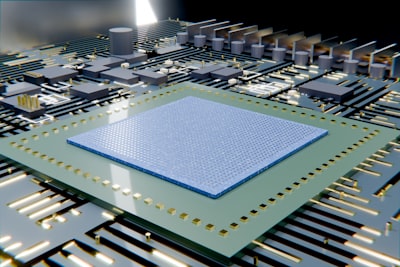
The DRAM memory sector faces one of the most emphatic predictions in recent years. Simon Chen, president of ADATA, has stated that the shortage of DRAM chips will last at least a decade, while dismissing the existence of a bubble in the artificial intelligence market. These statements, made during a recent interview, have sparked intense debate among analysts, manufacturers, and technology companies. To understand the scope of this forecast, it is worth analyzing the underlying factors shaping semiconductor supply and demand.
The DRAM shortage is not a new phenomenon, but the duration Chen predicts is surprising. Traditionally, boom-and-bust cycles in this market last between two and four years. However, the convergence of multiple trends —expansion of data centers, rise of generative AI, growth of the Internet of Things, and vehicle electrification— is altering historical patterns. According to Chen, structural demand will far outpace the capacity expansion of foundries, which require multi-billion-dollar investments and years to bring new production lines online. 'There is no AI bubble,' he says, referring to the fact that the sector's growth is backed by real use cases and not financial speculation.
From a technical perspective, DRAM manufacturing is one of the most complex processes in the semiconductor industry. Wafers require extreme ultraviolet lithography (EUV) and extreme quality control. As nodes advance to 10 nanometers and below, yields become harder to improve. At the same time, demand from AI servers, which need large amounts of high-bandwidth memory (HBM), has skyrocketed. Companies like NVIDIA, AMD, and Intel compete to secure supplies, adding pressure on DRAM manufacturers such as Samsung, SK Hynix, and Micron.
For companies that rely on technology, this situation poses a strategic challenge. Planning computing and storage capacity becomes critical. In this context, having custom software applications that optimize the use of memory resources and manage workloads efficiently can make a difference. A software development and technology company like Q2BSTUDIO offers tailored solutions that enable organizations to adapt to a resource-constrained environment without sacrificing performance.
Artificial intelligence, far from being a bubble, is consolidating as a driver of change. However, successful AI implementation requires solid infrastructure. Large language models and AI agents demand enormous amounts of memory and computation. Q2BSTUDIO develops AI agents that automate complex processes, from customer service to predictive analytics, helping companies extract value without needing excessive hardware. The key is to integrate these agents into modular and scalable systems, something only possible with a custom software approach.
Cybersecurity also emerges as a fundamental pillar. The more organizations depend on memory and cloud processing, the greater the risks of attacks. The DRAM shortage can lead to insecure practices, such as reusing obsolete components or purchasing products of dubious origin. Here, a professional cybersecurity service, like the one offered by Q2BSTUDIO, becomes an indispensable ally. Through audits, pentesting, and continuous monitoring, critical assets are protected in a tense supply chain environment.
The cloud, meanwhile, remains a key enabler. AWS and Azure cloud platforms allow scaling resources without acquiring own hardware, although they also depend on DRAM availability in data centers. Q2BSTUDIO has experience in cloud migration and optimization, helping companies choose the right combination of instances, storage, and networks to minimize the impact of shortages. Cloud AWS/Azure services like those offered can reduce dependence on local memory and better leverage shared resources.
In the business analytics field, business intelligence (BI) faces new challenges. With less memory available to process large data volumes, organizations need to optimize their data pipelines. BI / Power BI tools integrated with efficient data models allow obtaining insights without saturating systems. Q2BSTUDIO develops BI solutions that reduce memory footprint and speed up response times, even in hardware-constrained environments.
Process automation is another way to mitigate the shortage. By automating repetitive tasks, companies can free up computing and memory capacity for strategic uses. Q2BSTUDIO implements intelligent automation systems —from RPA to rule-based workflows— that run efficiently on limited infrastructure. All this helps companies maintain productivity without incurring exorbitant hardware acquisition costs.
Returning to the ADATA president's statement, one might ask whether the AI market is truly bubble-free. Some analysts point out that the valuation of companies like NVIDIA has grown exponentially, but Chen argues that underlying demand —model training, real-time inference, applications in healthcare and finance— is solid. What could happen, instead, is a reconfiguration of the value chain: memory manufacturers will benefit from the supply-demand tension, while system integrators and software developers will have to innovate to adapt.
In this scenario, partnering with a technology provider like Q2BSTUDIO becomes strategic. The company, specialized in software development, AI, cybersecurity, cloud, and BI, offers a holistic approach for organizations to navigate the DRAM shortage without losing competitiveness. Whether through custom applications that optimize memory usage, AI agents that automate critical processes, or cloud services that decentralize workloads, the key is adaptability. The prediction of a ten-year shortage may be dramatic, but with the right tools, companies can turn that limitation into a competitive advantage.
In conclusion, the ADATA president's vision brings a necessary debate about the future of digital infrastructure. While chip manufacturers struggle to expand capacity, the technology ecosystem must evolve toward a more efficient and resilient model. Investment in intelligent software, robust security, and flexible cloud is not an option but a necessity. And in that transformation, companies like Q2BSTUDIO are poised to play a leading role, offering the solutions the market demands in a context of limited resources but unlimited opportunities.