Short-term heart rate variability (HRV) prediction is emerging as a crucial tool for anticipating autonomic dysfunctions and adverse cardiac events. However, data from consumer wearables produce fragmented, artifact-laden HRV signals that challenge traditional forecasting approaches. In this context, time series foundation models (TSFMs) appear as a powerful alternative, as demonstrated by a recent study on real data from 49 healthy individuals. This article provides an in-depth analysis of the findings, techniques, and implications for developing advanced technological solutions, connecting with the services that companies like Q2BSTUDIO offer in the fields of custom software, artificial intelligence, and cybersecurity.
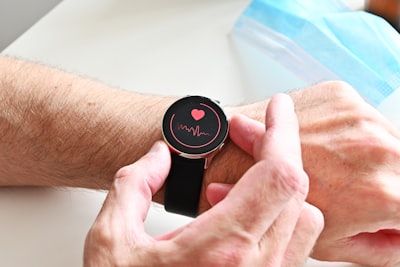
HRV is a key biomarker reflecting the balance between the sympathetic and parasympathetic nervous systems. Continuous monitoring via wearable devices such as smartwatches or activity bands enables early anomaly detection. Nevertheless, data quality is highly variable: optical heart rate sensors suffer from motion artifacts, poor placement, or sweat, causing gaps and spurious values. The resulting fragmentation prevents classical methods like exponential smoothing or weighted moving average from providing reliable forecasts beyond a few minutes.
The study evaluated three TSFMs —TimesFM, Chronos, and MOIRAI— comparing them against traditional baselines (mean, exponential smoothing, exponentially weighted moving average) on real wearable data. To address fragmentation, the researchers designed a variability-preserving imputation method that combines linear interpolation with locally adaptive stochastic noise, retaining the physiological dynamics essential for accurate forecasting. Results showed that TSFMs outperformed all baselines without fine-tuning, achieving mean absolute scaled error (MASE) between 0.81 and 0.87 for both context lengths (32 and 64 time steps). Chronos and TimesFM led performance, while MOIRAI offered limited improvements over baselines. With forecast horizons up to two hours, these results establish a benchmark for TSFM performance on real-world data, highlighting domain-specific fine-tuning as a promising direction for clinical deployment.
The ability to anticipate HRV changes two hours in advance has undeniable clinical value: it allows physicians to intervene before an adverse event such as arrhythmia or syncope occurs. However, moving these models into production requires a robust technological infrastructure. This is where custom software plays a fundamental role. Standard solutions rarely adapt to the specific needs of wearable data integration, real-time processing, and result visualization. A personalized platform must ingest continuous data streams, apply cleaning algorithms like the imputation method mentioned, run foundation models, and present predictions in intuitive clinical interfaces.
Artificial intelligence is the engine of these systems. TSFMs are just the tip of the iceberg: AI agents can handle continuous monitoring, anomaly detection, and early alert generation. For instance, an agent trained to recognize precursor patterns of bradycardia or tachycardia could notify the clinician minutes before symptoms manifest. Moreover, incorporating reinforcement learning techniques could dynamically optimize alarm thresholds according to each patient's profile.
Cybersecurity is another indispensable pillar. Health data is particularly sensitive and subject to regulations such as GDPR or HIPAA. Any platform handling HRV and other physiological metrics must implement end-to-end encryption, role-based access control, and periodic audits. Companies developing solutions in this field, like Q2BSTUDIO, integrate cybersecurity practices from the design stage, ensuring patient data remains protected both at rest and in transit.
Scalability is yet another challenge. Wearables can generate terabytes of data daily across a large population. Hosting and processing these volumes requires elastic cloud infrastructure, whether AWS or Azure. Cloud services enable serverless data pipelines, storage of time series in optimized databases (e.g., InfluxDB or TimescaleDB), and execution of AI models on demand GPUs. Q2BSTUDIO offers migration and optimization services on AWS/Azure cloud, ensuring applications benefit from high availability and auto-scaling.
Analyzing predictive results also benefits from Business Intelligence tools. Through interactive dashboards built with Power BI, clinical teams can visualize HRV trends, compare predictions with actual values, and detect deviations. Integrating Business Intelligence with Power BI into the platform enables data-driven decision-making agilely. For example, a physician could see on a single panel the evolution of patients' HRV, alerts generated by AI agents, and intervention recommendations.
Returning to the study, the fact that TSFMs work without fine-tuning is remarkable, but performance would improve with domain adaptation. Fine-tuning on labeled clinical data could further reduce MASE and personalize models for specific populations (e.g., heart failure patients or diabetics). This requires MLOps platforms that manage the model lifecycle: from training and validation to deployment and monitoring. Q2BSTUDIO develops process automation that facilitates these tasks, ensuring models are updated with new data without manual intervention.
In conclusion, zero-shot HRV prediction from wearables represents a significant advance in preventive medicine. Time series foundation models provide a solid foundation, but their real-world implementation requires a software ecosystem integrating AI, cybersecurity, cloud, and BI. Companies like Q2BSTUDIO are positioned to build these custom solutions, combining technical expertise with deep clinical domain knowledge. The combination of advanced models with robust infrastructure can transform wearable data into actionable clinical alerts, improving patients' quality of life and reducing hospital burden.