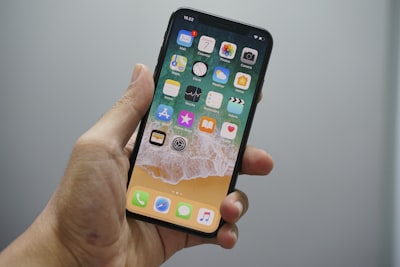
With an eye on the major evolution promised by iOS 27, Apple has released an interim update that, though modest in scope, contains two strategic novelties: a silent preparation for Siri's artificial intelligence and a new alert about the blocked contacts limit. iOS 26.6 is not the revolution many expect, but it is a necessary gear for the ecosystem to run smoothly when the main version arrives. To understand its true impact, we must analyze not only what is visible but also what happens behind the scenes.
The first feature of iOS 26.6 is, paradoxically, invisible to most users. Upon installing the update, the iPhone internally optimizes the Spotlight index, a process that prepares the device for the new search system that will support Siri AI in iOS 27. This optimization is not a mere performance patch; it is an internal restructuring that allows AI algorithms to access local data faster and more efficiently. Without this preparation, those who jump directly from iOS 26.5.2 to iOS 27 could experience several days of sluggish responses from the assistant until the index reorganizes itself. By advancing this task, Apple once again demonstrates that user experience is at the core of its decisions.
From a technical perspective, this maneuver has interesting implications. The fact that the Spotlight index needs a prior update suggests that iOS 27's new search engine is significantly different from the current one. It is not just an incremental improvement but an architectural change that likely leverages more advanced language models and machine learning. For companies developing custom software, this move is a warning: integration with the operating system's native AI capabilities will become increasingly demanding. Therefore, having a technology partner who understands these transitions, such as Q2BSTUDIO, is crucial to ensure corporate solutions remain compatible and efficient.
The second novelty is more visible, although it affects a small group of users. iOS 26.6 introduces an alert that informs when the limit of blocked contacts has been reached. The exact number is not officially documented, but anecdotal evidence suggests it varies between 5,000 and 20,000, depending on usage profile. For most, this limit is irrelevant; however, in corporate environments or for people exposed to mass phone harassment, this restriction can become a problem. The alert redirects to Settings to manage the list—a reminder that even in the most polished systems, technical boundaries exist. This type of seemingly minor feature defines the maturity of an operating system and demonstrates Apple's sensitivity to extreme use cases.
Beyond the specific features, iOS 26.6 invites us to reflect on Apple's strategy with artificial intelligence. The company is laying the groundwork for Siri AI to become not just a voice assistant but a true AI agent capable of anticipating user needs. This involves a profound reengineering of local data handling, privacy, and integration with cloud services. In this context, AI ceases to be an isolated functionality and becomes the core of the mobile experience. Companies wanting to leverage these capabilities will need not only to update their apps but also to rethink their system architecture—something Q2BSTUDIO offers expertise in, both in cloud AWS/Azure and Business Intelligence with Power BI.
Cybersecurity also plays a relevant role in this update. Apple's decision to limit blocked contacts is a security measure that prevents system database saturation, but it also raises questions about how to manage large-scale corporate block lists. For companies handling sensitive data, cybersecurity is not an add-on but a fundamental pillar. Q2BSTUDIO integrates pentesting and data protection practices into its projects, ensuring custom solutions are not only functional but also robust against threats. With the arrival of AI agents, the attack surface expands, and early preparation like iOS 26.6 is just the first step.
In the realm of automation and business intelligence, this update also leaves lessons. The optimization of the Spotlight index can be compared to data indexing processes in platforms like Power BI, where query speed depends on a correct prior structure. Q2BSTUDIO helps companies design data pipelines that minimize load times and maximize report accuracy—an approach aligned with Apple's philosophy: prepare the ground before launching major changes. The transition to iOS 27 will be a testing ground for many organizations, and those that have adopted modernization practices early will benefit.
Finally, we cannot overlook the role of AI agents in this evolution. Although Siri AI will only be available on iPhone 15 Pro and later, the preparation in iOS 26.6 indicates that Apple plans to extend similar capabilities to more devices in the future. AI agents are software capable of acting autonomously, performing tasks like filtering notifications, managing contacts, or even executing complex workflows. For businesses, developing these agents requires deep knowledge of the underlying infrastructure—something Q2BSTUDIO masters both in cloud and cross-platform application development. The combination of process automation, AI, and cloud will shape the next generation of corporate tools.
In summary, iOS 26.6 is much more than a simple maintenance update. It is the prelude to a new era where artificial intelligence will cease to be a feature and become the operating system itself. Companies that want to stay ahead must start preparing now, reviewing their technology infrastructure and allying with experts who can guide them. Q2BSTUDIO offers precisely that: a comprehensive perspective covering everything from custom software development to security and cloud, including business intelligence and automation. While Apple fine-tunes the details of iOS 27, the time to act is imminent.