Robust trajectory optimization with saturation in reusable launch vehicles represents one of the most complex challenges in modern aerospace engineering. During high-speed, high-angle-of-attack maneuvers such as the flip during reentry or powered landing, nonlinear dynamics, aerodynamic uncertainties, and actuator saturation create extreme conditions that conventional trajectory planning methods often cannot handle efficiently. In this context, specialized software development and the application of artificial intelligence become key tools to ensure mission safety and efficiency.
The core problem lies in combining precise control with physical constraints: actuators have torque, angle, and speed limits that cannot be exceeded without compromising vehicle integrity. Moreover, uncertainties in aerodynamic coefficients and atmospheric conditions require the optimizer to anticipate and mitigate deviations. Traditionally, successive convexification methods are used to approximate the nonlinear problem, but they do not directly integrate saturation or uncertainty evolution. A more advanced approach uses differentiable particle-based simulations, where uncertainty is represented by Lagrangian ensembles and the control policy is optimized end-to-end through backpropagation. This methodology allows the system to decide, for example, to sacrifice spatial tracking accuracy in exchange for maintaining a control margin against disturbances, thus achieving a robust, constraint-aware solution.
Implementing this kind of optimization in real environments requires flexible and scalable software infrastructure. This is where companies like Q2BSTUDIO offer custom software applications capable of integrating dynamic models, optimization algorithms, and Monte Carlo simulations within a single ecosystem. For instance, a robust guidance system can benefit from combining AWS or Azure cloud to run thousands of scenarios in parallel, while an AI agent, trained on the results, can adjust the control policy in real time. Cybersecurity also plays a critical role: any communication between the vehicle and ground station must be protected against attacks, and telemetry data require continuous analysis through BI/Power BI solutions to identify patterns of actuator degradation.
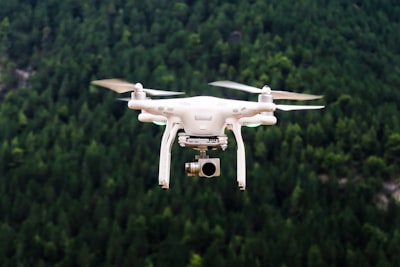
The differentiable particle approach is not only applicable to the aerospace context. In general industry, robust optimization with saturation constraints appears in robotics, autonomous vehicles, and process control systems. A robotic arm moving a heavy load with motor torque limits, or a drone operating in unpredictable winds, face similar problems. The key is to design algorithms that understand nonlinearities and uncertainties from the start, rather than treating them as afterthought corrections.
Artificial intelligence, especially reinforcement learning-based agents, can complement these methods. An AI agent can learn a control policy that, under certain conditions, reduces maneuver speed to avoid saturation, while another agent optimizes the nominal trajectory. Integrating both requires modular and customizable software architecture, exactly the kind of AI solutions developed at Q2BSTUDIO. Additionally, system health monitoring via Power BI dashboards allows engineers to visualize in real time the control margins and uncertainty evolution, facilitating strategic decision-making.
In practical implementation, robust optimization with saturation benefits from cloud computing. Platforms like AWS and Azure offer distributed computing services that enable large-scale particle simulations. Data pipelines can be automated with orchestration tools, and results stored in databases optimized for fast queries. Q2BSTUDIO, with its expertise in cloud AWS/Azure, helps design these architectures, ensuring scalability and fault tolerance. Likewise, cybersecurity is integrated from the design phase: encryption of data in transit and at rest, multi-factor authentication, and periodic audits, all based on industry best practices.
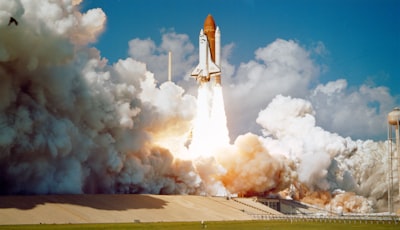
A concrete use case could be the development of a trajectory planner for a reusable launch vehicle. The software must be able to compute a control sequence that takes the rocket from low orbit to a landing zone, considering crosswinds, atmospheric density variations, and limits on fin and engine actuators. With a robust optimization approach, the system generates not only a nominal trajectory but also a feedback policy that adapts to deviations. Simulating thousands of particles allows evaluating the probability of success and tuning design parameters. This level of sophistication is only possible thanks to a multidisciplinary team combining flight dynamics, numerical optimization, and software development.
Q2BSTUDIO positions itself as a strategic technology partner in this field. Its custom software offering ranges from high-fidelity simulators to the implementation of artificial intelligence systems for adaptive control. Additionally, the company provides cybersecurity services to protect communications and critical data, as well as Business Intelligence solutions to analyze mission performance. Integration with cloud AWS/Azure ensures that these systems can scale according to project needs, whether for laboratory simulation or real-time mission.
In conclusion, robust trajectory optimization with saturation is a field where aerospace engineering and advanced computing converge. The ability to model uncertainties, respect physical limits, and make real-time decisions is fundamental to the success of reusable vehicles. Facing these challenges with custom software development and experts in AI, cloud, and cybersecurity—like those at Q2BSTUDIO—makes the difference between a theoretical design and a reliable operational solution. The future of space flight lies in systems that learn, adapt, and communicate securely, and that starts with robust and well-optimized code.