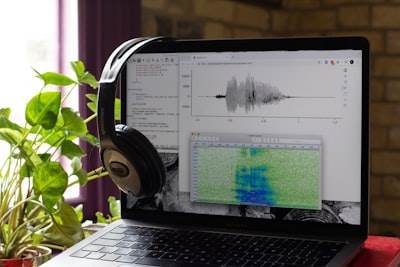
Multimodal understanding has advanced rapidly in recent years, but effectively integrating auditory perception with visual cues remains a significant technical challenge. Current models often treat audio as a secondary channel, losing valuable semantic information that could improve critical applications such as intelligent video surveillance, assistive technology for people with disabilities, or industrial process automation. In this context, the development of decoupled datasets —like the concept behind AVDC— opens new possibilities by allowing systems to learn separately and jointly visual, auditory signals and their interaction. However, to achieve industrial-level robustness, data alone is not enough: a software architecture that turns these advances into real solutions is needed.
At Q2BSTUDIO, we understand that true innovation happens when research is transformed into tangible products. That is why we combine our expertise in custom software development with cutting-edge artificial intelligence techniques to create systems capable of simultaneously processing images, sounds, and text. For example, in manufacturing environments, an assistant with robust auditory perception can detect acoustic anomalies in machinery while analyzing real-time video, reducing unplanned downtime. This not only improves efficiency but also strengthens cybersecurity by identifying threats in communications or critical environments.
To achieve this level of integration, automated annotation pipelines like the one proposed in the AVDC dataset are essential. They generate triplets of descriptions: visual-only, audio-only, and joint. This structure allows the complexity of multimodality to be broken down into manageable components. At Q2BSTUDIO, we apply similar principles in our AI projects, where we train models with decoupled data and later fuse representations in a final reasoning layer. The result are virtual assistants that not only 'see' but also 'hear' and 'understand' the full context, improving decision-making on cloud platforms like AWS or Azure.
The scalability of these systems heavily depends on the underlying infrastructure. Therefore, at Q2BSTUDIO we offer AWS/Azure cloud services to deploy training and inference pipelines that handle large volumes of audiovisual data. Additionally, our BI with Power BI solutions allow visualizing multimodal model performance metrics, facilitating continuous monitoring and optimization. Combining these capabilities turns advanced multimodal understanding into a strategic tool for companies seeking to automate complex processes.
A critical aspect of such systems is security. Audiovisual data can contain sensitive information, and models must be trained with robust privacy protocols. Cybersecurity becomes a fundamental pillar, from dataset encryption to inference API protection. At Q2BSTUDIO, we integrate cybersecurity and pentesting practices to ensure every deployment meets the highest standards. Thus, companies can adopt these technologies without exposing their corporate information.
The future of multimodal perception lies in models that not only process signals but also reason about them. Chain-of-Thought (CoT) approaches applied to audiovisual question answering, as inspired by datasets like AVDC-QA-CoT, enable systems to explain their decisions step by step. This is especially valuable in regulated environments where traceability is mandatory. At Q2BSTUDIO, we develop AI agents that incorporate these reasoning chains, improving transparency and trust in automated decisions.
In summary, multimodal understanding with robust auditory perception is not just a promising research line, but an achievable reality when combined with a solid development ecosystem. Companies like Q2BSTUDIO offer the technical expertise needed to transform advanced datasets into operational, scalable, and secure applications. From automatic annotation to cloud deployment, every step can be optimized to build systems that understand the world with all senses.