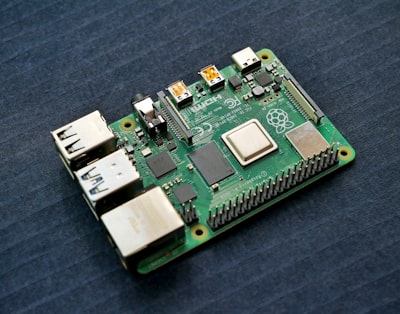
The Raspberry Pi has long been the emblem of affordable and versatile computing. However, price surges and component shortages have turned older models into true gems for those who know how to squeeze them. With a few inexpensive and accessible upgrades, any old Raspberry Pi can become an automation server, an edge computing node, or even a development platform for custom software. At Q2BSTUDIO, as a software and technology development company, we know that well-utilized legacy hardware remains a strategic tool for prototyping business solutions without large investments. Below are five easy improvements that revive your old Raspberry Pi and prepare it for modern tasks such as artificial intelligence, cybersecurity, or cloud data analytics.
1. Replace the SD card with an SSD via USB 3.0 or SATAThe most common bottleneck on any Raspberry Pi is the microSD card. Its read/write speed and fragility against power outages drag down system performance. The most effective and simple solution is to connect an SSD via a USB 3.0 adapter or, on Pi 4 and 5 models, use the available SATA port with a proper cable. The change is radical: boot time drops from minutes to seconds, heavy applications load without pauses, and storage lifespan multiplies. At Q2BSTUDIO we use this setup for our AI edge solutions, where real-time response is critical. Additionally, by freeing I/O resources, the Raspberry can run Docker containers, lightweight databases, or automation scripts simultaneously without choking.
2. Install a lightweight and optimized operating systemThe official Raspberry Pi OS is feature-rich, but for devices with low RAM or old CPUs it is best to opt for minimal versions like Raspberry Pi OS Lite, DietPi, or Ubuntu Server without a graphical environment. By removing the desktop, memory is fully dedicated to useful processes: a web server, an AI agent, a cybersecurity sensor, or an AWS/Azure cloud client. For instance, with DietPi you can deploy in a few commands tools like Node-RED for automation, Grafana for metric visualization, or even an MQTT broker to communicate industrial sensors. In enterprise environments, this lightness allows the Raspberry to act as a gateway to cloud services, sending data to a data lake on AWS or Azure for later analysis with Power BI. At Q2BSTUDIO we integrate these minimal operating systems into our digital transformation projects, ensuring minimal resource consumption and high availability.
3. Add active cooling for safe overclockingOld Raspberry Pis do not dissipate heat well, and overheating causes throttling that reduces performance. A small 5V fan together with copper or aluminium heatsinks on the CPU and USB/Ethernet chip can make a difference. With proper cooling, it is possible to overclock the board stably: raise the CPU clock from 700 MHz to 1 GHz or more, depending on the model. This extra power is key for running more demanding workloads, such as inference processes with TensorFlow Lite for AI agents, real-time network traffic analysis for cybersecurity, or periodic report generation with Python scripts consuming remote API data. At Q2BSTUDIO we have verified that an overclocked and cooled Pi 3 can handle a pentesting test server (with tools like Nmap, Metasploit, or Wireshark) without issues, ideal for controlled security labs.
4. Configure the Raspberry as an automation and orchestration serverAn old Raspberry Pi is perfect for centralizing home or office automation through platforms like Home Assistant, OpenHAB, or Node-RED. By connecting temperature, humidity, motion, or magnetic contact sensors to the GPIO pins, you can automate lights, heating regulation, or alert sending. But the real potential comes from combining this automation with cloud services. For example, from Home Assistant you can trigger an AWS Lambda function or an Azure Function to update an inventory database or generate a Power BI dashboard with energy consumption trends. Additionally, AI agents can be integrated to analyze patterns and optimize resource usage. At Q2BSTUDIO we develop turnkey solutions that connect these devices with enterprise platforms, ensuring bidirectional synchronization and data governance. The Raspberry turns from a toy into an intelligent control center.
5. Leverage GPIOs for edge computing with artificial intelligenceThe general-purpose input/output (GPIO) pins on the Raspberry allow interaction with the physical world. With a CSI camera or an ultrasonic sensor, you can build computer vision systems, object detection, or sound classification using libraries such as TensorFlow Lite or OpenCV. These AI models run directly on the board, without sending data to the cloud, reducing latency and costs. For example, a Raspberry Pi 3 with a USB camera can identify products on an assembly line and send only alerts to a central dashboard. At Q2BSTUDIO we apply this approach in Industry 4.0 projects, where edge AI agents make decisions in milliseconds. Moreover, the board can act as a cybersecurity gateway, filtering suspicious traffic before it reaches the cloud. With the previous upgrades (SSD, cooling, lightweight OS), such workloads become fully viable.
In summary, an old Raspberry Pi is not a white elephant, but a development platform ready to be reused with minimal investment. Replacing the SD with an SSD, installing a lightweight OS, cooling, setting up automation, and exploiting GPIOs for AI are steps any hobbyist or professional can accomplish in an afternoon. At Q2BSTUDIO we know that technology does not become obsolete when applied wisely; that is why we offer consulting and development services to scale these prototypes to enterprise environments, whether with cloud AWS/Azure, advanced cybersecurity, or custom applications with artificial intelligence. Give your Raspberry Pi a second life and discover all it can still contribute.