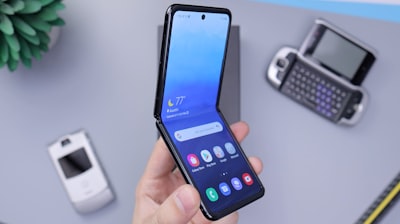
When I received the challenge from Dumb Co, I must admit I felt a mix of nostalgia and skepticism. The proposal was simple on the surface: replace my iPhone, that all-powerful device managing my digital life, with a hacked flip phone that promises the best of both worlds: the controlled limitations of an early 2000s terminal and the infinite connectivity of a modern smartphone. As a software engineer, my first reaction was to think about the technical complexity involved in syncing such a rudimentary device with today’s ecosystem. However, the experience not only forced me to rethink my relationship with technology but also reminded me of the importance of custom solutions when standard tools don’t fit.
Dumb Co’s flip phone is not an ordinary phone. It comes with modified firmware connecting via Bluetooth and a companion app to your smartphone. In theory, you can receive calls, read essential messages, and check the calendar without falling into the temptation of social media or work email. But theory and practice rarely align. The first thing I discovered is that syncing contacts and messages requires considerable development work: old protocols aren’t designed to interact with modern iOS or Android APIs. That’s where I started appreciating companies like Q2BSTUDIO, specialists in custom software development. A system like Dumb Co’s would need a personalized middleware to translate data between platforms, manage security, and prevent leaks. This is no trivial project, and it shows that even the most minimalist ideas require solid engineering.
Installing the hacked firmware also made me reflect on cybersecurity. A device open to modifications can become an attack vector if not properly audited. Dumb Co claims their system is secure, but who verifies the code? In the corporate world, unpatched vulnerabilities can paralyze operations. That’s why more companies outsource system reviews to professional teams. The cybersecurity and pentesting services offered by Q2BSTUDIO are essential to identify blind spots before malicious actors exploit them. In my case, the flip phone had barely any protection against man-in-the-middle attacks during Bluetooth synchronization—a flaw any security tester would spot in minutes.
Beyond security, the challenge led me to think about Artificial Intelligence as an ally to manage information overload. If Dumb Co incorporated an AI assistant capable of filtering notifications by priority, the device could offer a truly intelligent experience—not just a limited copy of a smartphone. Imagine an AI agent trained on your routines that decides which alert deserves to interrupt your day and which can wait. This idea isn’t science fiction; at Q2BSTUDIO they already develop custom AI agents for companies looking to automate workflow and communication management. Integrating that capability into a basic phone would be a qualitative leap.
Another technical aspect that caught my attention was cloud synchronization. To work without constant dependence on the main smartphone, Dumb Co uses AWS servers that store data temporarily and encrypted. Choosing the right cloud infrastructure is non-trivial: scalability, latency, and costs vary by provider. Many startups mistakenly pick a platform without assessing their real needs. Working with specialized cloud consultants in AWS and Azure helps optimize resources. For instance, Q2BSTUDIO offers cloud services that enable designing efficient architectures—something Dumb Co likely needs to scale its model.
Data management also made me think about Business Intelligence. During my experiment, I kept a manual log of every notification reaching the flip phone. When analyzing them, I saw patterns: most came from messaging apps, but also many calendar alerts that could have been consolidated. A BI system like Power BI could process those logs and provide dashboards to help Dumb Co understand how users interact with the device. In fact, Q2BSTUDIO implements BI solutions that transform raw data into strategic decisions. If Dumb Co applied analytics to sync patterns, it could refine product functionality to reduce unnecessary interruptions.
Process automation was another pillar of this experience. Setting up the flip phone required repetitive actions: pairing Bluetooth every so often, accepting permissions, checking that messages had synced. All that should be automatic. Automation not only saves time but reduces human error. In the corporate world, companies that adopt process automation achieve efficiencies that make a competitive difference. Q2BSTUDIO has an expert automation team that designs robust workflows—something Dumb Co could leverage to improve user experience for its hacked flip phone.
Back to the personal challenge: after two weeks using the device, I understood that true disconnection doesn’t depend on hardware, but on the decisions we make as users and developers. A minimalist phone can be a powerful tool if combined with a well-designed software ecosystem. But building that ecosystem requires multidisciplinary technical knowledge: from custom applications to artificial intelligence, cybersecurity, cloud, and BI. Companies like Q2BSTUDIO prove that it’s not necessary to reinvent the wheel, but rather to adapt existing technologies to specific problems.
In conclusion, Dumb Co’s challenge left me with a clear lesson: technology should serve our real needs, not the other way around. Whether it’s reducing distractions or optimizing business processes, the key lies in having technology partners who understand both the vision and the technical details. My hacked flip phone now rests in a drawer, but the learning about how to build smart, secure, and custom solutions remains alive.