In a business context where sustainability has shifted from an option to a requirement, small businesses face the difficult task of integrating environmental goals into their daily operations with limited resources. Technology, and specifically specialized software, stands as the key enabler to turn those goals into concrete, measurable, and reportable actions. However, adopting a generic off-the-shelf solution rarely fits the unique processes of an SME; that is why more businesses are opting to develop custom software that matches their exact needs and budget.
Environmental software for small businesses goes far beyond simple monitoring. It can orchestrate carbon reduction initiatives, track key performance indicators aligned with recognized frameworks such as GRI or SASB, manage recycling and energy efficiency projects, and generate automated reports for regulators and investors. The key is integration: a system that connects data on electricity consumption, transportation, waste, and production, providing a holistic view of environmental impact. Standard solutions often fall short in this regard, forcing companies to resort to spreadsheets and manual processes that consume time and are prone to errors.
Custom software solves this problem by allowing the exact modeling of the company's workflows. For example, a retail store can incorporate a module that calculates the carbon footprint of each product based on material sourcing, transportation, and packaging. This customization not only improves data accuracy but also facilitates auditing and regulatory compliance. Moreover, custom-built software can scale with the business, adding new modules without needing to replace the entire platform.
Artificial intelligence (AI) and AI agents add a layer of intelligence that transforms data into predictive and prescriptive information. Imagine a system that, using machine learning algorithms, identifies energy consumption patterns and suggests time adjustments to reduce electricity bills and emissions. AI agents can automate tasks such as waste sorting in a recycling plant or verification of environmental compliance, freeing staff time for higher-value activities. They can even act as virtual assistants answering employee queries about sustainability policies.
Cloud infrastructure — with providers like AWS or Azure — is the technological foundation that allows small businesses to access enterprise-level computing resources without large upfront investments. The cloud offers automatic scalability, meaning the software can grow from a handful of users to hundreds without performance issues. It also facilitates integration with other services, such as IoT sensors or third-party APIs, and ensures data availability at all times. However, the cloud also brings the need for robust cybersecurity. Environmental data — from emissions to recycling certificates — is sensitive information that must be protected against unauthorized access, leaks, or ransomware attacks. Well-designed software includes end-to-end encryption, multi-factor authentication, granular access controls, and regular security audits.
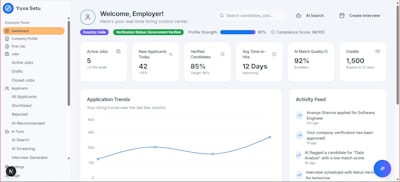
For data to be truly useful, it needs to be visualized clearly and actionably. Business Intelligence with Power BI tools allow the creation of interactive dashboards that display the company's environmental performance in real time. A manager can see the evolution of the carbon footprint, compare plants, detect anomalies, and make future projections. Power BI integrates easily with databases and APIs, becoming the control center of the sustainability strategy. Additionally, these reports can be exported in standard formats to meet the reporting requirements of investors and regulatory bodies.
Q2BSTUDIO, as a software and technology development company, accompanies small businesses throughout this process. Its team of experts analyzes current processes, identifies areas for improvement, and designs a solution that coherently integrates cloud, AI, cybersecurity, and BI. It is not about imposing a pre-fabricated platform but building a technological ecosystem tailored to each client. For example, an agri-food company can commission a system that monitors water consumption in crops via IoT sensors, stores data on AWS, applies AI models to predict irrigation needs, generates water footprint reports for certifications, and displays everything on a Power BI dashboard accessible from any device. All protected with best cybersecurity practices.
Software also enhances collaboration with partners and customers. Transparency portals allow suppliers, investors, and consumers to consult verifiable data on the company's environmental practices, generating trust and differentiation in the market. In sectors like fashion or electronics, where traceability is a decisive factor, a customized system can track the origin of each component and its environmental impact throughout the supply chain.
In conclusion, software has become the silent engine of sustainable transformation for small businesses. By combining custom applications, artificial intelligence, cloud, cybersecurity, and Business Intelligence, any SME can go from having environmental intentions to tangible and reportable results. The key is to choose a technology partner that understands both the technology and the particularities of the business. Q2BSTUDIO offers precisely that alliance, helping companies build their own path to sustainability with efficient, secure, and scalable solutions.