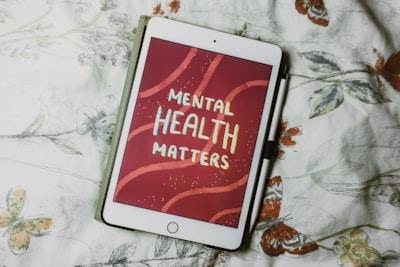
In today's digital ecosystem, mental health applications face a troubling paradox: while more users download these tools seeking relief, they abandon them faster. The data is stark: nearly 95% of those who install a mental health app stop using it by day 30. Major recognized platforms lose up to half their users within the first ten days. This retention crisis is not a simple marketing issue; it is a symptom that interface design is prioritizing visual trends over the real needs of people arriving in states of extreme vulnerability. From a technical and business perspective, building an effective mental health app requires a complete rethinking of the relationship between aesthetics, functionality, and empathy.
When a user opens a mental health app, they do not do so out of curiosity but out of need: anxiety, stress, exhaustion, or depression. In those moments, every interface element must reduce cognitive load, not increase it. Yet current trends — such as neobrutalism, hidden menus with non-standard gestures, or abstract icons — impose an unnecessary mental toll. A confusing gesture or a flashy animation becomes friction, and that friction is the reason many close the app forever. At Q2BSTUDIO, as a software and technology development company, we understand that design is not an ornament: it is the primary tool for building trust and sustainable retention. That is why, when approaching custom software projects for the health sector, we prioritize interfaces that adapt to the user's emotional state, not to the Dribbble trend catalog.
From a technical standpoint, the solution lies in integrating technologies that enable real-time personalization without adding complexity. For example, using AI and AI agents can analyze the user's mood through voice or text input and offer tailored coping practices. However, implementing this artificial intelligence requires a robust and secure architecture. This is where cloud AWS/Azure services become critical: they allow deploying scalable AI models, processing sensitive data with the highest cybersecurity standards, and ensuring availability even during usage spikes. Additionally, analyzing user interaction can feed BI/Power BI dashboards that inform about abandonment patterns, helping product teams iterate with real data.
One of the most common mistakes is transferring engagement mechanics from entertainment apps — streaks, aggressive notifications, gamified rewards — into the mental health context. What motivates in a productivity app can become pressure and guilt in a wellness tool. A user struggling with depression does not need a reminder that they broke a streak; they need a space that does not judge them. That is why at Q2BSTUDIO we design return systems based on short, compassionate cycles, such as three-day streaks that do not reset on failure, or notifications that remind the user the app is there for them, not the other way around.
Accessibility is another area where trends fail spectacularly. Low-contrast minimalism, gesture-only interactions, or dense animations exclude a significant portion of the population that most needs support: people with visual, motor, or cognitive disabilities. WCAG 2.2 guidelines are not optional; they are the ethical and technical floor for any serious application. In our custom software for the health sector, we incorporate universal design principles from the start, ensuring 4.5:1 contrast, touch targets of at least 24x24 pixels, and alternatives for every gesture. This is not only inclusive but improves the experience for all users, especially those with low cognitive capacity.
Navigational consistency is equally vital. A mental health app must be predictable: the user needs to know where each key tool is without having to relearn the interface every time they return. Trends that introduce novel navigation patterns — unique swipes, buttons that change location — generate fatigue and abandonment. In contrast, a stable information architecture, supported by recognizable icons and clear paths, builds trust. At Q2BSTUDIO we apply this principle through guided flows that reduce decision load: the user chooses from limited options and the app leads them step by step, like a cozy room where each object has a clear purpose.
The real business challenge is not to design a beautiful interface, but one that feels like a refuge. This means every visual and interaction decision must be evaluated under five key questions: Does it reduce cognitive load? Does it emotionally align with the user's state? Is it navigationally reliable? Does it respect accessibility? Does it invite use without coercion? In our experience, custom software that passes this filter achieves retention rates far above the industry average, because it turns technology into a quiet, constant support.
The underlying technology — AI, cybersecurity, cloud AWS/Azure, BI/Power BI — must work in the background to make the user experience seamless. Artificial intelligence can personalize content without overwhelming, cybersecurity protects sensitive data (such as emotions or diagnoses), the cloud guarantees scalability, and business analytics guide product evolution. But none of this matters if the interface remains a barrier instead of a bridge.
Ultimately, mental health applications cannot afford the luxury of following trends. The audience is too vulnerable and the consequences of abandonment are too high. At Q2BSTUDIO we bet on human-centered design, where technology serves the person, not the other way around. Building apps that truly help requires the courage to ignore what is trendy and listen to what the user needs in their worst moment. That is the real innovation.