Business continuity is one of the most critical concerns for small businesses, since any disruption — from a technical failure to a cyberattack — can lead to financial and reputational losses. Software for small businesses not only automates daily processes, but becomes the pillar that ensures operations keep running even under adverse conditions. In this article we explore how a well-designed technological strategy, supported by custom applications and cloud services, can guarantee the resilience of your SME.
When we talk about continuity, we do not only refer to having backups. Continuity involves a holistic approach that combines redundant infrastructure, disaster recovery plans, proactive monitoring, and an organizational culture prepared for the unexpected. Software acts as the nervous system that detects failures, executes automatic procedures, and maintains communication between teams. For example, a CRM system with real-time alerts can reassign tasks if a server goes down, while an artificial intelligence engine analyzes patterns to anticipate bottlenecks.
One of the fundamental elements is geographic redundancy. Hosting data and applications in multiple data centers, preferably with cloud AWS/Azure, allows traffic to be automatically redirected to another region if one fails. Small businesses often think this technology is only for large corporations, but providers like Q2BSTUDIO design modular solutions that fit an SME's budget and scale. The key lies in virtualization and hybrid environments, where software orchestrates failover without manual intervention.
Another pillar is recovery planning. Having replicated data is not enough; clear Runbooks specifying steps, responsible parties, and response times are necessary. Here automation comes into play: scripts that restore databases, restart services, or notify the support team. Process automation tools allow these tasks to be executed in seconds, minimizing downtime. Furthermore, integration with business continuity management systems (BCMS) ensures that the software does not operate in a silo, but rather forms part of a broader corporate plan.
Cybersecurity is inseparable from continuity. A cyberattack can paralyze an entire company, so software must include layers of protection: firewalls, encryption, multi-factor authentication, and intrusion detection. Q2BSTUDIO offers cybersecurity services that assess vulnerabilities and deploy proactive defenses. However, security is not static; it must be constantly updated with patches and threat analysis. Here AI agents can monitor network traffic, identify anomalous behavior, and block attacks in real time, acting as an autonomous guardian.
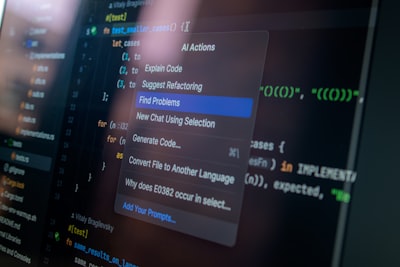
Artificial intelligence (AI) and machine learning are transforming business continuity. Predictive AI systems analyze failure history and usage patterns to predict when a server might collapse or when a database needs maintenance. This allows action before the incident occurs. Additionally, AI agents — virtual assistants that automate responses — can manage common incidents, freeing technical staff for strategic tasks. For example, an agent can restart a service, check logs, and escalate the problem if necessary, all without human intervention.
Another crucial aspect is visibility. Business Intelligence (BI) and tools like Power BI transform operational data into dashboards that show continuity status in real time. A small business owner can see metrics such as recovery time objective (RTO) and recovery point objective (RPO) directly on their phone. Q2BSTUDIO integrates BI solutions that consolidate information from different sources — CRM, ERP, monitoring systems — to provide a unified view. Thus, decisions are made with accurate data, not gut feelings.
Customization is another differentiating factor. Small businesses cannot afford generic software that does not fit their processes. Custom software can include specific modules for inventory management, invoicing, or regulatory compliance, all with built-in continuity capabilities. For instance, an application that replicates data in real time to a secondary instance in another region ensures that if the primary fails, the business keeps running with almost no data loss.
Training and culture also play an essential role. Software can include automatic drills that test continuity plans periodically, notifying employees and recording results. Q2BSTUDIO recommends establishing key performance indicators (KPIs) that evaluate the effectiveness of measures, such as uptime percentage or number of incidents resolved automatically. Documentation and Runbooks should be accessible from any device, preferably on a secure cloud.
In summary, software for small businesses is not just an operational tool, but a strategic asset for continuity. By combining redundancy, automation, cybersecurity, artificial intelligence, and data analytics, SMEs can achieve levels of resilience previously only available to large organizations. Q2BSTUDIO, with its focus on artificial intelligence and cloud solutions, enables every business — regardless of size — to design a robust technological ecosystem adapted to its needs and budget. Continuity is not a luxury; it is the foundation on which sustainable growth is built.