There is no single answer to the question of who benefits most from business software solutions. The greatest return on investment appears when technology stops being an isolated support and becomes the central nervous system of the organization. A well-designed platform connects departments, removes manual tasks and turns data into decisions; that is why benefits are distributed across the entire value chain. Even so, there are profiles and situations where the impact is more visible and measurable.
Organizations with fragmented critical processes, disconnected tools or reports built from spreadsheets are usually the ones that notice the difference most. For them, custom software is not a technological luxury but a way to close the gaps left by standard products. Growing companies that need to scale without multiplying errors also benefit, as do regulated companies that must demonstrate traceability and control. In these environments, business software reduces friction between business and technology.
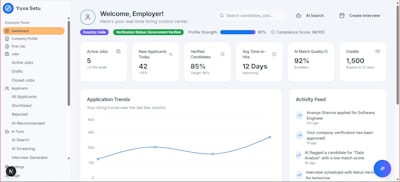
Executive teams are one of the groups that gain the most value. Thanks to dashboards based on BI and Power BI, they can see in real time the evolution of revenue, costs, productivity or risk. When those indicators are integrated with data sources consolidated in the AWS or Azure cloud, the view stops being historical and becomes predictive. The ability to anticipate trends, detect deviations and act before a problem grows is a competitive advantage that few generic tools offer.
Operations and project teams are also among those that benefit most, because they work with schedules, dependencies and deliverables. Process automation allows them to replace manual approvals, reassign tasks and resolve exceptions with clear business rules. In addition, AI agents can classify requests, generate summaries, predict bottlenecks and propose corrective actions. At Q2BSTUDIO we have seen how the combination of custom software and automation reduces cycle times almost immediately.
Customer-facing teams also gain enormous benefits. A CRM connected with the rest of operations allows sales, marketing and support to access a unique history, know the real status of each order or incident and provide consistent answers. AI adds personalization capacity: recommending products, writing communications or anticipating needs. Cybersecurity, meanwhile, is the foundation of trust; without data protection, no customer relationship is sustainable. A well-governed cloud architecture facilitates that balance between accessibility and security.
Data, IT and compliance teams find in these solutions a necessary ally. For them, moving from isolated systems to an integrated platform means governing information with clear policies, defining permissions, auditing access and guaranteeing data quality. Cybersecurity must be present from design: penetration testing, encryption, continuous monitoring and incident response. When the technology strategy includes cybersecurity from the start, the company not only protects its assets, but also makes audit work and regulatory compliance easier.
Another group that clearly benefits is commercial partners and suppliers. Collaboration portals, APIs and automated information exchanges allow the supply chain to work with less friction. Business software does not end at the company boundary; it can extend to distributors, manufacturers or final customers. That interconnection improves product traceability, reduces unnecessary stock and speeds up incident resolution.
Mid-sized companies that want to compete with large corporations also deserve a mention. Business software allows them to level the playing field: they can offer digital channels, personalized attention and advanced analytics without the need to build huge departments. A strategy based on custom applications, cloud integration and intelligent automation gives them the agility needed to react to market changes. In that sense, the benefit does not depend on the number of employees, but on the ambition to improve and the digital maturity of each organization.
Highly regulated and critical sectors tend to get the most out of it. Healthcare, banking, industry or energy need business software to guarantee interoperability, auditability and continuity. A small calculation error, a badly registered order or a security breach have significant economic and reputational consequences. That is why, instead of adapting a generic product, many organizations choose to build custom applications that reflect exactly their protocols and policies. That flexibility is especially valuable when there are unique processes that no standard tool solves.
Measuring success is another factor that determines who benefits. Organizations that define clear indicators before implementing a solution achieve faster and more sustainable results. It is not enough to install a tool; you have to observe how response times, customer satisfaction, team productivity or cost per process evolve. When metrics are shared in accessible dashboards, the dialogue between business and IT stops being subjective and relies on evidence. That measurement culture turns business software into a structural advantage.
Training and change management are equally decisive. A technically flawless solution can fail if users do not understand its value or do not receive adequate support. That is why teams that invest in onboarding, documentation and close support multiply adoption and reduce resistance. Technology does not work alone; it needs people who manage it, question it and improve it. When that cycle is activated, the whole organization benefits, not just one department.
Integration with the existing ecosystem is also key. Many companies already have an ERP, CRM or billing tools; the goal is not to replace them, but to connect them so that they share information securely. Custom software can act as an orchestrator, adapting data and business rules to real needs. This avoids duplicating efforts, reduces data-entry errors and takes advantage of the investment already made. This practical approach is one of the reasons why sustainable business software is usually a balance between standard and specific.
At Q2BSTUDIO we understand that the biggest beneficiary is not a specific profile but the organization that defines a clear map of stakeholders and needs. That is why we work with a methodology that combines business experience and technical criteria: we listen to executives, operations, IT and end users to design adoptable and secure solutions. Our focus is on custom software development, process automation, artificial intelligence, cybersecurity and deployment on AWS or Azure cloud. We also help build dashboards with Business Intelligence and Power BI, and integrate AI agents into daily workflows.
The final answer is that business software benefits most those who understand it as a strategic investment and not simply an expense. It also benefits those who put data at the center and prepare their teams to use it. Technology alone does not transform a company; process change, adoption of new tools and a willingness to measure results do. With the right technology partner, solutions become a real, measurable and sustainable advantage.