The definitive guide to understanding why an intranet for distributed teams with chat in Barcelona is a competitive factor in 2026. Remote and hybrid work has normalized a reality: teams no longer share an office, but they need to share context. A modern intranet is not a bulletin board; it is a platform that integrates conversations, knowledge and operations. For executives and IT managers, choosing the right solution demands a clear view of architecture, security and adoption.
In recent years, the market has evolved from simple messaging tools to digital workspaces where chat is connected to processes. Employees expect immediate answers, but they also need to retrieve a decision made months ago. The combination of persistent threads, semantic search and AI agents ensures that knowledge does not depend on anyone's memory.
The first challenge in implementing this kind of intranet is avoiding fragmentation. Many companies accumulate Slack, email, task managers, wikis and CRM without an integration layer. The result is a set of silos. A well-designed corporate intranet must act as an integration layer between applications, data and people. This is where custom software comes in: generic platforms are not enough; it is necessary to model the workflows and permissions of each organization. A custom software development approach allows the intranet to be adapted to real business processes, manage roles, integrate legacy systems and define a coherent user experience.
Second is cloud architecture. A platform for distributed teams must be accessible from anywhere, with high availability and disaster recovery. AWS/Azure cloud infrastructures are the usual foundation for this type of deployment, offering scalability, identity services and monitoring tools. Moreover, choosing a public cloud with data centers in Europe is key to complying with GDPR and the privacy expectations of Barcelona-based companies.
Cybersecurity is not an add-on. A corporate chat concentrates confidential conversations, contracts, customer information and intellectual property. If it is not properly protected, the intranet becomes an attack vector. Risk-based access, multi-factor authentication, encryption at rest and in transit, and periodic audits are essential. For companies handling sensitive data, a cybersecurity service that includes penetration testing and code review is a necessary investment.
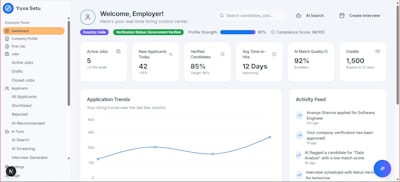
The business value of an intranet is measured not only by user activity, but also by impact on results. Integrating Business Intelligence and Power BI makes it possible to visualize adoption metrics, resolution times, internal satisfaction or cost per search query. Dashboards help steering committees know whether the platform is generating return on investment or whether the deployment needs to be redesigned.
AI and AI agents represent the qualitative leap of 2026. This is not about adding a generic chatbot. A good intranet system with chat must include assistants that summarize threads, answer questions from the internal knowledge base, identify experts in the organization or automate repetitive tasks. These agents integrate with the APIs of the rest of the tools and act with defined permissions, under human supervision. Q2BSTUDIO, for example, builds these solutions by combining artificial intelligence with cloud architectures and process automation.
An intranet for distributed teams with chat also has to address employee experience. The learning curve is critical. If users do not understand where each document lives or why they receive notifications, they will abandon the platform. Adoption is achieved with simple interfaces, assistants by area, and clear governance that avoids digital fatigue.
The Barcelona context adds nuances. Barcelona is a European hub for startups, scaleups and international corporations. Talent mobility, working with teams in different time zones and the need to manage projects in several languages make the intranet multilingual and culturally neutral. A local solution can adapt better to the dynamics of Catalan and Spanish companies.
When evaluating a provider, companies must look beyond the demo. It is advisable to ask about reference architecture, service guarantee model, backup policies and software lifecycle. It is also important to know whether the provider has in-house development capability or is limited to configuring third-party products.
Q2BSTUDIO is a software development and technology company with presence in Barcelona that approaches the intranet as a complete ecosystem. Its team combines custom software engineering, AWS and Azure cloud integration, cybersecurity, BI/Power BI and AI agents to deliver solutions with measurable outcomes. This profile is especially relevant for companies that do not want to depend on a closed tool and want to evolve their digitalization in phases.
A typical project starts with a needs analysis and process discovery. Then the information architecture is designed, approval flows are defined, chat is configured by team and third-party systems are connected. Afterwards, implementation is accompanied by training, documentation and post-implementation support. The key is that technology serves strategy.
In 2026, the most mature solutions integrate automation capabilities: tasks that used to consume hours of manual work are triggered directly from conversations. For example, a technical incident that appears in chat can generate a ticket, assign an owner and notify the user without human intervention. This kind of automation reduces costs and frees talent for higher-value tasks.
Another relevant aspect is change management. A next-generation intranet affects routines in every department. It is advisable to name internal ambassadors, set up feedback channels and publish usage metrics in Power BI to create transparency. In this way, the tool is perceived as support, not as surveillance.
Sustainability depends on governance and an internal committee that decides what is published, who can create channels and how information is archived. Without a solid digital culture, no intranet will work in the long term. Continuous training and internal communication must go hand in hand.
In short, the best intranet for distributed teams with chat in Barcelona is one that understands the company as a living system. It is not about installing a tool, but about building a work platform where technology responds to real problems.
For companies of all sizes, the decision comes down to finding a technology partner that combines local knowledge with international standards. Experience in software, cloud and data projects is just as important as interface design. A well-executed intranet becomes the foundation for future innovation.
If your organization is considering improving its internal communication, analyze current friction points: where information gets lost, how questions are resolved, which tools generate duplication. With a clear diagnosis, an intranet with integrated chat can transform productivity and quality of working life in Barcelona.
At Q2BSTUDIO, engineering and digital strategy teams accompany this process from diagnosis to continuous evolution, avoiding generic solutions that do not fit real operations. The recommendation for 2026 is clear: do not look for a tool, look for a work architecture that connects people, data and automation.