The flexibility of enterprise software is no longer an added value but a necessary condition for competing. Organizations need tools that adapt to their processes, not processes that bend to fit the tool. In this context, design and functionality must evolve together. Q2BSTUDIO works on this premise: each project combines technical expertise, business vision, and a user-centered approach.
A common mistake is to think that a standard package can solve all of a company's problems. Business rules change, markets demand faster response times, and teams expect agile digital experiences. That is why more and more companies choose custom software. Software developed specifically for an operation makes it possible to incorporate proprietary business logic, simplify internal workflows, and maintain technological coherence with the rest of the ecosystem. At Q2BSTUDIO, custom software development is approached from a modular architecture, which makes it easier to expand features without rebuilding the entire system.
Design flexibility starts with understanding what each profile needs inside the organization. A plant operator does not use the same interface as a financial director, and an application must reflect those differences. Configurable dashboards, role-based views, and navigation adjustments are essential elements for software to fit the real way of working. In addition, the experience must be taken care of on every device: web, mobile, or tablet. If a tool only works well on the desktop, it is limiting the productivity of teams on the move. Design flexibility is not just aesthetics; it is operational functionality.
The functional level also needs modularity. Having a stable core and independent components makes it possible to enable or disable functions according to current needs. This approach reduces complexity, shortens deployment times, and allows continuous improvements to be incorporated. Integration with existing systems is equally important: ERP, CRM, data platforms, or automation tools must be able to connect without obstacles. A flexible architecture avoids data isolation and allows workflows to cross departments naturally.
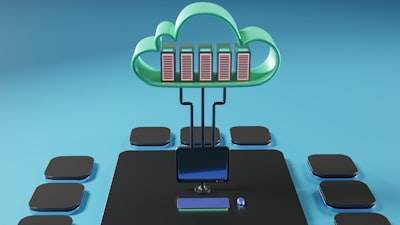
The cloud has multiplied the adaptation possibilities of enterprise software. With cloud AWS/Azure, a company can scale resources dynamically, provision environments in minutes, and reduce the gap between development and operations. Combining containers, APIs, and managed databases makes it possible to build solutions that can evolve without friction. Q2BSTUDIO uses these services to design robust and cost-effective infrastructures adapted to the demand level of each business. The cloud is not a destination but an enabler: it allows enterprise software to be transformed without requiring large initial investments.
The incorporation of artificial intelligence takes flexibility to another level. AI agents can take over repetitive tasks, interpret documents, answer queries, and recommend data-driven actions. Companies that integrate AI into their applications not only automate processes; they also improve the experience of their teams and customers. At the same time, these systems need clear rules, quality data, and responsible design. Flexibility here appears in the ability to train, adjust, and redirect models over time without having to replace the entire platform.
In an environment of constant change, security cannot be an afterthought added at the end of development. It must be part of the architecture from day one. Cybersecurity ranges from access management to vulnerability monitoring, including penetration testing and incident response. Flexible solutions make it easier to apply layered security policies, protecting data without blocking daily operations. Q2BSTUDIO integrates security principles into every delivery and offers cybersecurity services to help organizations maintain customer trust and meet regulatory requirements.
Data is the fuel of enterprise software, and flexibility is also measured in the ability to interpret it. BI/Power BI solutions allow centralizing information, visualizing key indicators, and making evidence-based decisions. A well-designed dashboard shows in real time what is happening in each area, from sales to production. This visibility is extremely valuable when a company needs to adjust its strategy quickly. Moreover, BI integration with daily processes can be done incrementally, adding data sources and metrics without interrupting team workflows.
Beyond technology, flexibility is a matter of method. Delivering enterprise software from an agile perspective allows validating hypotheses quickly, incorporating user feedback, and prioritizing the features that generate the most value. Q2BSTUDIO applies agile methodologies in all its phases: analysis, design, development, testing, and evolution. The goal is not to deliver a project and disappear, but to establish a long-term relationship in which the platform keeps improving with each iteration. This way of working reduces risks and ensures that the final product truly aligns with the organization's strategy.
The organizational dimension must also be considered. Adopting more flexible software implies changing habits, documenting processes, training teams, and defining responsibilities. Therefore, support during implementation is as important as code quality. A transformation project only succeeds if people understand the new tools and find in them real support for their work. The combination of technology, participatory design, and change management is what turns an application into a competitive advantage.
In terms of functionality, flexibility allows software to mature at the same pace as the company. Business needs are not static: new product lines, new distribution channels, and new regulations can appear. If the platform is modular, those changes are absorbed without friction. If the software is rigid, any modification becomes a high-cost project. The difference lies not only in the size of the company, but in the way technology is conceived. Betting on flexibility is betting on continuous evolution.
Q2BSTUDIO understands that each organization has its own starting point. Some companies need to automate part of a process, others want to modernize their cloud infrastructure, and others are looking to develop a completely new platform. From software development to process automation, artificial intelligence, or Business Intelligence, the key is to set a realistic roadmap aligned with the business. Technology decisions must be made with the future in mind, but also with today's concrete problems.
The flexibility of enterprise software is not an abstract attribute. It translates into interfaces that change according to context, integrations that connect disparate systems, and teams that can operate without friction. It also means that software can grow, shrink, and reconfigure itself without jeopardizing the stability of the whole. When these capabilities are combined, organizations gain responsiveness, efficiency, and clarity to design their future. And in an environment as dynamic as today's, that is one of the hardest advantages to replicate.