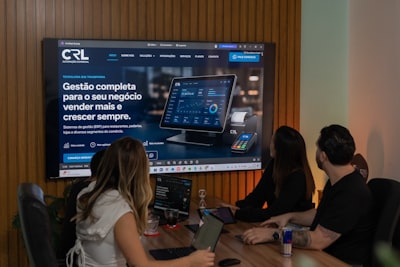
A business software solution is not a simple program that you install and forget. It is an ecosystem of applications, data and processes that affects every area of the organization. That is why deciding who participates in its design and implementation is as important as choosing the technology. When the business model is transferred to a system, each role provides a different view; if a perspective is missing, the software may solve an apparent problem but trigger knock-on dysfunctions.
The first person who should be at the table is the executive sponsor. This is not a ceremonial assistant, but someone with the authority to unlock budgets, mediate between departments and sustain difficult decisions. Without this support, any digital transformation project loses priority and ends up relegated. The sponsor also ensures that business objectives prevail over technical preferences or internal inertia.
Alongside the sponsor, it is appropriate to appoint a product manager or process owner. This profile is the bridge between what the operation needs and what the technical team builds. They need to understand the actual workflow, exceptions, bottlenecks and metrics that define success. If this role lacks authority, the project fills up with intermediaries who reinterpret requirements and the essence of the business is lost.
Business users from the affected areas are another pillar. Selling, buying, manufacturing or serving customers are activities that only those who execute them know in detail. Involving them from the start does not mean gathering them in a room and asking for a wishlist; it means working with them in sprints, validating prototypes and observing how they actually work. Users not only provide requirements, they also detect adoption risks before those become costs.
IT participates as facilitator and guardian of the architecture. Its role is not limited to installing servers; it must ensure that the solution fits existing systems, that integration is secure and that data is consistent. IT is also responsible for maintainability: a solution built outside the technical area becomes permanent technical debt. For this reason, collaboration between business and IT must be continuous, not just at the beginning.
When regulatory or compliance requirements exist, compliance and risk teams must be present from the beginning. Performing a risk analysis afterwards forces processes to be reworked and pays for avoidable errors. Data protection regulations, sector rules and audit requirements condition design decisions that seem minor, such as who can see a report or how long a record is kept.
Other technical profiles add value when the project touches specific areas. For example, a cloud architect with experience in AWS or Azure defines how environments are deployed, how infrastructure is sized and how costs are controlled. A cybersecurity specialist reviews authentication, permissions and data protection. If the software handles sensitive information, their opinion cannot be a final add-on; it must be integrated into the design.
Artificial intelligence and AI agents have changed the rules of the game. When a business solution incorporates AI, profiles are needed to understand models, data quality and the ethical impact of automated decisions. An intelligent button is not enough: you need to define which data is used for training, how predictions are audited and what human supervision exists. This capability can be contracted externally, but it is always advisable for someone internal to understand its logic.
A data and reporting manager is also essential. A Business Intelligence platform such as Power BI only provides value if there are clear indicators and reliable data. This profile defines operational metrics, dashboards and alerts that managers need. Many business solutions fail not because of missing functionality, but because their impact cannot be measured. Therefore, reporting design must begin at the same time as process design.
The technology provider is another relevant participant. Companies like Q2BSTUDIO bring an external and specialized vision in software development, cloud and automation. Their experience in similar projects helps avoid common mistakes and accelerates design and implementation phases. Working with a partner allows the internal team to focus on its business while experts solve technical challenges, always under shared governance.
Governance must be light but effective. A small committee, with sponsor, product manager and technical leader, can make decisions in hours and avoid paralysis caused by large committees. Meetings should be periodic, with a clear agenda and brief minutes. The committee's function is not to supervise every task, but to resolve priority conflicts and ensure the project does not deviate from business objectives.
The cycle does not end with go-live. The extended team must remain during the first weeks to adjust training, fix incidents and collect feedback. Users need direct channels to report issues and propose improvements. This phase determines real adoption: software that is perfect on paper but damaged in reality can recover if there are people willing to listen.
In business software projects, integrators and data specialists must also be considered. If the solution must talk to the ERP, CRM or other tools, those responsible for these systems must participate in technical definitions. Connections between platforms are a typical friction point: file formats, synchronizations and permissions need joint design. It cannot be assumed that two systems will understand each other on their own.
The combination of profiles varies according to project scope. An internal document management solution has different needs from a sales platform built with custom software. However, the principle is common: create a shared vision among business, technology and end users. Participation is not a matter of quantity, but quality and representation of each perspective.
Q2BSTUDIO collaborates with teams to define these roles and accompany the entire lifecycle, from diagnosis to continuous evolution. In its projects, it combines custom software development, process automation, cloud integrations with AWS or Azure, cybersecurity, Business Intelligence and AI agents. The goal is not to deliver code, but to generate business capabilities.
In short, business software solutions are a collective exercise. The sponsor provides momentum, the process owner prepares the ground, users bring reality and IT builds the scaffolding. With agile governance and the support of external specialists, the organization can turn software into a lasting competitive advantage.