Comparing business software is a strategic process that goes far beyond listing features. The final choice affects team productivity, information security and organizational agility for years. So, before opening a spreadsheet with characteristics, it is worth understanding the purpose: what business problem needs to be solved, which processes will change and which metrics will be used to measure success. Without that context, any comparison becomes a superficial exercise.
A practical way to start is to audit current workflows. You need to identify the tasks that consume the most time, recurring errors, data that is not shared and decisions made without up-to-date information. Based on this diagnosis, the organization can decide whether it needs a configurable standard platform, a modular solution that adapts to its processes, or custom software development. Each path has different implications for time, cost and maintenance.
When defining comparison criteria, technical architecture must be included. A business solution can offer all the desired features in a demo and still be difficult to maintain or scale. That is why it is worth asking about the modularity of its core, the technologies used to build it, the available documentation and the ease of extending it without creating dependencies. Technical debt is a silent risk that appears months after implementation and can undermine any investment.
Integration is another pillar. No company works with a single tool. Enterprise resource planning systems, customer relationship managers, ecommerce platforms and analytics solutions must exchange data seamlessly. When comparing, you need to review the available APIs, data formats, prebuilt connectors and the ability to orchestrate flows between systems. A poor integration forces users to duplicate records, enter information several times and make decisions with outdated data.
Cybersecurity cannot be treated as an add-on. You need to analyze the identity management model, role-based access controls, data encryption and audit mechanisms. You also need to check how security updates are handled and whether the provider carries out penetration testing. In regulated sectors, regulatory compliance is a critical factor. A solution that does not demonstrate solid standards can become a legal and operational problem.
Infrastructure is also part of the comparison. Solutions deployed in the cloud make it possible to adjust resources to demand, contract backup services and access high-availability environments without major upfront investments. Platforms such as AWS and Azure offer monitoring, security and automatic scaling tools. An organization that wants to take advantage of these benefits can evaluate the cloud solutions on AWS or Azure that best fit its data sovereignty, performance and operating budget needs. It is also important to define the exit strategy: how data is extracted and what happens if the provider changes.
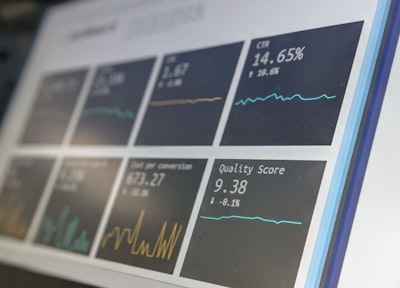
Data analytics is a differentiator. Business intelligence (BI) solutions transform operational data into useful management indicators. Tools such as Power BI stand out for their ability to connect to multiple sources, create interactive dashboards and deliver real-time reports. When comparing a business solution, you need to evaluate the underlying data model and how easy it is to build specific metrics. Great operational functionality is useless if it does not allow measuring the real impact of the business.
Artificial intelligence is changing the rules of selection. More and more solutions incorporate AI to automate processes, recommend actions or detect anomalies. AI agents can also act on systems: query a database, update a record or notify a person when something needs attention. When comparing, you should ask whether the solution allows integrating your own AI models, whether those models can be trained with company historical data and whether there is a clear data governance framework to avoid bias and ensure transparency.
The trade-off between standard software and custom development deserves a specific analysis. A standard tool usually deploys faster and has a user community, but it can impose generic processes that do not fit how the company works. Custom software development lets you model the system exactly according to business rules, although it requires more project control and good requirements definition. In practice, many organizations achieve the best balance by combining standard modules and customized functions.
The economic evaluation must be complete. Comparing only license or subscription prices is not enough. You need to include the cost of integration with existing systems, user training, data migration, ongoing maintenance and the necessary infrastructure. You also need to estimate the time until the solution generates value. A longer project can make sense if its return on investment is higher, but the opportunity cost must be quantified and scenarios compared over several years.
Before signing, it is advisable to run a proof of concept with real data. This test allows validating the solution's performance under production-like conditions, checking usability with the employees who will use it daily and seeing how the provider responds to change requests. The test must have a plan with measurable objectives, a defined scope and clear success criteria. If the pilot drags on without results, that is a warning sign.
The provider is as important as the software. You need to know their working methodology, their ability to document changes, their availability to resolve incidents and their experience with projects with similar characteristics. It is also useful to talk to clients who have implemented the solution in a similar sector. A good partner not only delivers a product; they help prioritize features, design training and manage adoption by the teams.
Q2BSTUDIO fits this vision as a software development and technology company that supports organizations from initial analysis to launch. Its approach combines custom software engineering with cloud platform integration, cybersecurity, business intelligence and the incorporation of artificial intelligence. In this way, the company helps build a technology roadmap where every solution is justified by its contribution to the business, not by a technology trend.
It is worth avoiding certain common mistakes. Choosing a tool only for its popularity, trusting perfectly prepared demos, leaving end users out of the process or not reviewing contractual conditions can put the project at risk. Another mistake is underestimating data quality. An excellent system with incomplete data generates unreliable reports and poor decisions. Time must be spent cleaning and normalizing information before implementation.
In short, comparing business software is an exercise in strategy, not an administrative chore. It must include process analysis, architecture, security, cloud, analytics, artificial intelligence, total cost and provider capabilities. With a rigorous method and a long-term vision, the decision becomes a growth lever. Q2BSTUDIO can bring that technical and business perspective, helping to select and implement the solution that truly fits each organization.