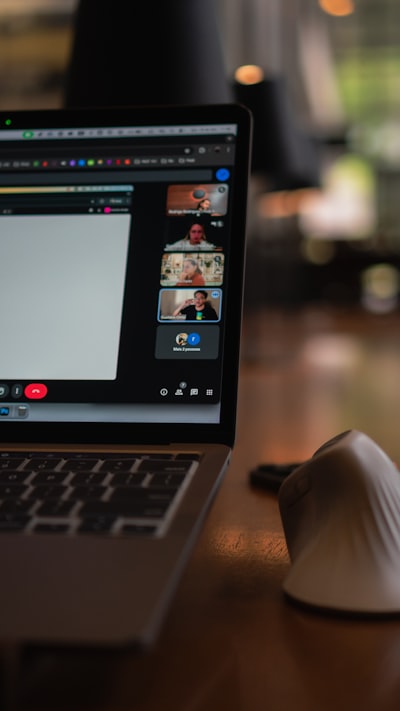
Remote work and geographic distribution have turned the intranet into a strategic asset, not a simple document repository. An intranet for distributed teams with chat must remove the manual processes that slow productivity: spreadsheets shared by email, approvals without traceability, endless searches for information. Organizations that still work this way lose time, make errors, and measure their activity poorly.
The idea of 'no manual processes' means the platform carries out administrative and operational work digitally, with clear rules, automatic notifications, and audit trails. When an employee needs to approve a request, review a document, or coordinate a task, the intranet provides contextual chat, a smart form, and a predefined decision flow.
This approach is not limited to digitizing forms. It means rethinking how data flows across departments, systems, and people. A modern intranet behaves like the company's nervous system: it connects ERP, CRM, databases, and collaboration tools, and executes coordinated actions.
To reach this level of integration, it makes sense to work with custom software technologies, also called custom applications. Off-the-shelf solutions impose limits after a few months; a tailored development, on the other hand, can model the real processes of the organization. Q2BSTUDIO, as a software development and technology company, designs scalable intranets for companies in different sectors. A good starting point is its custom software service: custom software.
AI adds an intelligence layer on top of that foundation. Integrated assistants answer questions about internal policies, summarize documents, and classify requests. AI agents go further: they execute complete tasks, such as assigning resources, validating invoices, or preparing reports. With the right intranet, AI is not an experimental tab but an operational capability inside the workflow. Q2BSTUDIO can guide this implementation through its Artificial Intelligence service.
In distributed environments, security is a priority. Information travels from offices, homes, and public spaces, so an intranet must include cybersecurity at every layer: multi-factor authentication, role-based access control, encryption, and event monitoring. Deployment on AWS/Azure cloud allows services to scale without exposing data. Q2BSTUDIO combines these environments with remote access policies and hardening best practices.
Another essential component is observability. Executives need to know what is happening in each area through clear indicators. Integration with BI/Power BI displays productivity KPIs, cycle times, team workload, and bottlenecks. Instead of asking for manual reports, managers consult a real-time dashboard that reflects the status of every process.
The chat embedded in the intranet works as a contextual communication hub. Every conversation is linked to a task or record, so information is not lost. Chat can also be handled by AI agents to answer common questions, guide an employee through a request, or alert about incidents.
A common use case is employee onboarding. With an intranet without manual processes, the new hire receives credentials, documentation, and a training plan through chat; the system requests IT access, assigns a mentor, and reminds about each milestone. Everything is recorded automatically.
Another frequent example is purchase management. An employee submits a request; the intranet verifies the available budget, asks the relevant manager, and notifies the supplier. What previously required emails and phone calls is resolved within hours, with a complete audit trail.
Consolidated data also improves coordination. Distributed teams share the same version of a project, changes are reflected instantly, and decisions rely on up-to-date information. This reduces status meetings and removes dependence on email.
Coexistence with legacy systems is another decisive factor. Custom applications can use APIs to connect with management ERPs, sales platforms, or support tools to retrieve and update data in real time. This preserves the existing investment while gaining agility.
The transformation toward an intranet with no manual processes requires a roadmap. First, identify the processes with the highest impact and measure current times. Then design a functional product with critical modules: chat, forms, notifications, roles, and dashboard. Later, incorporate integrations with corporate systems and roll out the solution in phases.
Q2BSTUDIO approaches these projects with a practical mindset. Its team analyzes existing workflows, defines success indicators, and proposes an architecture based on standard software and best practices, avoiding unnecessary dependencies. It also develops management portals so users can operate AI autonomously, without needing engineering support for every change.
Choosing a technology partner should not be decided by price alone. What matters is understanding the business, experience in systems integration, and commitment to security. Q2BSTUDIO covers the full cycle: consulting, design, construction, integration, and platform evolution.
The sustainability of the solution also depends on training. Teams need to understand how each flow works, when AI intervenes, and how to resolve an exception. Q2BSTUDIO promotes training sessions and practical documentation, because adoption determines the return on investment.
Useful questions when evaluating an intranet: can it grow without replacing the ERP? Is it compatible with AWS/Azure cloud? What level of automation does it support? How are permissions managed? Can activity be monitored with BI/Power BI? The answers must be concrete and demonstrable, not a catalog of intentions.
The investment in an intranet for distributed teams with chat is usually recovered in less than a year, thanks to savings in coordination hours, fewer errors, and better decision-making. The sustainable benefit comes from adaptability: a tailored platform evolves with the business.
The ultimate goal is not having a flashy tool, but removing the repetitive tasks that prevent people from focusing on what matters. An intranet with chat and automation lets everyone access accurate information, act quickly, and cooperate without friction.