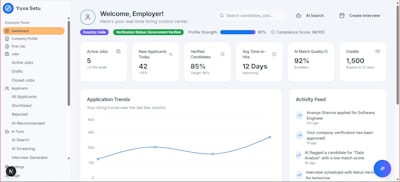
Digitizing a company does not end when processes stop using paper. The real leap happens when systems start talking to each other: when an invoice registered in the management application reaches the dashboard without friction, when a new customer is validated against an external database, or when an AI agent consults the status of an order in real time. The question of whether a digitalized company can connect to databases or APIs has an affirmative answer, but it deserves nuance: the connection is the starting point, not the destination. What matters is how it is designed, how it is protected, and how that connectivity is used to make better decisions.
Connecting to a database is not a goal in itself. A digitalized company accumulates information in multiple places: an ERP, a CRM, legacy spreadsheets, ecommerce platforms, industrial sensors, or cloud files. Those sources can be relational databases such as PostgreSQL, MySQL, or SQL Server, or NoSQL databases designed for large volumes of unstructured data. Data lakes and warehouses also appear, centralizing information for analysis. The ability to connect all of that depends not only on technology, but on data quality and the business rules that define how data is interpreted. Without a governance layer, integration can generate more noise than value. Therefore, when a company decides to open its databases to other applications, it needs to document schemas, control permissions, and keep a record of who accesses what and for what purpose.
APIs are the common language of modern integration. A well-designed API allows one system to request data or execute actions securely, without the consumer needing to know the internal details of the database. There are SaaS platform APIs, internal APIs, third-party APIs, REST, GraphQL, or asynchronous messaging protocols. The key is to design clear contracts, manage versions, and protect each endpoint. Many companies start by connecting an electronic invoicing API or a payment gateway, then extend that logic to suppliers, customers, and partners. API orchestration makes it possible to transform data between systems, enrich information, and detect incidents before they affect operations. Q2BSTUDIO, as a software and technology development company, builds integration layers that document each interface and apply monitoring so that data flow remains predictable.
The AWS/Azure cloud has changed the rules of enterprise connectivity. Managed databases, storage buckets, serverless functions, and message queues allow scaling without investing in on-premises hardware. A company can connect its local infrastructure to the cloud through secure tunnels, virtual private networks, or hybrid integration services. That flexibility makes it easier for teams to work with the same data from any location. However, the cloud also demands discipline: you have to choose which services are really necessary, configure permissions correctly, and avoid runaway costs. Q2BSTUDIO helps organizations design an AWS/Azure cloud services strategy aligned with their business goals, from initial migration to ongoing operations.
Not every need is solved with standard tools. Sometimes integration requires specific development: a supplier portal, a connector for a legacy system, an adapter for a proprietary protocol, or an interface that unifies scattered data. Custom software allows business logic, approval flows, and permissions to be adjusted to the reality of the company, instead of forcing the organization to change its processes to fit a generic product. Q2BSTUDIO develops custom software that connects natively to databases and APIs, reducing friction between departments and eliminating repetitive manual tasks.
Artificial intelligence adds a new layer to this architecture. A predictive model needs access to historical and real-time data to deliver useful results. An AI agent that automates tasks requires well-defined interfaces to query inventories, update records, or respond to customers. Without a solid connection between the model and data sources, AI is left without raw material. Data quality determines prediction quality, and latency influences the usefulness of every response. Q2BSTUDIO integrates AI into business processes through flows that combine structured and unstructured data, internal and external APIs, and AI agents capable of executing actions within a controlled permission framework.
Connecting to databases and APIs makes sense when information becomes a decision. BI/Power BI platforms allow you to visualize metrics, detect trends, and share dashboards across the organization. For a report to be reliable, data must travel from source to semantic model without losses or duplicates. Power BI can connect to Azure SQL Database, a data lake, a REST API, or an Excel file, but the quality of the result depends on previous transformation. Q2BSTUDIO designs extraction, transformation, and load flows, together with data models and dashboards, so that indicators reflect operational reality rather than a polished version of information.
Every connection expands the attack surface. An exposed API without authentication, a poorly configured database, or an access key embedded in code can turn digitalization into a vulnerability. That is why cybersecurity should not be a later phase, but a design criterion. Encryption in transit and at rest, access control, secret management, multifactor authentication, and continuous auditing are essential elements. In addition, it is advisable to perform periodic penetration tests to identify cracks before third parties do. Q2BSTUDIO incorporates cybersecurity into every integration project and offers pentesting services to validate that data exposure is kept to the necessary minimum.
Connectivity is not implemented overnight. A reasonable strategy starts by inventorying systems and data sources, identifying the processes that will benefit most from automation, prioritizing based on impact, and designing a scalable integration model. Then comes the technical phase: defining standards, creating connectors, setting up monitoring, and documenting contracts. Automatic reconciliation is another key piece, because it guarantees that data arriving at a destination matches what left the source. With that approach, a company can connect its ERP to a CRM, its production systems to a data lake, or its online store to an analytics platform, without relying on manual processes.
Answering the question in the title is simple: yes, any digitalized company can connect to databases or APIs. What distinguishes a successful integration from a fragile one is not the act of connecting, but the architecture that supports it. The choice of tools, respect for security standards, data quality, and the ability to evolve make the difference. Q2BSTUDIO, as a software and technology development company, helps organizations design that path: from data engineering and custom software to artificial intelligence, including cloud, cybersecurity, and BI/Power BI. If your company is already digitalized, the next step is not to connect just for the sake of connecting, but to do it with judgment.