Mobility is no longer an extra feature in a corporate intranet; it is the point where it is decided whether a platform truly transforms daily work or becomes another virtual desktop that no one consults outside the office.
When a company evaluates an intranet that replaces SharePoint, comparisons usually focus on features such as document management, approval workflows or integration with Microsoft Teams. However, the mobile experience makes the real difference: a person at a factory, on a sales visit or at an airport needs to access corporate information with the same fluidity and security as from their desk. If the intranet does not respond well on mobile, employees will look for shortcuts, abandon the tool or duplicate tasks.
Q2BSTUDIO faces this challenge from a software and business perspective. Instead of offering a closed template, it studies the specific processes of each company and designs an intranet using custom software that puts mobility at the center. This involves defining which tasks are truly critical outside the office: checking a file, approving a budget, responding to a security alert or viewing a dashboard. Each of these actions requires functional design, not simply a reduced version of the desktop website.
One of the most relevant technical decisions is choosing between a responsive interface, a progressive web app (PWA) or a native app. All three can be valid, but they respond to different needs. A PWA allows employees to install the intranet on their device without going through the app store, offers partial offline support and facilitates continuous updates. A native app, in turn, can integrate with the operating system to use push notifications, biometrics or access to specific hardware. Q2BSTUDIO evaluates each scenario and recommends the option that best balances experience, cost and maintenance. For many companies, the combination of advanced responsive design and PWA is the most practical path, especially when the team already works with custom applications in other areas.
Security is the second major pillar. A mobile intranet exposes corporate data outside the office perimeter, so protecting access from a computer is not enough. It is necessary to implement mechanisms such as multi-factor authentication, mobile device management, conditional access policies and encryption of data in transit and at rest. When the intranet connects to on-premise systems, Q2BSTUDIO deploys VPN tunnels or Azure private endpoints so that communication never crosses the public internet without protection. In strictly regulated environments, access audits and traceability of every action are included. In short, cybersecurity is not a separate module: it is part of the architecture from the first version.
Another key issue is integration with the existing ecosystem. Replacing SharePoint does not necessarily mean eliminating all its capabilities. Many organizations maintain legacy sites, libraries or workflows that must remain operational. The new intranet can coexist with them thanks to APIs and connectors that synchronize identities, documents and processes. Integration with Azure Active Directory (or Microsoft Entra ID) allows employees to use the same corporate credentials, while the connection with Microsoft Teams centralizes notifications, chats and meetings in a single place. Q2BSTUDIO designs these integrations pragmatically, avoiding duplication and ensuring that data flows without friction between systems such as SAP, Salesforce, Odoo or Dynamics.
Infrastructure also plays a central role. A mobile intranet needs a solid foundation that guarantees availability, performance and scalability. Cloud solutions on AWS or Azure allow the platform to be deployed in multiple regions, apply auto-scaling during usage peaks and reduce the operational load of the IT department. In addition, the cloud facilitates the creation of development, testing and production environments, accelerating the delivery of new functionalities. Q2BSTUDIO always recommends a cloud strategy aligned with the budget and criticality of each process, because not all workloads require the same level of investment.
Artificial intelligence is another differentiator. An intranet that replaces SharePoint can incorporate semantic search, automatic document summaries, virtual assistants that guide employees or AI agents that perform repetitive tasks. For example, a salesperson can request in natural language a report of pending items in their account and the agent obtains the data from the intranet and the ERP, summarizes it and presents the day's priorities. All this on mobile, with the same security as on the desktop. This layer of artificial intelligence is not a decorative addition; it is trained with the company's documentation and protocols to offer contextual and actionable responses. Q2BSTUDIO configures these agents with the appropriate supervision measures, so that a human can review critical decisions before an irreversible change is executed.
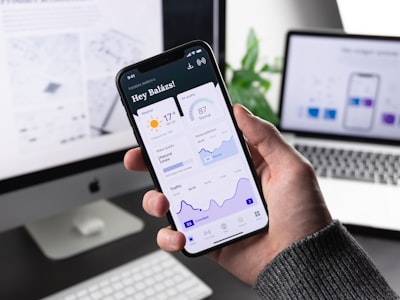
Business visibility also improves on mobile. Power BI dashboards or equivalent tools can be integrated into the intranet so that executives and middle managers can consult KPIs from any device. Instead of receiving static reports by email, each manager accesses an updated view in real time, with filters by department, region or project. The combination of intranet, BI and mobile devices turns decision-making into a continuous process, not an event that happens once a month. In addition, dashboards can be configured to show alerts when a metric deviates from the expected range, enabling an immediate reaction.
From an implementation point of view, mobile work should not be treated as a late phase. Q2BSTUDIO applies a methodology that begins with discovering real workflows, including how employees move outside the office. Then a minimum viable product focused on the most urgent mobile tasks is defined, tested with a pilot group and iterated in short cycles. This makes it possible to measure results from the first weeks and adjust the interface, notifications or permissions before extending the solution to the whole company. Training for the internal team and complete documentation are part of the deliverable, because the goal is for the client to manage their intranet autonomously.
In summary, mobile compatibility is the litmus test of any intranet project. If the platform is not designed for work on the move, the rest of the functionalities lose value. That is why Q2BSTUDIO approaches mobile design as a cross-cutting discipline: user experience, security, integration, cloud and artificial intelligence work together from the beginning. Companies that solve this aspect well get their teams to adopt the tool, reduce waiting times and make better decisions.
If your organization is considering an intranet that replaces SharePoint, do not settle for a desktop demo. Ask them to show its behavior on a mobile device, ask about the security strategy and demand that AI agents be governed by clear controls. With the right partner, the intranet stops being a document repository and becomes the company's digital nervous system.