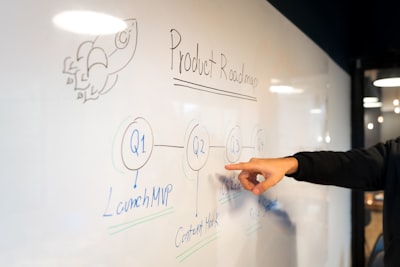
Digital transformation is not achieved solely with generic tools. Every business has unique processes, customers and objectives, and the technology supporting them must reflect that reality. That is why custom software becomes a strategic lever: it aligns the technology platform with business vision and makes it possible to size investment according to real priorities. Understanding the cost of a tailored solution is not a pricing exercise; it is a decision that directly affects the innovation roadmap.
One of the first questions that arises is how much budget a proprietary solution requires. The answer cannot be reduced to a fixed number because many variables are involved: functional scope, number of integrations, technical complexity, security requirements and delivery model. We must also consider product evolution: an application can start with a small set of features and grow into the operational core of the company. For this reason, the cost of custom software development should be analyzed together with the value delivered by each feature, not as an isolated expense.
A solid innovation roadmap requires technology that does not limit the pace of growth. At Q2BSTUDIO we therefore work with a modular approach: every part of the system can be extended, replaced or connected to others without rebuilding the whole. This architecture makes it possible to incorporate AWS/Azure cloud services, artificial intelligence capabilities, BI/Power BI dashboards and cybersecurity measures from day one. Well-designed custom software is not a sealed box; it is a platform that evolves with business strategy.
The starting point for accurate cost estimation is a discovery phase. Instead of beginning with a fixed list of requirements, technical and business teams analyze current processes, pain points and improvement opportunities. This stage reveals which features generate the most return, which data is critical and which integrations are required with systems such as ERP or CRM. With that information, Q2BSTUDIO prepares a transparent estimate, with phased delivery options, so the organization can decide how to allocate budget according to risk and priorities.
An iterative delivery model changes the conversation: rather than discussing one large final build, we discuss milestones that bring value from the first weeks. A minimum viable product lets teams test hypotheses with real users, measure results and adjust the plan without waiting for everything to be resolved. This way of working reduces financial risk and brings the cost of custom software closer to real business demand. Each iteration produces learnings that feed the innovation roadmap, so investment focuses on what has shown impact.
Integration capacity is another factor that determines cost. Connecting custom software to management platforms, databases or external services requires technical expertise and an upfront API design. A poor integration can cause data duplication, operational errors and high maintenance costs. That is why Q2BSTUDIO projects devote significant effort to defining clear and robust data contracts. That early work translates into a more stable platform and a lower total cost of ownership over time.
Cybersecurity cannot be an extra layer added at the end of the project. In custom software development, security requirements are part of the design: access control, encryption, identity management, data protection and intrusion testing. Periodic security audits, such as pentesting, help detect vulnerabilities before they become incidents. Including these services from the start avoids overruns and protects the trust of clients and users. Investing in security is, in fact, an investment in continuity.
Artificial intelligence is no longer an add-on; it has become a core capability of enterprise software. AI agents can automate repetitive tasks, classify documents, answer queries or recommend actions based on data. Integrating AI models into a custom application allows teams to focus on strategic decisions. Q2BSTUDIO combines traditional software development with these technologies to create solutions that learn and improve with use. The associated cost is planned in phases, so each model is trained, evaluated and put into production with clear criteria.
In the same way, Business Intelligence turns data generated by the application into actionable information. With tools such as Power BI, key indicators are presented in dashboards that make it easier to monitor innovation: development speed, user adoption, revenue impact and customer satisfaction. Custom software produces quality data because it is designed to record activity in a structured way. Combining that source with a BI layer allows roadmap decisions to be based on evidence rather than intuition.
Ultimately, the cost of custom software drives the innovation roadmap when it is understood as a continuous investment. The key is to choose a technology partner with vision, method and experience. Q2BSTUDIO supports organizations from the initial idea to evolutionary maintenance, offering software development, AWS/Azure cloud, cybersecurity, artificial intelligence and BI/Power BI services. In this way, every euro invested becomes the ability to experiment, scale and sustain a competitive advantage in an ever-changing environment.