
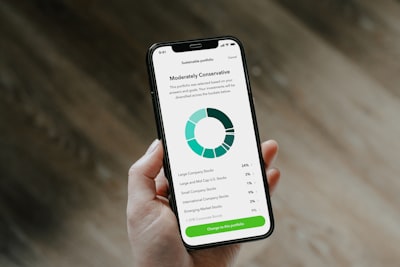
The corporate intranet is no longer a simple document repository. In today's context, a mobile-first intranet design represents the gateway to digital transformation for many organizations: it lets people consult information, collaborate, and automate processes from anywhere, with the same experience as a modern application. This approach also has a direct impact on sustainability, since it reduces travel, paper consumption, and operational duplication.
To make an intranet truly efficient, it is not enough to adapt the design to a mobile screen. It is necessary to rethink workflows, connect legacy systems with new platforms, and provide teams with tools that allow them to make data-driven decisions. This is where a custom software development company such as Q2BSTUDIO brings a practical vision: building the solution around real business processes, not the other way around. Custom software development allows the intranet to be integrated with ERP, CRM, productivity tools, and proprietary systems, avoiding generic solutions that create resistance and hidden costs.
Sustainability is not an add-on but a consequence of efficiency. When a mobile intranet lets employees solve incidents from their phones, approve documents without printing, or automatically notify maintenance teams, it eliminates intermediate steps that consume time, energy, and materials. Organizations that measure these savings discover that small improvements in digital flows generate significant reductions in costs and emissions. To achieve this, it is essential to include ESG metrics in dashboards and link them to platform usage indicators.
From a technical point of view, a modern intranet must rely on a solid architecture. Many companies choose to deploy their intranet on AWS/Azure cloud to ensure scalability, high availability, and perimeter security. These environments make it possible to apply granular access policies, continuous auditing, and encryption of data at rest and in transit. Cybersecurity thus becomes a functional requirement, not an afterthought. A specialized provider assesses risks, proposes controls, and performs periodic penetration tests to protect corporate information and employee privacy.
The value of a mobile-first intranet grows when combined with artificial intelligence. Traditional internal search engines force the user to guess which keywords to use. With AI models and AI agents, the intranet understands the intent behind a search and responds with synthesized information, relevant links, and suggested actions. This capability, developed by Q2BSTUDIO through artificial intelligence services, turns the intranet into an operational assistant that reduces search time and improves the learning curve of new employees.
For AI to provide real value, it must be integrated into business processes rather than work in isolation. For example, an AI agent can automatically classify support requests, enrich answers with internal documents, and escalate critical incidents to the right department. Another common use case is the automatic generation of meeting minutes, summaries, and action plans, which are published directly in the team workspace. These automations, combined with business intelligence dashboards, allow management to visualize trends, bottlenecks, and improvement opportunities in real time.
This is where Power BI integration makes sense. An intranet should not only display content; it should offer visibility into what is used, what works, and what can be optimized. BI dashboards connected to intranet usage data, the ERP, and productivity tools help middle managers and executives make evidence-based decisions. At the same time, automated reporting reduces manual work for analysts and frees up time for higher-value tasks.
One of the keys to success is ease of use. Mobile-first design means that the most frequent functions are available on the home screen: notifications, approvals, search, contacts, and tasks. Every tap must have a clear purpose. Companies that apply this philosophy observe higher adoption rates and less resistance to change. To achieve this, the design process must begin with a discovery phase in which real departmental flows, friction points, and user expectations are analyzed.
Q2BSTUDIO approaches these projects with an iterative methodology. After an initial consulting phase, a minimum viable product can be operational in a few weeks. This approach allows users to validate core features and share ideas without blocking development. Then, technical teams add new integrations, automations, and AI modules incrementally. Transparency around timelines and budget is essential for steering committees, who need to justify the investment with clear indicators.
Sustainability also appears in the management of technological resources. A well-designed intranet consumes less energy because it avoids unnecessary data transfers, optimizes cloud use, and reduces duplicate storage. Moreover, by moving processes that previously required paper or physical travel to digital channels, the organization's carbon footprint decreases. A platform accessible from mobile devices also supports hybrid and decentralized work models, with corresponding savings in office space and travel.
For a mobile-first intranet initiative to be successful in the long term, clear information governance should be established. This includes defining who can publish content, how document freshness is reviewed, and what access levels each role has. Integration with directory services and identity systems ensures that permissions are synchronized automatically. Document management, access auditing, and change traceability reinforce trust in the tool.
Companies that have already taken this step see benefits in three areas: productivity, sustainability, and transparency. Productivity improves because employees spend less time searching for information and more time executing valuable tasks. Sustainability improves because physical consumption is reduced and energy resources are optimized. Transparency improves because dashboards objectively show project progress and platform usage. These three pillars are interconnected and should be part of corporate strategy.
The role of a technology partner is not limited to writing code. A custom software development company helps prioritize use cases, calculate return on investment, and avoid common mistakes such as feature overload or lack of integration with existing systems. Q2BSTUDIO combines experience in AWS/Azure cloud, cybersecurity, BI/Power BI platforms, and AI agents to deliver comprehensive solutions. Its results-oriented approach allows IT leaders and general managers to see the impact of the investment in weeks, not years.
When evaluating a provider, it is worth assessing the quality of documentation, post-implementation support, and the ability to transfer knowledge to the internal team. An intranet is not a static project: processes change, teams evolve, and sustainability priorities expand. Therefore, the platform should be designed to be modified without redoing the entire development. The use of APIs, reusable components, and independent modules facilitates maintenance and evolution.
Adopting a mobile-first intranet is not a trend but a response to the real needs of today's organizations. Employees expect tools as good as the ones they use in their personal lives. When the intranet is fast, clear, and useful, it stops being seen as a corporate obligation and becomes an ally in daily work. For administrative areas, it also represents an advance in efficiency: internal communication processes are simplified, bureaucracy is reduced, and resources are freed for activities with greater impact.
In short, integrating sustainability and efficiency into an intranet requires a solid technical vision and a realistic business approach. Technology facilitates change, but people and processes make it real. Having a technology partner who understands both sides, proposes tailor-made solutions, and offers close support makes the difference between an IT project and a true transformation lever.

