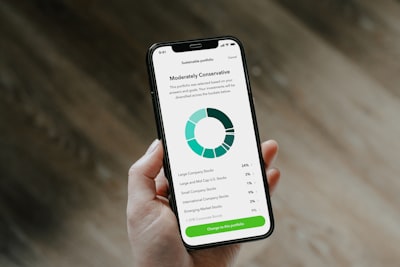
The corporate intranet has ceased to be a simple document repository. By 2026 it has become the digital operations center of organizations. The way people work has changed: the desktop computer is no longer the starting point. Professionals, sales teams, plant personnel and executives need to access information and perform tasks from a mobile phone, from home, in a meeting or on a factory floor. Therefore, planning an intranet with mobile-first design is a strategic decision, not an aesthetic issue.
Traditional intranets were designed for large screens and mouse-based navigation. When scaled to mobile, problems emerge: illegible text, small buttons, endless menus, high load times and a frustrating experience. The result is low adoption and a return to informal tools such as messaging groups. Instead of solving the problem, many companies try to add a mobile layer to a desktop-oriented system. The real solution requires reorganizing information, processes and interfaces from a mobile logic: fewer clicks, more context and more speed.
Mobile-first design does not only mean responsive screens. It implies an information architecture where content is structured around what the employee needs to do at any given moment. Critical flows must be identified: consulting a manual, registering an incident, approving a request, viewing a metric. Each flow must be completable on a mobile device with full guarantees. Notifications push the user toward the right action, offline mode allows working in areas without coverage, and synchronization happens when the device regains connectivity.
For a mobile intranet to deliver this experience, the underlying technology must be carefully designed. The trend in 2026 is to build an API layer that decouples the mobile front end from the systems of record. The intranet consumes data from multiple sources and presents a unified view. This architecture enables evolution, scalability and the integration of artificial intelligence. Companies that continue using monolithic structures and isolated databases will struggle to adapt.
In this context, custom application development becomes a competitive advantage. Every organization has different processes, roles and policies. Generic software can cover basic functions, but it rarely fits the particularities of a business. Q2BSTUDIO, as a software and technology development company, builds mobile intranets that adapt to each client's reality, using agile methodologies and multidisciplinary teams.
Artificial intelligence is one of the great enablers of the modern intranet. AI agents can act as virtual assistants that understand user intent and provide precise answers. Instead of browsing menus, the employee types a natural language question: what is the status of my request, where is the safety protocol, what deadline do I have to submit a report. The system searches the knowledge base, summarizes information, suggests actions and performs administrative tasks if it has permissions.
AI also automates repetitive tasks. Many intranets include approval flows, supplier onboarding, vacation management or document classification. With AI agents, these tasks run autonomously: the system reads an email, extracts relevant data, validates it against the ERP and updates the database. When a complex decision is required, it is escalated to a manager with all contextual information. This reduces cycle times and eliminates manual work.
AI deployment must be carried out with responsibility and security criteria. Installing a generative model is not enough. It is necessary to define which data it can access, what permissions each user has, how actions are logged and when human validation is needed. In addition, the infrastructure must guarantee the privacy of corporate information. For this reason, many organizations combine AWS/Azure cloud services with private environments and secure connections.
Q2BSTUDIO designs cloud architectures that allow the mobile intranet and AI agents to scale without compromising security. It uses Azure/AWS cloud services to host applications, manage identities, monitor performance and enable AI capabilities. When data resides in on-premise systems, secure tunnels and private networks are established so the model can access them without exposing the corporate network. This combination is key to getting value from AI without losing control.
Cybersecurity is a cross-cutting layer in any mobile intranet. Accessing from personal devices and external networks increases the attack surface. Multi-factor authentication, identity management, data encryption and continuous auditing are essential elements. APIs also need protection, since a misconfigured API can expose critical information. Companies should run penetration tests, review permissions and train employees in good practices.
In addition to security, a mobile intranet must provide visibility. Integrating Business Intelligence and Power BI makes it possible to show the indicators that matter on mobile dashboards. A CEO, an operations manager or a sales manager can consult the state of activity in real time: pending orders, warehouse occupancy, open incidents, billing. This information is presented visually and clearly, with the ability to drill down into detail. BI technology turns the intranet into a place where data is no longer hidden in databases and becomes actionable knowledge.
Integration is often underestimated. The mobile intranet must connect with the ERP, CRM, collaboration tools and human resources systems. Q2BSTUDIO implements integration and automation layers that connect all these pieces without forcing companies to replace existing platforms. The goal is that users do not have to jump from one system to another, but find in the intranet a single entry point and a consistent experience.
Q2BSTUDIO approaches each project with a discovery phase that analyzes current workflows, technical constraints and business objectives. From there, a roadmap with incremental deliveries is defined. In a few weeks, a viable product that solves the most relevant use cases can be available. Then the team iterates based on usage metrics and user feedback. This approach reduces risk and accelerates return on investment.
The benefits of an intranet with mobile-first design are visible in daily work. Employees onboard faster, solve doubts without depending on colleagues, execute approvals from anywhere and make fewer errors. The organization gains agility, reduces operational costs and improves the work experience. Moreover, the intranet becomes the backbone of digital transformation: a place where AI, automation and data work together.
By 2026, companies that do not adapt their intranet to mobile will be at a disadvantage. Talent prefers tools that respect their time and way of working. An outdated digital environment generates frustration and burnout. The good news is that the technology exists and is accessible. With the right approach, any organization can turn its intranet into a strategic asset.
The key is to combine design, technology and business. A mobile intranet is not an isolated IT project: it is an initiative that affects every area. That is why it is advisable to work with professionals who understand custom software, AI, security and cloud. Q2BSTUDIO brings together these skills and works with the client to build solutions that generate measurable results. It is not about installing a tool, but about designing the way the company will work in the coming years.
The digital future of an organization depends on having an intranet with mobile-first design. It is the gateway to systems, data and AI. It is the space where people collaborate, learn and decide. Those who understand this in time will be able to build a more efficient, secure and change-ready company.