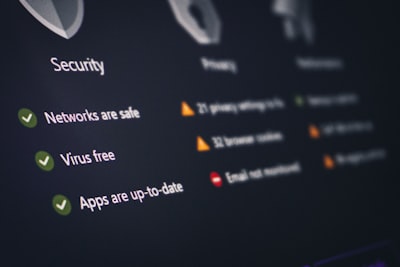
The multilingual intranet has become the operational hub for many European companies. It is not just a document repository: it is where teams consult information, collaborate, automate tasks and access corporate systems. In 2026, a security and architecture audit of this platform cannot be limited to checking passwords or patches. You have to analyze how users interact, what languages and regions coexist, how permissions are managed and how new AI services are integrated.
The first common mistake is treating the intranet as a static project. A company with offices in Germany, Spain and Poland needs a platform that delivers the same level of service in each language, with acceptable response times and with the certainty that an employee in Munich will not see information restricted for their office. The audit must start by understanding the information governance model: who can publish, who can translate, who can administer and which countries or roles have access to each piece of content.
The architecture side cannot be separated from security. That is why it is useful to begin with an integral review of the cybersecurity of the solution, including network, identities, dependencies between services and data protection. In a multilingual intranet, you must also check whether translation chains are protected, whether localized texts can leak sensitive information, and whether automatic translation providers comply with European regulations.
From a technical point of view, scalability is the first critical point. An intranet that works well with 500 users can collapse at 5,000 if databases, work queues, caching and load balancing are not reviewed. The audit must verify whether the platform is prepared for usage peaks, such as the start of the year or the publication of an internal policy that all employees are required to read. You also need to review the API: if the intranet connects to SAP, Odoo, Salesforce, Teams or Active Directory, each integration is an attack surface and a possible bottleneck.
The performance of multilingual environments depends on decisions such as language detected in the URL, localization of dates and currencies, optimization of queries in each language, and content distribution at edge locations. A rigorous audit measures response time by country, with real users, and compares the experience of an employee in Barcelona with one in Bucharest. That information makes it possible to decide whether to use a content delivery network or whether a module needs redesign.
Security on the intranet must start from a zero-trust model. Validating the user once is not enough; every request must be checked by context: from which device, from which network, with which role and for which resource. Authentication must integrate with the corporate identity provider, but the audit must also verify whether privileged accounts are protected with multi-factor authentication, whether API secrets are rotated, whether access logs are retained, and whether administrative access to the intranet is recorded with immutable traceability.
Permissions in a multilingual environment are especially complex because policies must be applied at country, department and language levels. The same document may be available in English and French, but only for the finance team. If the intranet uses shared repositories, the audit must verify that file metadata does not expose information beyond the user's role. You should also test that searches respect permissions: an internal search engine that ignores restrictions can turn an intranet into a source of data leakage.
In 2026, AI is a natural part of the intranet. Many companies want a virtual assistant to answer questions about internal policies, automate requests, or summarize documents in multiple languages. However, AI introduces risks that an audit must cover: prompt leakage, access by models to documents the user should not see, hallucinations in minority languages, traceability of answers, and uncontrolled token costs. The solution is not to forbid AI, but to govern it with a well-designed RAG architecture, with embeddings that respect permission partitions and with records of each query and each source used.
AI agents, now common in advanced intranets, deserve special attention. Unlike a simple chatbot, an agent can execute actions: create an incident, approve a workflow, send a notification to a group. The audit must verify that the agent has limits, whether it needs human supervision for critical operations, whether actions are logged, and whether the least privilege principle also applies to the agent. Here, the experience of a software and technology development company like Q2BSTUDIO helps differentiate acceptable risk from what requires redesign.
Cloud infrastructure is another pillar. A multilingual intranet hosted on AWS or Azure can offer high availability if well configured, but it can also generate unnecessary costs if resources are not optimized. The audit must review machine sizing, managed databases, automatic backups, disaster recovery plans, and development and production environments. Hybrid connections with on-premises systems should use VPN or Azure Private Link instead of exposing services to the internet.
The financial side also matters. A medium intranet begins to notice AI costs when employees use it to translate documents, generate summaries, and search for information. Without clear metrics, monthly costs can grow without anyone knowing which department consumes what. An audit must include a cost visibility model by team and feature, and recommend dashboards where responsible people can see the main indicators without depending on Engineering.
Observability is not a luxury. If the intranet fails, employees lose hours of work and look for external solutions. The audit should require that the technical team have access to performance metrics, centralized logs, and proactive alerts. It is also worth checking whether the dashboards seen by management reflect operational reality: uptime, search speed, open incidents, adoption by language, and user satisfaction. Integrating Business Intelligence tools such as Power BI can make this visible in a practical way.
In this context, the relationship with a software and technology development company should not be limited to buying a license or hiring maintenance. Q2BSTUDIO understands the intranet as a living system that must evolve with the business. Its team combines the construction of custom software, enterprise AI integration, cybersecurity and data analysis with the practical vision of those who have deployed projects in complex corporate environments.
A security and architecture audit for 2026 should end with a clear, prioritized report with concrete solutions. A hundred-page document that no one reads is useless. Management needs to know which risks are urgent, which improvements create the most value, in what order to implement them, and what they cost. Work phases should include a security review, proof of concepts for weak points, a remediation plan, and accompaniment during implementation.
Companies that take advantage of this opportunity get a faster, safer and more useful intranet. They improve employee experience, reduce time spent searching for information, and enable AI use cases that once seemed distant. The audit is not an expense; it is an investment so that the platform remains an asset instead of becoming a risk.
If your organization is thinking about auditing its multilingual intranet, it is worth having a team with real experience in architecture, cloud, AI and cybersecurity. Q2BSTUDIO offers a complete vision, with professionals who speak both business and engineering language. The goal is that the 2026 intranet not only works, but drives the company's digital transformation.