In 2026, a multilingual intranet is an operational platform rather than a simple notice board. European companies need their teams to access up-to-date information in their own language, with the right permissions and no friction. Globalisation and hybrid work have increased the need for a shared digital space, where an office in Madrid, a subsidiary in Warsaw and a remote team in Lisbon can follow the same processes without language becoming a barrier. That requires a solid digital architecture, capable of integrating with business systems and growing without creating technical debt. For this reason, more organisations are choosing custom application development instead of adapting generic tools that do not fit their real processes.
Question: What makes a multilingual intranet different from a traditional portal? Answer: the difference lies in the ability to deliver content and processes adapted to each country's context. A multilingual intranet does not simply translate texts: it manages permissions by subsidiary, date and currency formats, local data protection regulations and different approval flows. It should also reflect cultural differences in internal communication, such as tone, preferred channels or document structure. When built as custom software, the intranet can incorporate these rules naturally, without relying on patches or forced configurations.
Question: What problems does it solve in a European company? Answer: it reduces scattered information, accelerates employee onboarding and makes collaboration easier among teams in different countries. It also automates everyday processes such as holiday requests, activity reports, expense approvals or IT requests. With a central view of these processes, companies spot bottlenecks and remove manual tasks that consume hours every week. In addition, it prevents contradictory versions of the same document and ensures that knowledge does not depend on one person's memory. The result is a more agile organisation with fewer operational errors.
Question: What advantages does it offer over chat tools and shared folders? Answer: chat is useful for quick conversations, but it is not a reliable place to store decisions. Shared folders also lack context and version control. A multilingual intranet structures information by knowledge area, process and audience. Each piece of content can have an owner, a review status, an approved version and an assigned language. Technical teams, HR and management find what they need without relying on a long email chain. The intranet can also recommend content based on role, location or access level, something that neither chat nor a shared drive can do.
Question: What role do AI and AI agents play? Answer: AI turns a passive intranet into an active assistant. A good internal search engine understands the intent behind a question, not just keywords. AI agents can summarise documents, generate drafts in several languages, classify requests and recommend relevant content. These components rely on enterprise AI connected to internal data, with access controls and human oversight when a decision has legal or financial impact. In this way, technology delivers value without losing traceability.
Question: How are cybersecurity and governance guaranteed? Answer: an intranet manages sensitive data about employees, customers and operations. Therefore, cybersecurity must exist in every layer: user authentication, role-based access control, activity logging, data encryption and secure connections between offices and cloud AWS/Azure environments. In addition, the governance model defines who can edit content, who approves it and what evidence is kept for audits. Complying with GDPR is not an add-on; it is a design requirement. It is also wise to define incident response protocols and training plans so that people understand how to use the intranet safely.
Question: How does it integrate with existing systems? Answer: through APIs and connectors that link the intranet with the ERP, CRM, office tools and communication platforms. In this way, an employee can view customer data, update a project or request a purchase without leaving the intranet. This integration also works the other way: intranet events can feed other systems. Q2BSTUDIO applies this approach with integrations to SAP, Odoo, Salesforce, HubSpot, Microsoft Dynamics, SharePoint and Teams, among other platforms. The goal is to extend the existing technology investment, not replace systems that already work.
Question: How is user experience built? Answer: in an internal portal, user experience is as important as on a public website. If someone needs five clicks to find the holiday form, they will end up using a shortcut or asking a colleague. The design should prioritise the most frequent tasks: searching for a policy, updating personal data, approving a request or contacting support. The interface must also adapt to each language and to the screen sizes commonly used in each country. At Q2BSTUDIO, we use a user-centred design approach with prototypes and testing before writing the final code.
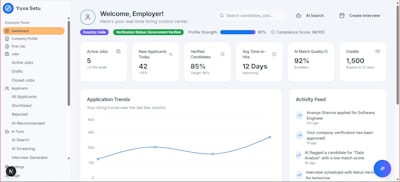
Question: How is return on investment measured? Answer: with concrete indicators defined before starting. For example, employee onboarding time, number of clicks to find a policy, speed of expense approval or percentage of automated tasks. This data is displayed in dashboards using BI/Power BI, where leadership can compare progress month by month. At Q2BSTUDIO, projects include an early definition of metrics, costs and expected benefits, so the investment decision is no longer based on intuition. Dashboards also help detect areas for improvement before they become bigger problems.
Question: Why is it worth having a technology partner? Answer: because this kind of project combines architecture, security, user experience, integrations and change management. An internal team may know the business, but it does not always have time or specialists in cloud, AI and cybersecurity. A development company like Q2BSTUDIO provides a senior team, an iterative methodology and knowledge transfer so the client stays autonomous. The goal is not to create dependency, but to hand over the keys and train the people who will operate the solution. In this way, technical knowledge stays in the organisation rather than with a single supplier.
Question: What is the first step to start a project? Answer: first, define the business objective. An intranet designed to improve internal communication is not the same as an intranet designed to support operations. It is worth identifying the processes that consume the most time, the tools that already exist and the data that must be available. Then define an initial scope, choose an architecture and prepare a first version that solves a specific problem. From there, the project expands in phases. This working method reduces risk and delivers visible results quickly. Q2BSTUDIO supports companies through all these phases, from diagnosis to production launch.
The key is to start with a clear scope and evolve in phases. A multilingual intranet is not built in a single giant release; you launch an initial version, measure its use and improve continuously. Companies that follow this path see visible benefits in a few months and lay the foundations for future automation and artificial intelligence projects.