The best time to adopt a multilingual intranet does not come with an alert: it is built on signals. A company that opens markets in several countries, hires remote talent, or needs to standardize processes among subsidiaries is already experiencing the symptoms of fragmented communication. Teams lose time searching for documents, sensitive information travels through informal channels, and leadership lacks a single view of what is happening. Installing an intranet while there is still order makes it possible to avoid the costs of redoing processes later.
The difference between a traditional intranet and a well-executed multilingual intranet is the ability to adapt to the language and culture of each team. Translating menus is not enough; every employee needs to be able to publish content, receive notifications, and consult indicators in their own language. Approval workflows also need to respect the particularities of each subsidiary, because a vacation policy, an expense report, or a quality procedure has local nuances that cannot be solved with a rigid template.
Many market solutions promise multilingual support, but limit it to the interface. The real challenge lies in user-generated content, approval templates, and business logic. A company with subsidiaries needs the system to know which language each employee is assigned, to translate notices automatically, and to allow local administrators to manage their own versions. When this is solved, the intranet stops being a corporate showcase and becomes an everyday work tool.
In this context, technology plays a decisive role. An intranet built as a custom application makes it possible to integrate the systems the company already uses instead of forcing a radical change. For example, it is possible to connect the intranet with ERP, CRM, and collaboration tools so information flows automatically. This approach reduces data duplication, accelerates decision-making, and gives middle managers a more realistic view of each team's performance. With a solid base, the organization can add automation modules, artificial intelligence, or business intelligence as needs evolve.
Companies often ask when the best time to start this kind of project is. The answer: when growth strategy begins to depend on coordination capacity. If leadership has to ask for manual updates to know what is happening in each country, or if employees cannot find the current versions of procedures, the intranet is no longer an optional improvement. It is a lever of control and efficiency. Moreover, in an environment where hybrid work is common, having a unique space with multilingual support reduces the gap between those who work in the office and those who work from home.
Artificial intelligence transforms the intranet into a proactive assistant. An employee can ask in their own language where the travel policy is, who is responsible for a customer, or how to request time off, and the system answers within seconds. Behind that experience is an enterprise AI architecture that connects the intranet to internal data sources, respects access permissions, and audits every interaction. AI agents can also perform repetitive tasks such as classifying documents, generating summaries, or updating records, freeing up time for higher-value work.
Implementing AI in an intranet does not mean opening the company's data to any external provider. There are private deployment models, secure VPN connectivity, and access to AWS/Azure cloud services with private endpoints. This combination allows the organization to take advantage of the best models on the market without losing control of its information. Cybersecurity becomes a cross-cutting layer: authentication, role-based permissions, activity logging, and protection of data in transit and at rest.
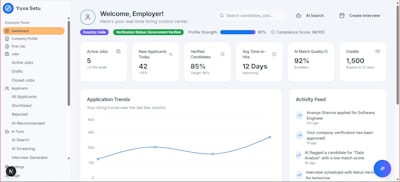
Another fundamental aspect is measurement. An intranet without metrics is a black box. Therefore, it is advisable to incorporate dashboards with BI/Power BI that show adoption by department, response times, most used processes, and bottlenecks. These indicators make it possible to justify the investment and guide future improvements. When leaders see the data on a single panel, conversations move from opinions to facts.
The role of a technology partner like Q2BSTUDIO is precisely that: to accompany the company from design to operations, with software development, integration, and cybersecurity capabilities. It is not about selling a license, but about building a solution adjusted to real processes. Q2BSTUDIO designs custom applications, integrates systems, deploys infrastructure on AWS or Azure, and trains internal teams to manage the platform autonomously. That combination of engineering and support is what turns an intranet into a strategic asset.
A multilingual intranet project usually begins with an analysis of workflows and information gaps. Then a viable product is defined in a few weeks, with essential functions: multilingual search, user profiles, document repository, notifications, and secure access. From there, automation, AI, and dashboard modules are added incrementally. This approach reduces risk and allows results to be seen in the early stages.
The investment depends on scope, but companies usually recover it in less than a year thanks to reduced search time, less duplicated work, and improved employee experience. More importantly, the organization has a technology base that can be reused for future automation or data analytics projects. An intranet is not an isolated expense; it is the platform on which other digital initiatives stand.
In short, the best time to adopt a multilingual intranet is when the company wants to grow without losing control. The signals — new offices, distributed teams, manual processes, different languages — indicate that coordination needs structural support. Those who wait until the problem is critical end up investing more in correcting errors than advancing. Those who act with strategic vision turn the intranet into a competitive advantage. Q2BSTUDIO can help that process with a practical, measurable, business-focused approach.