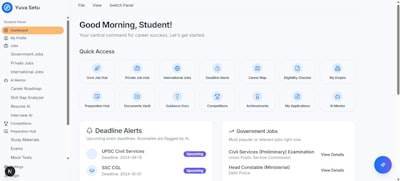
Digital transformation is no longer just about adopting isolated tools; it depends on how those tools integrate into daily workflows. In 2026, Sevilla has become a technology hub in southern Europe, and the fastest-evolving companies are those that understand the value of a well-designed intranet with smart onboarding capabilities and a human-centric approach.
Modern companies face a complex challenge: information is scattered, teams work remotely and in hybrid mode, and talent onboarding requires increasingly agile processes. Traditional intranets, conceived as simple document repositories, are obsolete. An intranet with smart onboarding turns the employee experience into a guided flow where technology anticipates needs, automates tasks, and personalizes learning.
Q2BSTUDIO, a Seville-based company specializing in software development and technology, has built a methodology that combines artificial intelligence, automation, and custom software to build intranets that not only inform but transform internal processes. Its approach is not to replace existing tools but to integrate and enhance them through APIs and native connectors.
Smart onboarding goes beyond initial training. It is an intelligent system that supports employees from day one, adapting content to their role, goals, and learning pace. With conversational AI agents, users can resolve operational questions without waiting for a human colleague. With automated workflows, system registrations, equipment assignment, and documentation access happen sequentially and without errors.
The key is recognizing that no two companies are the same. Off-the-shelf, closed, rigid solutions often cause adaptation problems. Custom software allows the intranet to be modeled according to the real processes of each organization, ensuring the tool fits operations rather than the other way around.
From a technical perspective, modern infrastructure relies on the cloud. AWS and Azure cloud services provide the elasticity needed to handle usage peaks, host language models, and ensure business continuity. Top-tier cloud providers also include security certifications that make compliance easier. Integrating the intranet with Active Directory, SharePoint, or Teams becomes natural when using these ecosystems.
Cybersecurity is central to any corporate intranet project. Employee data, strategic documents, and internal conversations require protection against unauthorized access. Cybersecurity and pentesting services help detect vulnerabilities before they are exploited, and role-based access design minimizes the attack surface. Q2BSTUDIO incorporates security best practices from the architecture phase.
Information visibility is another major challenge. A unified dashboard built with Business Intelligence tools like Power BI lets management track process progress, team productivity, and the impact of digitalization initiatives in real time. Indicators that used to be calculated manually are now updated automatically, feeding decision-making with reliable data.
AI agents are the most innovative piece of the modern intranet. They are not just a chatbot with static answers; they are assistants capable of querying the corporate knowledge base, summarizing documents, drafting communications, and executing administrative tasks through process automation. Combining language models with internal company data delivers a level of accuracy and context that drastically reduces time spent on repetitive activities.
Implementing an intranet with smart onboarding must be phased. The first stage is a discovery of the current state: process mapping, identification of pain points, and definition of key performance indicators. Then comes solution design and the construction of a minimum viable product, usually within four to eight weeks. This MVP makes it possible to validate hypotheses and collect user feedback before expanding functionality.
During development, special attention is paid to integration with existing systems. Companies often use management tools such as SAP, Salesforce, HubSpot, or document management platforms. An API-based architecture avoids duplicate information and lets the intranet act as an orchestration layer over the rest of the applications. Connections between on-premises services and the cloud are made through secure remote access protocols and VPN tunnels.
Business results appear quickly. Organizations that have launched this type of initiative see process cycle time reductions between 20% and 45%. Manual tasks that once took hours are automated, freeing staff to focus on higher-value activities. Fewer errors from automation also have a direct impact on satisfaction for internal and external customers.
One of the most valued aspects for CFOs is the ability to understand return on investment from the start. Q2BSTUDIO develops a business case with expected metrics, payback timelines, and a risk matrix. This shifts the decision to invest in a smart intranet from intuition to objective data.
Another important advantage is autonomy. Q2BSTUDIO solutions include a web administration portal, designed so business users can configure AI models, manage prompts, and monitor expenses without relying on engineering for every change. This customer-empowerment strategy helps the solution evolve sustainably over time.
How much does such a project cost? The budget varies according to scope, but a deployment focused on onboarding features usually ranges from €5,000 to €60,000. Companies seeking simplicity and agility achieve full payback in six to twelve months. Larger projects with natural language processing and corporate system connections may require more investment, but the associated return is proportionally higher.
How long does it take to start? The starting point is a discovery session, where a senior consultant analyzes company processes and proposes an action plan. Fieldwork typically begins within one or two weeks, and the first operational deliverable is available in less than two months. Delivery speed does not compromise quality; development is organized in sprints with continuous releases.
What if the company already has an IT infrastructure? The intranet does not replace what works. The integration strategy ensures that new modules coexist with legacy systems. Data migration is controlled, and it is always possible to keep certain features in original tools while information is gradually transferred.
Sevilla has become a benchmark for software development in Spain. The combination of local talent, technical universities, and an increasingly innovation-friendly business community creates the perfect ecosystem for this kind of transformation. Working with a technology partner like Q2BSTUDIO, with proven experience in enterprise AI and automation, significantly reduces project risk.
For HR leaders, an intranet with smart onboarding is a key competitive advantage: it accelerates talent integration, reduces the learning curve, and improves retention. For IT leaders, it is an opportunity to modernize corporate architecture without starting from scratch. For the executive team, it is an actionable investment providing data, control, and efficiency.
The specialists' recommendation is clear: before evaluating proprietary solutions on the market, it is worth carrying out an internal reflection on processes and available technical capabilities. An external partner can provide the impartial perspective needed to prioritize high-impact actions and avoid unnecessary investment.
Q2BSTUDIO invites Sevillian companies to discover how a smart intranet can transform their daily operations. Every organization can start with a 30-minute no-obligation session, where pain points, improvement opportunities, and an initial roadmap are analyzed. The result is a working document that supports strategic decision-making.
Technology is available. The methodology is proven. Sevilla has the ideal context to lead change in southern Europe. The next step is up to each company, and there is no better time than the present.