The business environment in Seville in 2026 requires companies to be more efficient with the same resources. Operations and back-office teams live with scattered documents, manual approvals and disconnected tools. Implementing an intranet with smart onboarding solves these problems when it is based on sound technology and a technical team that understands the business. Q2BSTUDIO is a software development and technology company that has delivered projects of this kind with measurable results in southern Spain.
This article summarizes a real experience by Q2BSTUDIO in Seville. The goal is not to discuss abstract concepts, but to explain how a mid-size company integrated an intranet with smart onboarding, improved key performance indicators and generated business value in under twelve weeks. The text covers initial conditions, technical decisions, results and lessons that other companies can apply.
The company featured is a mid-size firm in Seville with around 20 people in operations and administration departments. Before the project, the employee onboarding process depended on spreadsheets, emails and managers who had to remember every step manually. Information was distributed across an ERP, a CRM, SharePoint and several local files. Management did not have a clear view of bottlenecks, and every onboarding cycle consumed too much time.
Q2BSTUDIO started with a discovery phase that mapped current workflows, defined baseline indicators and identified systems that would have to coexist with the new intranet. This stage was essential because it separated core requirements from assumptions. It also surfaced friction points: duplicated tasks, unnecessary approvals and constant searches for information in different repositories.
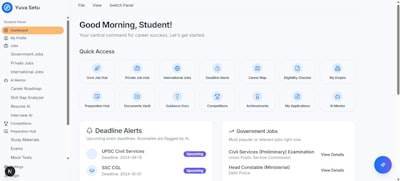
On that basis, the team designed an intranet with smart onboarding. The first component was a custom web portal where each person sees tasks, documents and deadlines clearly. The second was an automation engine that orchestrates notifications, approvals and alerts. The third was an assistant based on AI agents that answers questions about internal policies and guides new employees step by step.
From a technical perspective, the architecture combined custom software development with AWS and Azure cloud services. Business logic was implemented through workflows orchestrated in n8n, with retries and complete observability. For AI tasks, a retrieval-augmented generation approach was used, so the model only consults authorized sources and does not invent answers. AI agents were deployed in private environments with secure connectivity through VPN and encrypted tunnels.
One goal was to avoid technology becoming a barrier for the team. For that reason, Q2BSTUDIO built a control panel that summarizes activity in real time. The panel combines operational indicators with visual analysis in a BI/Power BI tool, giving management an accurate picture of each process without manual reports. This visibility was one of the most appreciated cultural changes for the client.
Cybersecurity was addressed from day one. Access to the intranet and the onboarding portal is controlled with roles, audit logs and password policies. Sensitive information is encrypted in transit and at rest, and data processing procedures were defined in line with GDPR. The combination of AWS/Azure cloud and security measures made it possible to connect the client's internal systems to the new AI layer without exposing data.
The project was executed in phases. During the first two weeks, discovery was completed and the baseline was established. From weeks three to six, a minimum viable product was built and integrated with main flows. From weeks seven to nine, a controlled rollout was carried out with a reduced group of users. From weeks ten to twelve, final adjustments were made, administrators were trained and knowledge transfer happened.
Results were clear. The time needed to complete an onboarding was reduced by around a third, and hours spent on repetitive manual tasks fell by almost 40%. Process accuracy went from 78% to over 90%. Operational costs related to onboarding decreased during the first half-year, and management recovered the investment in less than nine months. These figures were measured in the client's production environment. In addition, the internal team stopped spending hours on manual reports because the system generated them automatically.
For an intranet with smart onboarding to have impact, integration with existing systems matters more than artificial intelligence alone. The client already used an ERP and a CRM, and the new solution did not replace them. Instead, it added an automation and integration layer. Q2BSTUDIO connected the portal to SharePoint, Microsoft Teams, the ERP and approval workflows through APIs, so people did not need to switch constantly between tools.
Another relevant conclusion is that AI agents must have clear boundaries. The implementation included human supervision checkpoints for decisions requiring validation. This reduces the risk of automatic errors and improves employee adoption. Technology does not replace people: it gives them time to focus on higher-value activities.
The experience also shows that governance is critical. The system records who accesses each document, who approves each step and what changes are made to AI configuration. This is essential for GDPR compliance and internal audit policies, and it also builds trust among managers.
Q2BSTUDIO is not just an automation consultancy; it is a software development company that combines engineering, artificial intelligence and cybersecurity. Its methodology includes an initial discovery session, fixed budgets and short delivery cycles. Companies looking for an intranet with smart onboarding in Seville can start by defining clear indicators and a limited scope. With the right technical partner, return on investment can arrive in less than a year. Knowledge is transferred to the client team through documentation and training, so the operation does not depend on a single supplier.
If your company needs to transform the way it brings in talent and shares knowledge, the next step is to analyze current processes and decide which indicators you want to improve. An intranet with smart onboarding is not a digital luxury: it is an operational infrastructure that saves hours, reduces errors and gives management visibility. With an agile approach and a strong technical base, any organization can achieve results in a few weeks. The initial investment is lower than many companies assume, and risk is reduced with phased delivery.