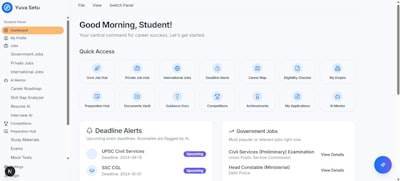
The corporate intranet has evolved from a simple document repository into an intelligent work hub. In 2026, competitive organizations view it as the place where automation, artificial intelligence and employee experience converge. An intranet with smart onboarding does more than welcome new hires: it makes them productive from day one, reduces administrative friction and turns knowledge management into a strategic advantage.
In this context, Q2BSTUDIO builds custom software that integrates AI, automation and data analytics. This is not a closed product: every solution is designed around the people, workflows and tools that already exist in the organization. That is why an intranet with smart onboarding can act as a digital core connecting HR, IT, operations and leadership.
Smart onboarding is critical because the first days shape an employee relationship with the company. Organizations that offer a clear, automated and personalized experience reduce the learning curve and increase retention. An employee who knows where to find information, who can answer their questions and what tasks need to be completed spends less time on bureaucracy and more time creating value. The intranet acts as a permanent assistant: it provides context, prioritizes tasks and connects people with the right colleagues.
The foundation of this system is an intelligent search experience powered by AI agents. Traditional shared folders are left behind. Employees can ask questions in natural language and receive answers with references to the original documents. These agents can interpret the intent of a query, filter based on permissions and suggest related contacts or resources. By integrating with the corporate knowledge repository, the intranet learns from every interaction and improves continuously.
Process automation is another pillar. From creating an email account to managing access to internal tools, assigning a mentor or scheduling initial training, everything can be activated through automated workflows. This removes repetitive tasks from HR and IT, ensures that no stage is left incomplete and provides the new hire with a clear, sequenced action list. Automation does not replace people: it frees them from manual management and allows them to focus on relationships and follow-up.
Scalability and deployment needs are solved with AWS/Azure cloud. Cloud infrastructure makes the intranet available across different countries and time zones, with automatic backup and elastic growth capacity. Integration with HR, ERP, CRM and productivity suites is carried out through secure APIs and connectors. In this way, the intranet is not an island but an orchestrator that extracts and distributes information from source systems without duplicating processes or generating inconsistencies.
Corporate intranet cannot be discussed without cybersecurity. Access to sensitive data, identity management and protection against internal and external threats are non-negotiable requirements. A secure architecture includes multi-factor authentication, encryption in transit and at rest, audit logging and role-based access control. Continuous monitoring makes it possible to detect anomalous behavior and respond quickly. Digital trust becomes an adoption enabler: employees use the intranet because they know their information is protected.
Decision-making also benefits. Business intelligence dashboards, for example with Power BI, show real-time metrics of the onboarding process: time to productivity, new hire satisfaction, task completion and HR team workload. These dashboards allow leadership to understand the status of each hire and identify bottlenecks. Information is no longer scattered across spreadsheets; it becomes part of a unified, actionable view.
The business impact can be seen at several levels. HR reduces its administrative burden and can spend more time on talent strategy. IT eliminates calls and tickets related to access and passwords. New employees reach full capacity sooner and feel part of the organization from day one. Leadership, in turn, gains objective visibility into results and can prioritize improvements with real data. Overall, an intranet with smart onboarding works as a lever for productivity and corporate culture.
Implementation must be agile and results-oriented. The first step is a diagnosis of current workflows, the tools involved and the indicators that will allow progress to be measured. Next, a minimum viable product is defined to automate the critical onboarding stages and tested with a small group of users. From that baseline, new features are added, scope expands to more departments and AI agents are adjusted with real organizational data. This methodology reduces risk and accelerates return on investment.
In this model, artificial intelligence is not an aesthetic add-on but an operational component. AI agents can answer frequently asked questions, summarize internal policies, recommend courses and support employees during their first months. Thanks to cloud integration, these agents are trained with corporate data and can scale securely. Human oversight remains present at critical points, but automation handles most of the repetitive work.
Q2BSTUDIO supports the entire cycle: design, development, integration, deployment and evolution. Its expertise in artificial intelligence, AWS/Azure cloud, cybersecurity and BI/Power BI makes it possible to build robust intranets adapted to each sector. Companies that take this step not only modernize their internal infrastructure; they create an environment where innovation becomes routine and where talent can reach its full potential. The intranet stops being an expense and becomes a strategic investment with measurable return.