The corporate intranet has ceased to be a simple document repository. In 2026, organizations competing for talent and efficiency understand that the intranet with smart onboarding is a strategic platform: it reduces the time new employees need to adapt, digitizes internal processes, and turns scattered knowledge into an operational advantage. This article explores, from a technical and business perspective, how automation and innovation converge in this type of project.
The rise of hybrid work has multiplied the number of internal tools, communication channels, and data sources. A newly hired employee needs access to documentation, contacts, applications, and procedures in a coherent environment. The intelligent intranet acts as an integration layer, avoiding fragmentation and accelerating the learning curve. For Human Resources, this translates into a homogeneous experience; for IT, into a more governable ecosystem; for leadership, into a real productivity lever.
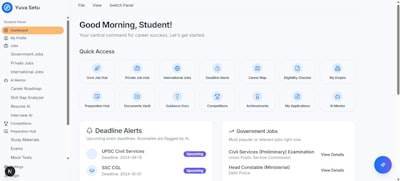
Smart onboarding combines three elements: contextual content, personalized task flows, and data-driven automation. Instead of delivering a static manual, the intranet detects the user's role, department, and experience level to show only what is relevant. A new developer will see technical guides and repository access; a salesperson will receive product information and proposal templates; an operations manager will find indicators and approval procedures. This personalization is not cosmetic: it relies on a corporate data model and business rules that evolve with every interaction.
Process automation plays a decisive role. Intranets with business logic can automatically request account creation, send reminders, escalate incidents, and update documentation when a project changes. By connecting with the ERP, CRM, or active directory, the intranet stops being a query point and becomes an orchestrator. Onboarding requests, probation reviews, and internal certifications are managed with approval circuits, traceability, and notifications, reducing administrative work and manual errors.
Innovation, for its part, needs a space to test, measure, and scale. The intranet with smart onboarding can work as a corporate laboratory: it allows launching communication campaigns, piloting AI agents to answer frequent questions, publishing workflow prototypes, and collecting employee feedback before implementing a global change. This approach turns the intranet into an innovation hub that connects ideas with operational processes, always with clear adoption, usage, and improvement metrics.
One of the most relevant advances is the incorporation of AI agents into the workplace. A well-trained agent can answer questions about internal policies, generate project summaries, prepare the first days of a new hire, or detect outdated documentation. However, these agents must not work as black boxes. It is essential to define limits, audits, and human oversight mechanisms. The intranet acts as a secure container where AI models access information with clear permissions and activity logs.
From a technical point of view, a modern intranet needs a flexible architecture. Custom software development makes it possible to adapt the platform to the real flows of the business, avoiding the constraints of a generic product. On that foundation, AI systems, semantic search engines, and connectors with collaboration tools such as Microsoft Teams or SharePoint are integrated. Q2BSTUDIO, a software development and technology company, uses this approach to build intranets that grow with the organization and can incorporate predictive analytics without starting from scratch.
For companies looking for a solid solution, custom software development is the most efficient way to guarantee functional fit and technological autonomy. Q2BSTUDIO designs the intranet in modules, so the internal team can prioritize features and take over maintenance in the medium term. This strategy also facilitates product evolution: if a new AI provider appears next year or the security policy changes, the platform can adapt without downtime.
Deployment infrastructure is another critical factor. Many organizations choose a hybrid cloud strategy: the most sensitive components remain in a private environment, while elastic compute and storage services rely on AWS or Azure. The choice between one platform and another depends on latency, cost, data residency, and integration capabilities. In any case, the intranet should take advantage of managed identity, backup, and monitoring services to ensure business continuity.
Security must be present from the first line of code. A corporate intranet contains personal data, confidential documents, and access credentials, so cybersecurity is not a complement but a design requirement. Role-based access control, encryption in transit and at rest, environment segregation, and suspicious event monitoring are common best practices. It also complies with regulations such as GDPR as long as there is traceability over consent and user rights.
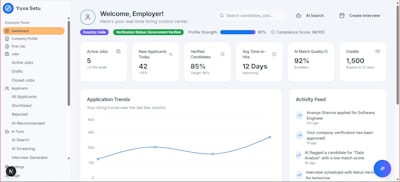
For the intranet with smart onboarding to generate visible value, it must be measured. Power BI dashboards allow visualizing adoption by department, average ramp-up time, completion rates for internal courses, and the impact of automation on task volume. Management can then make decisions based on data instead of perceptions. The integration of Power BI with the intranet is done through standard connectors and APIs, allowing dashboards to be updated in near real time.
Implementing an intranet with these characteristics requires an iterative approach. The first phases should focus on discovering friction points in the current onboarding process, identifying key integrations, and defining baseline indicators. Then, a minimum viable product is built to solve the most urgent use cases. Subsequent iterations add automation modules, AI agents, and dashboards. In this way, investment is spread over time and results are seen in months, not years.
Change management is as important as technical development. An intranet that is perfect from a technical point of view fails if employees do not use it. Therefore, the project must include internal communications, training, reference material, and a support channel. Usage data helps quickly detect departments that need extra support and features that do not gain traction. Innovation is also social: people need to adopt new routines and trust digital tools.
Q2BSTUDIO accompanies this process from a position close to the business. Its multidisciplinary team combines custom software development, AI integration, and cybersecurity best practices to deliver technology solutions that generate return. The company also works with internal IT teams to transfer knowledge, so the intranet does not depend on a single provider. The combination of Artificial Intelligence solutions, AWS/Azure cloud, and Power BI analytics creates a modern ecosystem ready for the coming challenges.
In the end, the intranet with smart onboarding must answer a clear business question: how do we reduce the time a person needs to become productive and how do we help the organization learn from its own projects. Automation frees up time for valuable work; innovation creates a culture of continuous improvement. A well-designed intranet turns these abstract concepts into concrete, measurable, and scalable features.