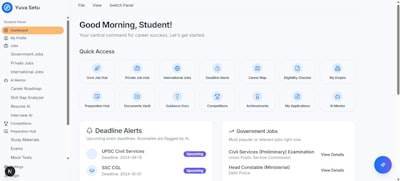
Corporate culture is not transformed by manuals, motivational talks, or a welcome course that everyone forgets within days. It changes when everyday work tools make collaborating, learning, and deciding easier than doing the opposite. An intranet with smart onboarding acts exactly at that point: it is where technology shapes habits, and habits become culture.
As a company grows, knowledge gets dispersed. New employees arrive with enthusiasm, but quickly face reality: outdated manuals, overwhelmed coworkers, and processes that were never documented. At that moment, culture becomes fragile. An intranet with smart onboarding changes this scenario by turning onboarding into a guided, personalized experience connected to the real operations, values, and people who have already walked the path.
This tool is not just a document repository. It is an environment that combines data, workflows, and virtual assistants to give each person the right information at the right time. The first day stops being chaos and becomes a route designed according to role, department, and upcoming projects. That reduces anxiety and accelerates belonging. People who quickly understand how things are done, and why, start contributing much sooner.
One of the most visible cultural effects is transparency. When team goals, project progress, and decision criteria are available on a common platform, rumors lose strength and self-serving interpretations have no place. Trust is not decreed; it is built through visibility. People trust more when they can see the full context and know that their colleagues see it too. That shared visibility is arguably the first major cultural change the intranet introduces.
Transparency also redefines responsibility. In a well-designed intranet, each person has a profile, tasks, a calendar, and a history of contributions. That is not control or surveillance; it is clarity. When everyone knows what is expected of them and how their work affects the collective result, accountability no longer feels like a threat. It becomes a natural coordination mechanism and a source of personal pride.
Another cultural pillar that gets stronger is autonomy. Instead of waiting for someone to answer an email, validate a document, or authorize a request, employees can solve many doubts on their own through smart search, knowledge bases, and AI agents. This autonomy frees time and sends a powerful message: the organization trusts its people's judgment. That trust is the fuel of initiative and innovation.
Collaboration also changes structurally. Classic departmental silos weaken because the intranet includes communities of practice, thematic channels, and systems for finding experts across the organization. A newcomer can locate the right person in another area in minutes, even if they have never met. Cross-functional conversations emerge, generating new solutions and preventing problems from getting trapped inside internal boundaries.
When it comes to learning, the smart intranet introduces a continuous improvement dynamic. Instead of memorizing a manual, employees receive microcontent, alerts, and personalized recommendations based on their role and learning stage. Onboarding stops being a two-week event and becomes ongoing support during the first months. That growth mindset, when extended across the organization, eventually influences everything from quality to innovation.
For middle managers and executives, the cultural effect translates into data-driven decisions. With Business Intelligence and Power BI dashboards, leaders can observe tool adoption, average productivity time per team, bottlenecks, and internal climate indicators. Intuition still matters, but it is no longer the only steering wheel. Information becomes a common good that everyone can interpret.
Behind this experience there is serious technical architecture. The intranet needs to integrate with HR, identity, ERP, and operations systems, and it must run on cloud infrastructure such as AWS or Azure to scale with performance and security. Data privacy and cybersecurity protocols are not an afterthought; they are the basis of trust. No healthy culture can be built on an insecure platform.
This is where custom software development makes a decisive difference. Standard solutions impose their logic and rarely fit how a company really works. A custom platform, by contrast, can reflect the organization's own processes, language, and values. That is why it makes sense to work with a technology partner like Q2BSTUDIO, specialized in custom software and AI solutions that adapt to each client's context.
Q2BSTUDIO approaches these projects with an integrative vision. It does not simply deliver a portal: it analyzes workflows, identifies friction points, designs a minimum viable product in a few weeks, and extends the intranet with AI agents and automations. The result is not just a tool but a system that grows with the company. It can incorporate new integrations, flows, and content without starting from scratch.
Artificial intelligence is, in fact, the great cultural accelerator. An assistant that guides a new employee, summarizes internal policies, or automates administrative tasks is not a luxury; it is a statement of intent. The company communicates that it wants talent to focus on what matters. That decision directly impacts motivation, retention, and how employees perceive the organization's future.
Managed cultural change also matters. Implementing a smart intranet means reviewing routines, incentives, and internal communication channels. Activating the platform is not enough; people need support, answers, and early wins to celebrate. Organizations that combine solid technology with a clear communication plan achieve faster adoption and more lasting habits.
Corporate politics also improves. When relevant information is accessible, decisions no longer depend on who knows whom. Promotions, appointments, and project assignments can be based on evidence and real contributions. This reduces favoritism and reinforces a merit culture, something many teams want but few achieve without tools that give objective visibility to work.
Success indicators go beyond technical usage. Time to full productivity, twelve-month retention rates, employee satisfaction, and internal decision quality are all dimensions that improve when culture is supported by a well-designed platform. These data points justify the investment to leadership and guide future improvements.
Culture is not a project with a start and end date; it is a living reality that requires maintenance. A smart intranet should include continuous evaluation mechanisms, such as short surveys, sentiment analysis, or usage audits. Technology makes it possible to detect problems before they become crises and adjust cultural strategy with the same agility as a technical process.
Ultimately, an intranet with smart onboarding is an investment in how people work. It improves how people arrive, but above all it transforms the company's relationship with knowledge, error, and collaboration. Technology is the vehicle; culture is the destination. Companies that understand this relationship build competitive advantages that are hard to copy, because they live not in hardware or software, but in the collective intelligence of their people.